

The Optus chief was right to quit but real change is unlikely at the telco until bigger issues are fixed
- Written by The Conversation
Optus chief executive Kelly Bayer Rosmarin bowed to the inevitable on Monday and resigned as chief executive of Australia’s second largest telecommunications company.
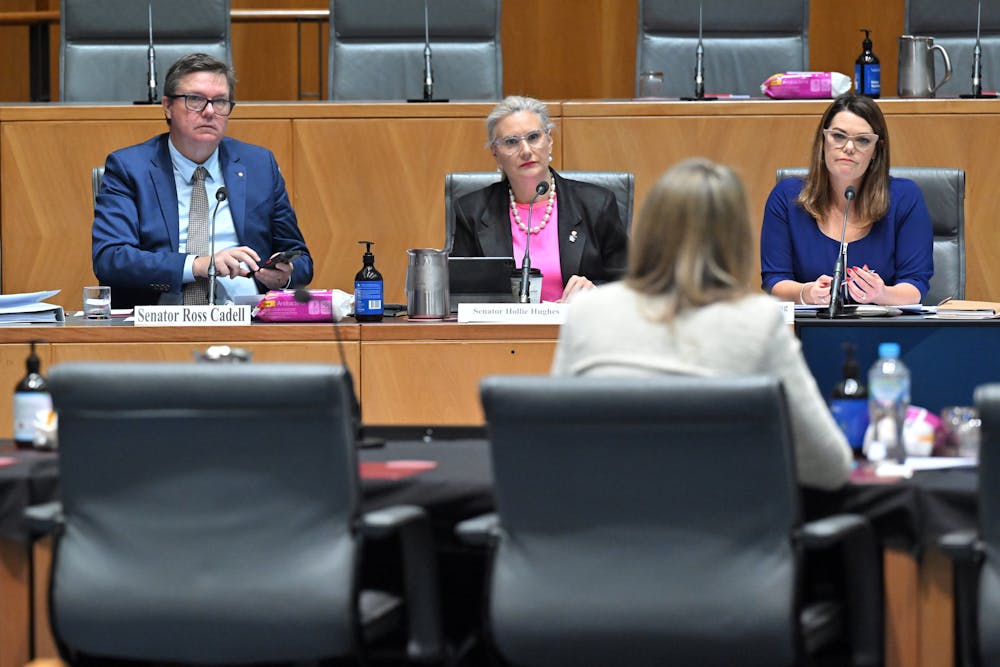
Why inevitable? Poor communication and a lacklustre response during a major system outage is bad enough. Then things got worse when Bayer Rosmarin and the director of Optus networks admitted at a Senate hearing on Friday they had no disaster management plan for the kind of national outage experienced two weeks earlier.
Someone was always going to have to take the blame. Now, two critical questions emerge. First, will the resignation of the chief executive be sufficient to stem the tide of bad publicity from Optus’ outage debacle? Second, is this yet another instance of a female chief at a prominent Australian company being pushed over the “glass cliff”?
Quitting is only a Band-Aid fix
The resignation of a chief executive following a national fiasco has become something of a ritual for big Australian corporations. This happened at Qantas, too.
Such actions calm public anger, making it appear someone is taking responsibility. Yet, is this truly effective? Not necessarily. This is because problems are deeply ingrained within these corporations, which removing the current leader will not necessarily resolve. Again, the Qantas example illustrates this point.
Optus’ challenges are notably linked to its operational model as a subsidiary of Singtel Ltd, a Singapore-based company. A review of its website shows Optus has a very lean corporate structure in Australia.
Remarkably, Optus doesn’t have a traditional board of directors within Australia to oversee its management. The website lists Paul O’Sullivan as the chairman, but it’s unclear what exactly he chairs. Surprisingly, O’Sullivan maintains a low public profile, despite Optus being Australia’s second-largest telecommunications carrier. At best, it appears he chairs a board of senior executives including the chief executive.
Read more: The Optus outage shows us the perils of having vital networks in private hands
Even within the ranks of the nominated executives, no one is specifically responsible for the company’s risk management. While Optus claims to have such systems in place, the recent national outage points to a significant lapse in disaster planning. This is a major failure of risk management.
The likelihood of such an outage might have appeared remote to Bayer Rosmarin, yet given the potentially severe consequences, comprehensive planning and scenario testing would seem essential for the telco giant. Like the inevitability of cyber hacking, a national outage could be considered a matter of when, not if.
Optus needs robust governance
In a typical scenario, a board of directors would scrutinise the executive team’s oversight and accountability functions as the catastrophe unfolded. With no Australian board, those tasks are apparently the responsibility of Optus’ parent, Singtel.
It is easy to imagine systemic risk concerns at Optus might be too far removed from the Singapore-based board. But that is not much consolation for Australian consumers and agencies who depend on Optus for telecommunication services, including the emergency triple-zero number.
Read more: Optus has revealed the cause of the major outage. Could it happen again?
Optus’ lack of strong governance in Australia is and remains a major concern for the company, regardless of who’s in charge. Optus urgently needs a properly constituted local board of directors with clear accountability for its local operations.
This includes a chairperson ready to front the media and share responsibility with the chief executive. It also requires more transparent governance, particularly regarding risk management and remuneration. Optus can handle some of these issues, but the cost overlay will no doubt be a factor in the mode of the remedy.
That is where the federal government, through its regulatory agency, the Australian Communications and Media Authority, must come in and tighten up the governance requirements of companies with a carrier licence.
The short-lived tenure of women at the top
The resignation of Bayer Rosmarin from Optus arguably becomes a classic case of the “glass cliff” phenomenon, where women are installed in leadership roles only to be blamed for failing to fix a crisis. Her stint as chief executive was brief, starting in April 2020 after joining Optus in March 2019. Her time at the helm will likely be remembered for two national scandals: a cyber hack and a national outage.
 The message sent to Optus customers on the day of the outage.
AAP
The message sent to Optus customers on the day of the outage.
AAP
Studies looking at women in leadership suggest women who take on such roles in turbulent times are likely to endure a shorter tenure than their male counterparts. One scandal might be overlooked, but two? It seems the outcome was inevitable.
Michael Venter, the interim chief executive, may well succeed where Bayer-Rosmarin failed. However, unless Optus takes the time to properly resolve systemic risk issues and bolster its governance arrangements, it should expect more trouble ahead.
Read more: Optus said it didn't have the 'soundbite' to explain the crisis. We should expect better


