

Who was Narcissus?
- Written by The Conversation
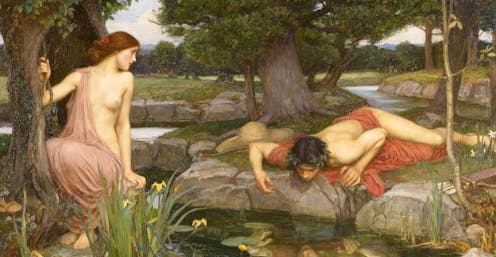
Narcissus is among the best-known figures from Greek mythology.
His beauty has lasted millennia: his name denotes the genus of plants of the amaryllis family, such as the daffodil and jonquil; his personality lends itself to the term “narcissism”, which describes a self-absorbed individual; and his story has inspired great works of art and literature.
The familial origins of Narcissus vary. In the Metamorphoses, Latin poet and mythographer Ovid names him as the son of the river god, Cephissus and the nymph, Liriope.
Another account, from the Greek author of the late Roman Imperial era, Nonnos, lists his mother as the goddess of the moon, Selene and his father her mortal consort, Endymion.
Read more: Guide to the classics: Ovid's Metamorphoses and reading rape
The Roman versions of Narcissus’ narrative are clearly based on a much earlier Greek myth. Scant evidence remains of its origins, other than the Greek etymology of his name and his place of birth in Boeotia, in Central Greece.
Divine retribution
Ovid’s vivid and dramatic version of the myth is the best known and most cited. He describes the fate of the beautiful youth, Narcissus, as announced by the seer, Tiresias; namely, he will live a long, fruitful life, provided he never recognises himself.
This prediction inevitably comes to fruition after Narcissus is subject to divine punishment for his rejection of the nymph, Echo. (In an alternative tradition, to which Ovid also alludes, Narcissus rejects the advances of a young man, Ameinias.)
Ovid tells of Narcissus’ repulsion at Echo’s advances and the devastating effect this had on her. Distraught at the beautiful youth’s aggressive rejection, Echo literally wastes away until nothing is left of her except her voice. She is able to repeat only the last few words of sentences uttered by others.

Ovid reveals Echo is merely one in a list of thwarted admirers, including a young man who prays for divine retribution against Narcissus’ arrogance. Sadly for Narcissus, the goddess of retribution – Rhamnusia – is more than happy to fulfil this prayer, thus manifesting Tiresias’ prediction.
While hunting one day and beset by thirst, Narcissus bends down by a pond to drink. Suddenly he gazes upon his own reflection. Narcissus is besotted by the beautiful young man who gazes back at him from the water’s surface. But he is rejected by the object of his desire, who continually disappears each time he reaches for him.
He falls in love with someone who will never return that love – himself. And, like Echo, he begins to fade away.
A powerful story
The story of Narcissus is a powerful one. It taught the Greeks and Romans about the cruel and absolute power of divine forces in their lives and the harsh justice they mete out to mortals. It also encapsulates a well-known ancient belief concerning suspicions around beautiful people.
The ancients were intensely cautious about the possible dangers of beauty. They believed it could incite both divine and human envy and conceal hidden evils behind enchanting veneers.
The idea of beauty’s potential to harm and hurt is at the heart of Narcissus’ story, expressing the ancient fear that a stunning face may not be matched by a kind heart.
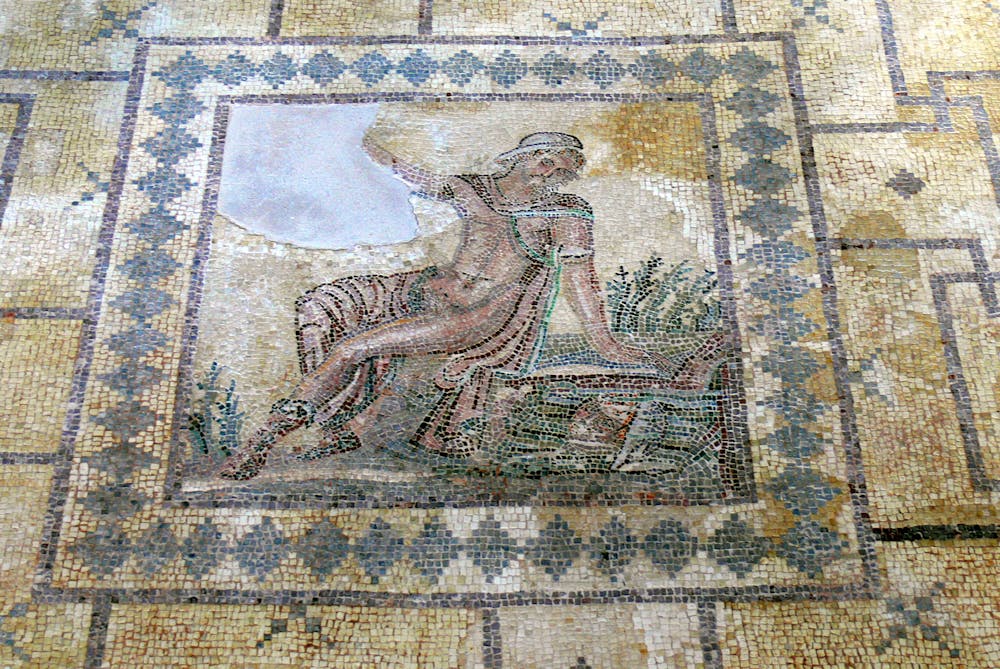 Paphos Archaeological Park. House of Dionysos: Mosaic of Narcissus.
Wikimedia Commons, CC BY-SA
Paphos Archaeological Park. House of Dionysos: Mosaic of Narcissus.
Wikimedia Commons, CC BY-SA
As with the hundreds of tales told in the Metamorphoses, the myth of Narcissus is one of transformation. As the nymphs of the waters and the trees prepare Narcissus’ funeral pyre, no body is found. Instead, a flower with white petals encircling a yellow centre lays in its place, namely, the daffodil.
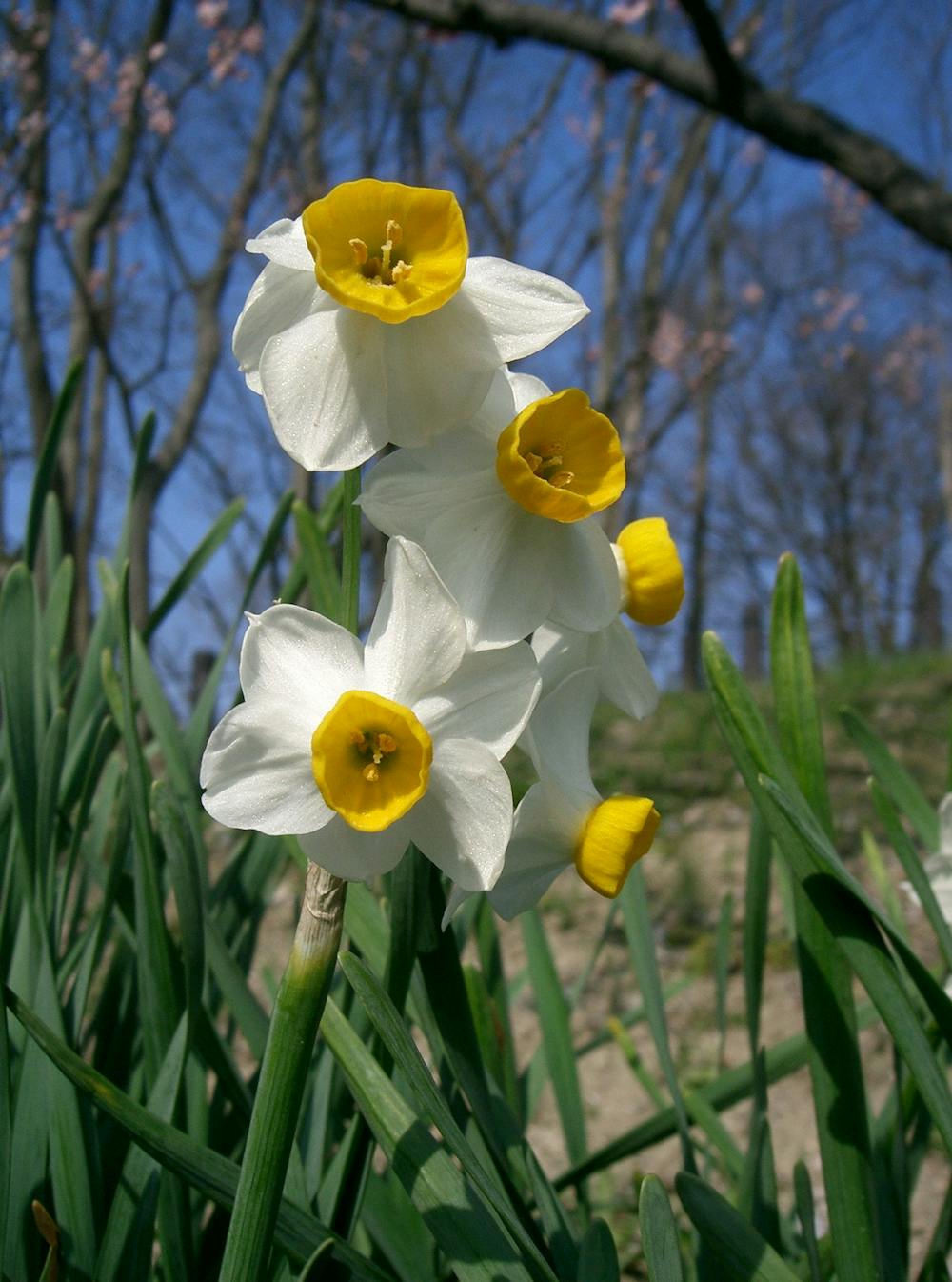 A daffodil or ‘Narcissus tazetta’.
KENPEI/Wikimedia Commons, CC BY-NC-SA
A daffodil or ‘Narcissus tazetta’.
KENPEI/Wikimedia Commons, CC BY-NC-SA
Like many of Ovid’s versions of the myths so powerfully and evocatively recorded, the tale of Narcissus has inspired artists and poets as well as, of course, early psychoanalysts.
Austrian psychoanalyst Otto Rank published an early account of narcissism in 1911, A Contribution to Narcissism. Sigmund Freud followed in 1914 with an article entitled, On Narcissism: An Introduction.
Rank emphasised vanity and grandiosity as aspects of narcissism. Freud linked narcissism with libidinal theories around instinctual sexual urges. Narcissism, he suggested, was not necessarily an abnormal human condition but one tempered by whether the libido was directed inward (towards oneself) or outward (towards others).
These forays into narcissism or the increasingly popular term, “”narcissistic personality disorder“, are currently understood as being characterised by a fixation on oneself, extending to an exaggerated sense of one’s importance and limited empathy for other people.
For artists and poets, Narcissus’ story perhaps remains less complex. They have preferred to capture the pivotal moment of his self-fixated gaze, leaving interpretations to the viewer.
From antiquity to modernity, artists, from Pompeiian fresco painters of the first century CE to Caravaggio (1571-1610) and John William Waterhouse (1849-1917), have captured the tragic outcome inherent in his obsession with his own reflection.
Today, we may take this myth as a salient warning against our contemporary obsession with taking "selfies” and the self-promoting phenomenon of social networking.
Read more https://theconversation.com/who-was-narcissus-216353


