

We gave palliative care patients VR therapy. More than 50% said it helped reduce pain and depression symptoms
- Written by The Conversation
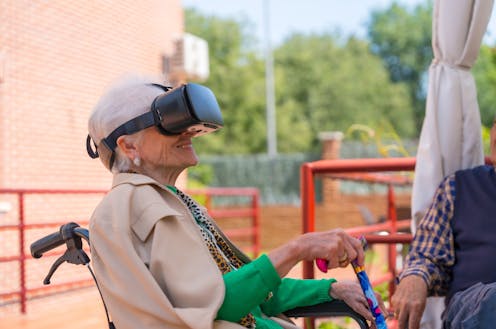
People in palliative care are dealing with serious, non-curable illness. Every day can be filled with severe physical, psychological and emotional pain.
Palliative care staff work hard to help make patients as comfortable as possible and provide strong emotional support. Meaningful activities can help but patients often aren’t well enough to do the things they really love, such as travel. We wondered whether virtual reality (VR) could help.
To find out, we supported 16 palliative care patients in an acute ward to do three 20-minute VR sessions, and asked them how they felt before and after each one.
Our study, published this week in the journal BMJ Supportive & Palliative Care, found more than 50% of patients experienced clinically meaningful reductions in symptoms such as pain and depression immediately after a 20-minute VR session.
Importantly, though, some also told us it didn’t help or that they felt unwell after using it. This shows taking a nuanced approach to using VR in palliative care is crucial.
What we did
VR involves using a headset to create an immersive experience that feels 3D, often accompanied by music or realistic sound effects. This computer-generated environment can feel incredibly close to reality.
Previous research has looked at VR use in palliative care but we were especially interested in finding out if personalised VR sessions were associated with meaningful changes in pain and depression symptoms.
Personalised VR means each person experiences content that is meaningful to that individual. So rather than asking patients to choose, for example, between a rainforest and a beach VR experience, we interviewed the patients before their sessions to gauge their interests and create a VR session tailored to them.
For example, one person said they wanted a VR experience that allowed them to explore Paris again. Others had migrated to Australia from the UK so they asked for VR experiences that brought them back to the country where they were born. One person was a big fan of Star Wars, so we provided a VR Star Wars game.
For our study, we asked 16 palliative care patients from an acute ward in a South Australian hospital to participate in three VR sessions using a headset that is now known as Meta Quest 2. The participants, who ranged in age from 48 to 87 years old, used the headset for around 20 minutes per session. The primary VR applications we used were Wander and YouTube VR.
We asked each participant about their emotional and physical symptoms before and after each session.
One of the apps used in our study was Wander.What we found
We found just 20 minutes of VR immersion could immediately reduce the participants’ subjective feelings of both physical pain and emotional pain (such as depression). At least half of the participants reported significant relief after a single session. After one session, two out of three participants reported relief.
One person told us:
When the service is finished you feel like you’re floating. [It takes a] weight off your shoulders.
Another said:
Well, I’d rather lie here thinking about a fish swimming [or] a Willy Nelson concert than be dying […] I enjoyed it.
One participant told us:
Oh, it’s just amazing, it was nothing like I expected […] it takes you from this world into another beautiful world.
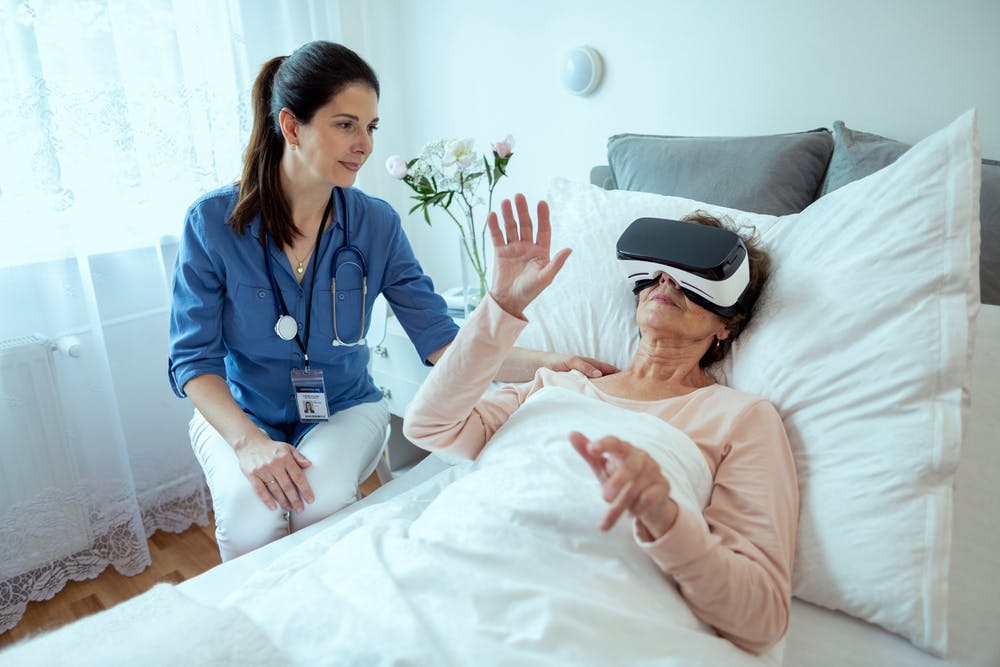
 While the benefits of VR were profound for some, they were not universal.
DC Studio/Shutterstock
While the benefits of VR were profound for some, they were not universal.
DC Studio/Shutterstock
A different person said:
[…] by the time you get to where I am, there’s things you think of, ‘I wish I’d done this, I wish I’d had the chance to have been able to do that’ and then this offers you that experience to have just about feel like you’ve been there.
While the benefits of VR were profound for some, they were not universal.
Some participants reported feeling worse after the VR sessions.
One person said the headset felt too heavy on their cheekbone, another said they experienced nausea after using the VR.
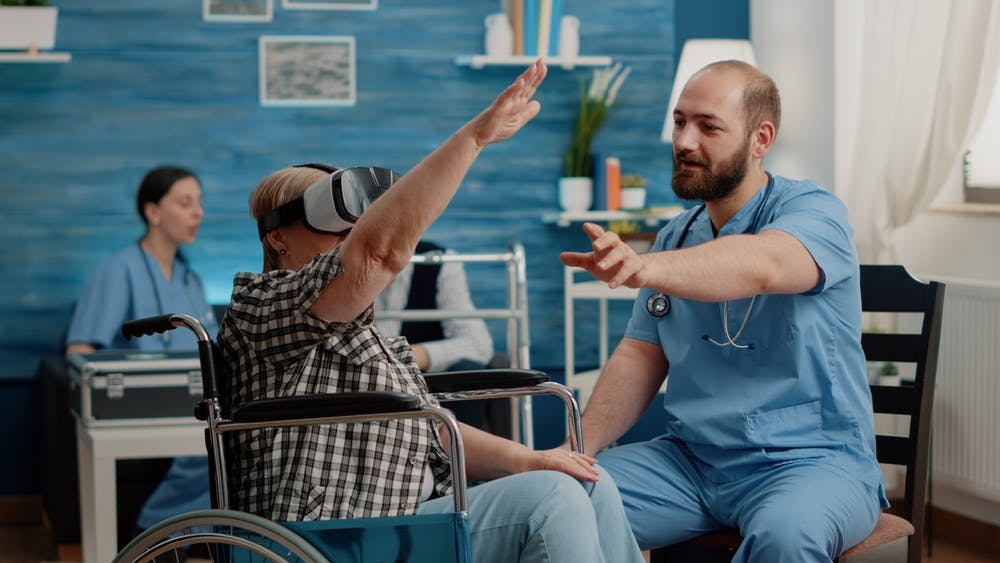
 The benefits of VR were profound for some, but not all.
Ground Picture/Shutterstock
The benefits of VR were profound for some, but not all.
Ground Picture/Shutterstock
Where to from here?
We and others have now collected good evidence VR can be a helpful palliative care therapy for some patients – but not all. It is not a universal remedy.
More research is needed to better understand which patients will benefit the most from VR and how we can best use it. It’s also worth remembering skilled staff need to be on hand to support a patient to use VR; it’s no good just buying a VR set and expecting patients to use it on their own.
Our study, while limited, shows VR therapy may in some cases have a role to play to help palliative care patients experience moments of joy and comfort despite the seriousness of their illness.


