

Could spending a billion dollars actually bring solar manufacturing back to Australia? It’s worth a shot
- Written by The Conversation
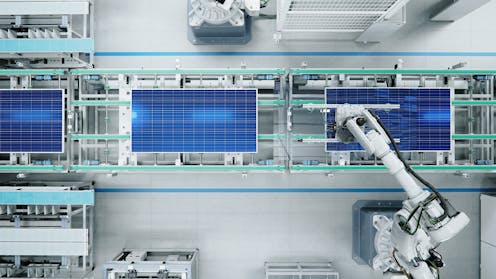
Solar SunShot is well named. The Australian government announced today it would plough A$1 billion into bringing back solar manufacturing to Australia, boosting energy security, swapping coal and gas jobs for those in the solar industry, and guarding against supply chain shocks and geopolitical tension.
The announcement is big. At a stroke, the federal government is proposing to directly invest in manufacturing the main technology Australia will rely on to make its power. By 2050, solar should provide most of our electricity – but only if we have enough panels.
What would that look like? Australia was once a world leader in solar energy technology. But while our solar researchers are still highly regarded, we only have one company commercially manufacturing solar panels. That means the SunShot program will likely start by boosting efforts to make modules here using imported cells and module components, before building out the supply chain to make glass for the panels, aluminium frames and, eventually, the solar photovoltaic cells themselves and the pure polysilicon needed to make them.
If we had a solar manufacturing industry able to make a gigawatt’s worth of panels annually, we would create around 750 jobs and meet about 20% of our current demand for solar. More jobs would come as the ecosystem grows, including manufacturing glass and aluminium frames.
Critics will say it’s pointless to compete with China’s dominant renewable energy industry. But as climate change worsens and global efforts to go green intensify, we can’t rely on a single country. The backdrop, of course, is the increasing popularity of reshoring, where Western countries use public funding to try to bring back manufacturing from nations such as China, as the United States is aiming to do with its mammoth Inflation Reduction Act.
Read more: Australia's new dawn: becoming a green superpower with a big role in cutting global emissions
Can we compete with cheap panels?
In 1983, UNSW professor Martin Green invented the first PERC solar cell (which stands for Passivated Emitter and Rear Contact). This cell was better at converting sunlight to electricity than previous cells. His invention is now in use in about 90% of the world’s installed solar panels.
Australian researchers have long been at the forefront of solar development. But where we’ve struggled is in commercialisation and manufacturing. The world’s first solar billionaire, Shi Zhengrong, did his PhD at UNSW before returning to his native China to found the multinational solar giant SunTech. Even now, many of China’s top solar firms have connections with Australian researchers.
China became dominant in renewables not simply because of its enormous domestic market and a deep manufacturing base. The Chinese government has long funded solar firms to make their products more competitive.
That’s where Australia’s SunShot would come in, by helping to create the market of suppliers needed to make solar panel manufacturing a reality.
Australia wouldn’t be trying to go for global market share, but rather to substitute its own imports. Currently, only about 1% of the millions of panels we install annually are made in Australia. Even so, as the solar industry surges worldwide, there may well be room for more entrants.
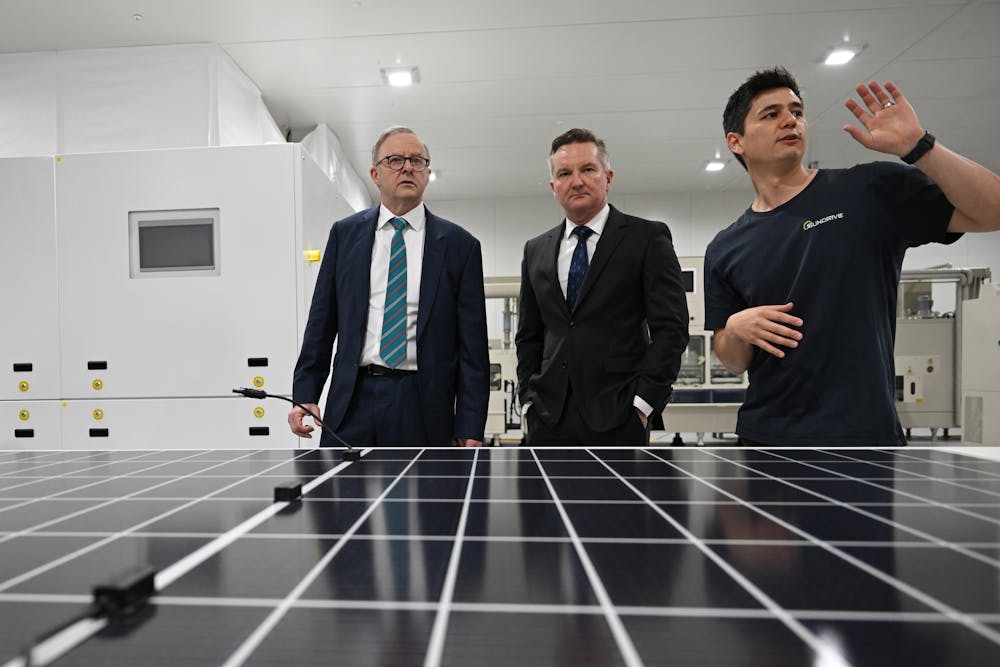
What would Australian solar manufacturing look like?
We can’t run before we can walk. Bringing manufacturing back won’t happen overnight. Today’s announcement is short on detail. But we know it draws on work done last year by the Australian PV Institute in a report titled Silicon to Solar, which this article’s lead author worked on.
Realistically, what we’ll have to start with is working with our single existing solar panel manufacturer, Tindo, as well as boosting other market entrants such as the startup SunDrive.
Tindo doesn’t make solar panels from scratch. Instead, it imports cells from overseas and assembles them into modules.
The first step, then, is to grow the market for Australian-made modules using imported products. This is the quickest step in the supply chain to establish.
Then we can begin helping suppliers of other components, such as the special glass to cover the panels, and the aluminium frames.
The next step would be to establish solar cell production lines in Australia and scale them to meet the demand from our own module production lines.
We could then move to the next challenge, turning silicon ingots into the wafers used for cells. Establishing these capabilities in Australia might allow Australia to export these materials to other markets such as the US and Europe.
The final step – and one that will take years and more investment, even if we start planning now – would be to have our own polysilicon factories. A multibillion-dollar factory near Townsville is being planned, with support from the Queensland government.
Turning lower-grade metallurgical silicon into 99.9999% pure polysilicon is hard and expensive. You can’t build a small polysilicon factory – scale is important. But it can be done. The size of the factory needed means most of the polysilicon it produces will need to be exported to regions like the US and Europe. We could begin to substitute polysilicon for exports of coal and gas.
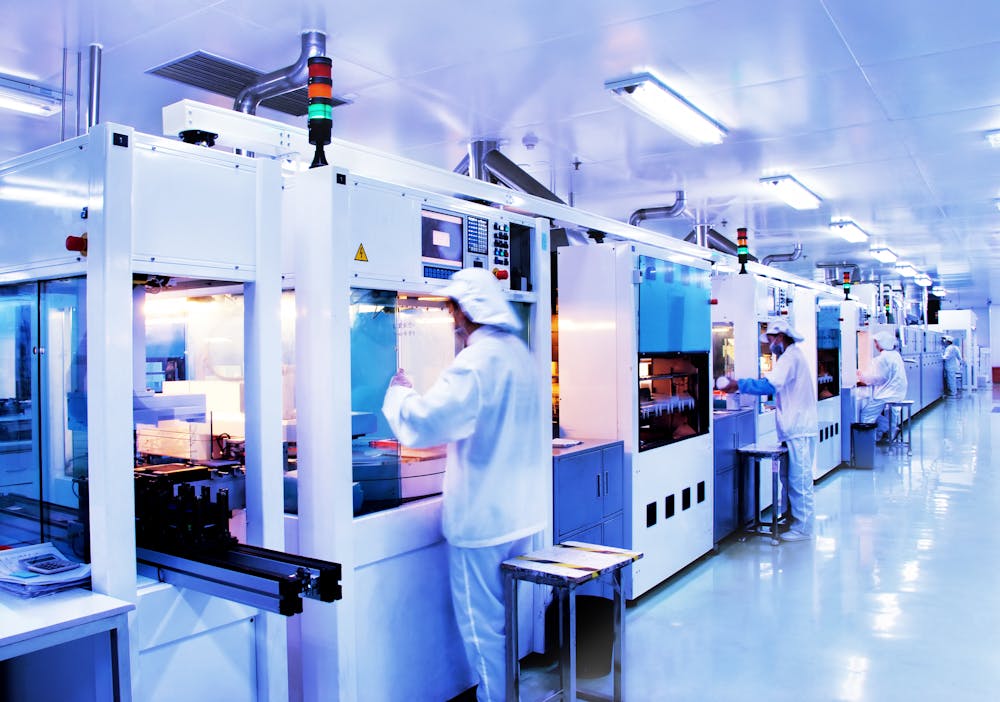 Building up our solar manufacturing capabilities will take many steps.
06photo/Shutterstock
Building up our solar manufacturing capabilities will take many steps.
06photo/Shutterstock
What are the benefits?
The government will spruik jobs in the regions, especially where retiring coal plants such as Liddell in New South Wales will take jobs with them.
But there are other benefits. We could take better advantage of the talent and research knowhow in Australia to begin building next-generation cells.
If we can kickstart a viable solar industry, it would help us unlock other parts of the green economy. Cheap and plentiful solar power could make it viable to crack water to make green hydrogen or make green steel and aluminium.
Many of these initiatives have to be set in train now to gain the benefits in five or ten years’ time. Today’s announcement is just the start. But in a sun-drenched country, it makes sense to aim for the skies.


