

Will global oil supply be at risk if Iran and Israel pull the Middle East into war?
- Written by The Conversation
Tensions in the Middle East have escalated following Iran’s weekend missile and drone attacks on Israel, heightening concerns of a wider conflict.
As with the Russian invasion of Ukraine, further conflict has the potential to destabilise oil prices and disrupt supply chains.
In Australia, already grappling with a cost-of-living crisis, the ripple effects could soon be felt.
Rising oil prices lead to increased inflation, first affecting fuel prices at petrol stations, advancing to to the prices of fresh produce and groceries delivered by truck, and finally spreading to most transactions in a connected economy.
But how concerned should we be?
The United States Energy Information Administration says Iran is responsible for about only 2% to global oil supplies, none of them coming to Australia.
Malaysia is Australia’s major supplier of oil and Singapore and South Korea supply most of our petrol and diesel. The Middle East seems too distant to matter.
But oil prices are set globally, and a small group of countries have a large impact on it.
Founded in the 1960s, the Organisation of the Petroleum Exporting Countries (OPEC) originally included Iran, Iraq, Kuwait, Saudi Arabia and Venezuela, which between them controlled the majority of global oil exports.
This meant conflicts involving OPEC members used to squeeze supplies, causing big spikes in inflation of the kind seen in the 1970s and 1980s.
Not so much today. According to the World Economic Forum, the now 13 members of OPEC produce about 40% of the world’s oil, accounting for about 60% of the petroleum traded globally.
There are more alternatives. Among the non-OPEC producers are countries like Mexico, Kazakhstan, Azerbaijan and Malaysia. In 2022 these non-OPEC producers exported respectable 16.5 million barrels a day compared to OPEC’s 28.7 million.
Iran is not the major player it used to be, especially for Western countries.
In 2019 the US and the EU imposed sanctions on Iran in response to its nuclear program and human rights violations.
Iran has employed strategies to circumvent restrictions by rebranding the country of origin of its oil, conducting tanker-to-tanker transfers and engaging getting its oil refined and resold from obscure locations. But its importance to global supply chains diminished.
China is now Iran’s primary buyer, reportedly receiving a 15% discount on oil it agrees to take as Western sanctions are enforced.
Therefore, a buoyant US economy and a recovery in Chinese markets have a larger impact on oil prices than the current escalation of the Middle East conflict. To a point.
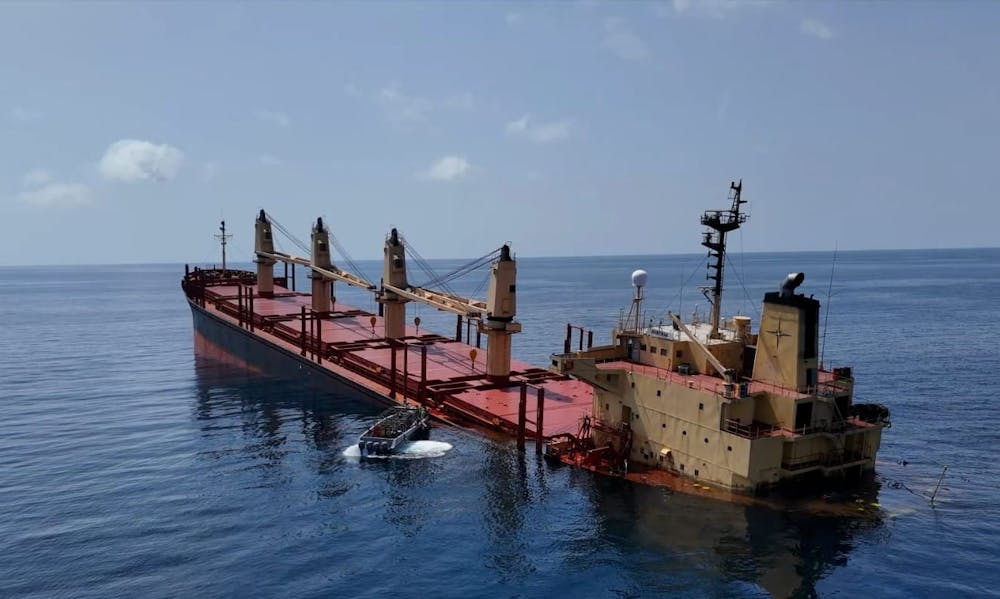
Iranian support of Houthi militants in Yemen leading to attacks on merchant ships late last year reduced shipping traffic in the Suez Canal by about 50%, according to the International Monetary Fund. Most of the remaining traffic involves oil tankers.
If Israel hits back at Iran’s weekend drone and missile attack and Iran retaliates by disrupting the Strait of Hormuz – a narrow waterway nearby through which a quarter of global maritime oil trade flows – global oil markets will face a major choke point.
This could be mitigated by exporters using more time consuming routes, but the damage to oil prices could be significant and long-standing. There are not many alternative routes from main production sites to Western countries.
If logistics are affected, consumers may face shortages once again. And Australia is not in a great position to weather that.
Despite being a member of the International Energy Agency, Australia does not maintain oil stocks equivalent to at least 90 days of consumption, as required.
According to Australia Petroleum Statistics, current diesel stocks are estimated to last only about 26 days, with petrol stocks close behind at 27 days.
Furthermore, refinery production on Australian soil has significantly decreased; from producing about 15.1 billion litres of gasoline in 2013 to only 5.7 in 2023, a drop by about two-thirds.
There is no need for alarm as long as Australia’s response to a major crisis is fast and effective.
To be prepared, the government should prioritise securing oil supplies from reliable, nearby partners, take measures to prevent panic buying, be ready to increase domestic production and encourage industry to develop robust business continuity plans.
With these initiatives in place, Australia will be well prepared to handle any potential crises that may arise.


