Beyond the spin, beyond the handouts, here’s how to get a handle on what’s really happening on budget night
- Written by The Conversation
Three weeks from now, some of us will be presented with a mountain of budget papers, and just about all of us will get to hear about them on radio, TV or news websites on budget night.
The quickest way to find out what the budget is really doing will be to listen to the treasurer’s speech, or to peruse online the aptly-named “glossy” – a document that last year was titled “Stronger foundations for a better future”.
But they will tell you exactly what the government wants you to hear, exactly as it wants you to hear it.
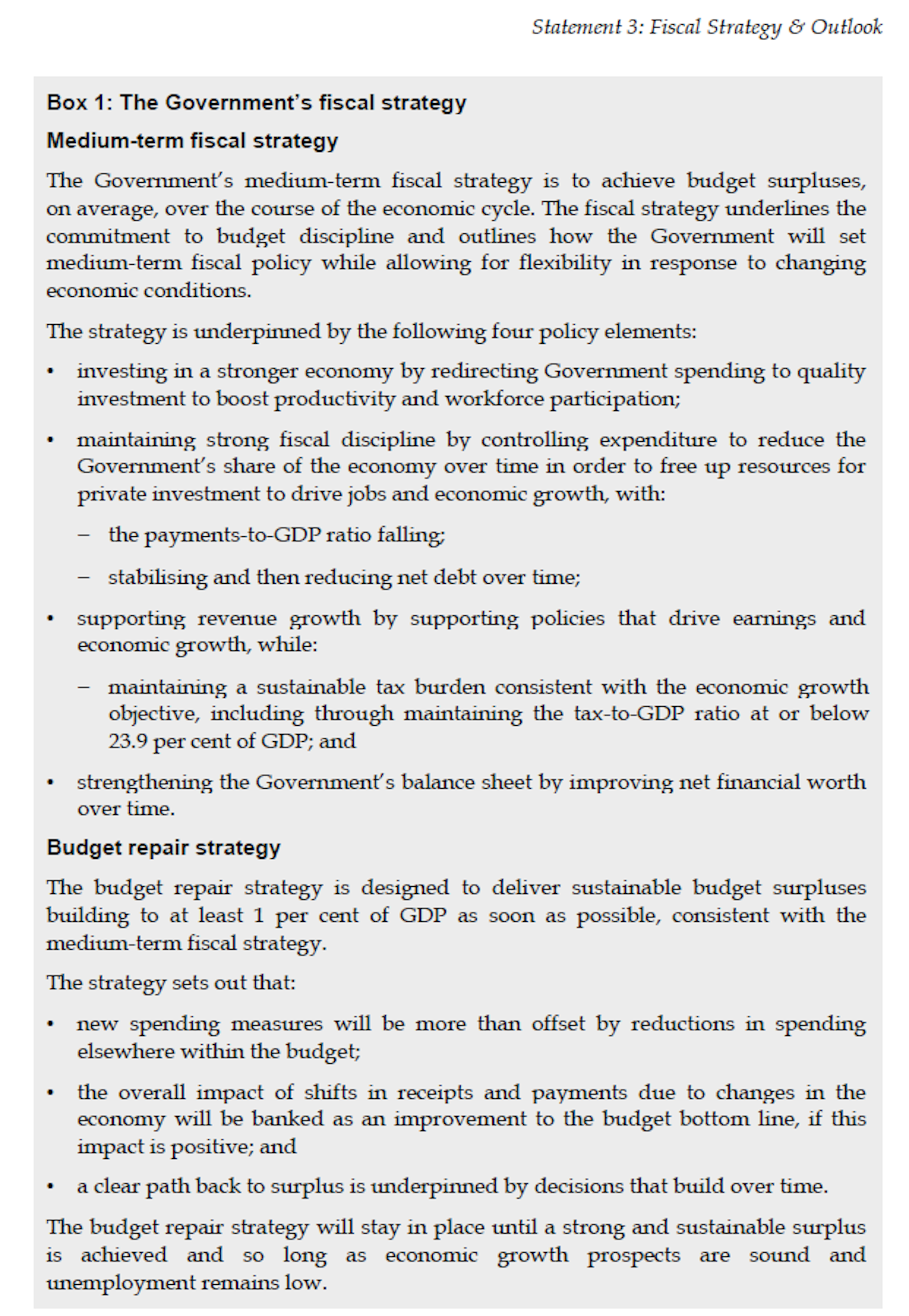
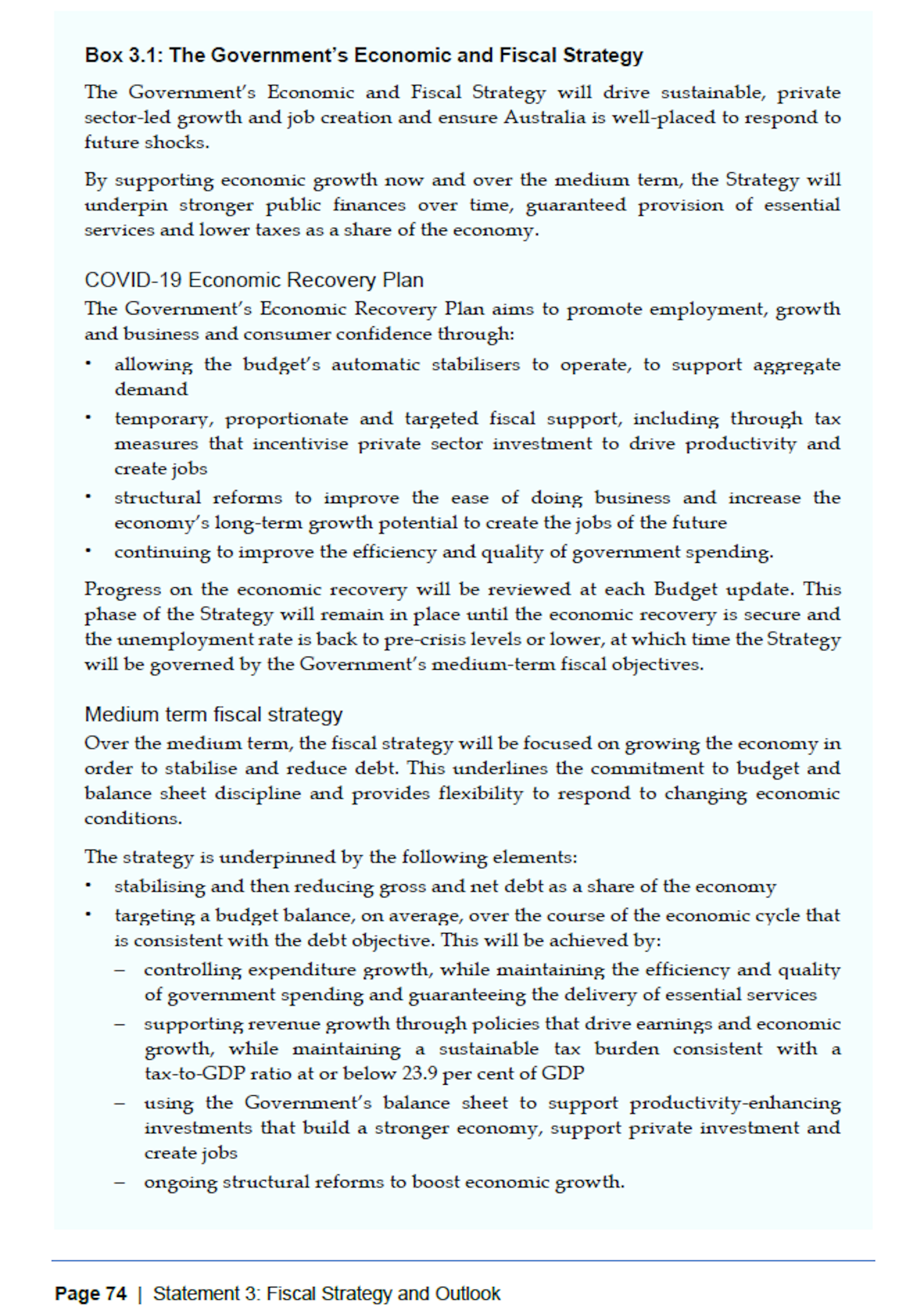
If you are looking instead for the truth – what the government is actually trying to achieve and what it is holding itself and its officials to, I would suggest something else, tucked away on about page 87 of the main budget document.
It is required by the Charter of Budget Honesty Act introduced in 1998 by Peter Costello, the treasurer under Prime Minister John Howard.
On taking office in 1996, Costello set up a National Commission of Audit to examine the finances he had inherited from the Hawke and Keating governments, presumably with an eye to discovering they had been mismanaged.
But the members of the commission weren’t much interested in that. Instead, they decided to deal with something more fundamental.
Budget as you wish, but explain your strategy
Governments were perfectly entitled to manage money in whatever way they wanted, and they were perfectly entitled to spend more money than they raised (which they usually do, it’s called a budget deficit).
What the commission wanted was for governments to make clear what they were doing, and to spell out the strategy behind it.
Only part of it was about being upfront with the public. The commission also wanted governments to be upfront with themselves – to actually develop frameworks for what they were doing, rather than doing whatever they felt like.
The commission recommended a Charter of Budget Honesty, which among other things requires officials to prepare independent assessments of the finances before each election, requires budget updates six months after each budget, and requires tax expenditures (tax breaks) to be accounted for like other expenditures.
And it requires the publication and regular updating of a fiscal strategy statement.
Where treasurers hold themselves accountable
The fiscal strategy can be thought of as an exam question set by the student who is being examined – something along the lines of “this is what you say you want your budget to achieve, please set out the means by which you plan to achieve it”.
It turns out to have been exceptionally effective in getting governments to organise their thoughts, make budgets at least try to achieve something, and let the rest of us know what they are trying to achieve.
Every few years, treasurers change the strategy, as is their right. Treasurer Jim Chalmers says he’ll change it again this budget, to de-emphasise the fight against inflation and to more greatly emphasise the need to support economic growth.
His statement will tell us what’s behind his actions in a way the glossy words in his brochure and speech might not.
The strategy that has signposted 26 years
 Treasurer Peter Costello published the first fiscal strategy.
Alan Porritt/AAP
Treasurer Peter Costello published the first fiscal strategy.
Alan Porritt/AAP
Previous statements have signposted all the important turns in what the budget is trying to do.
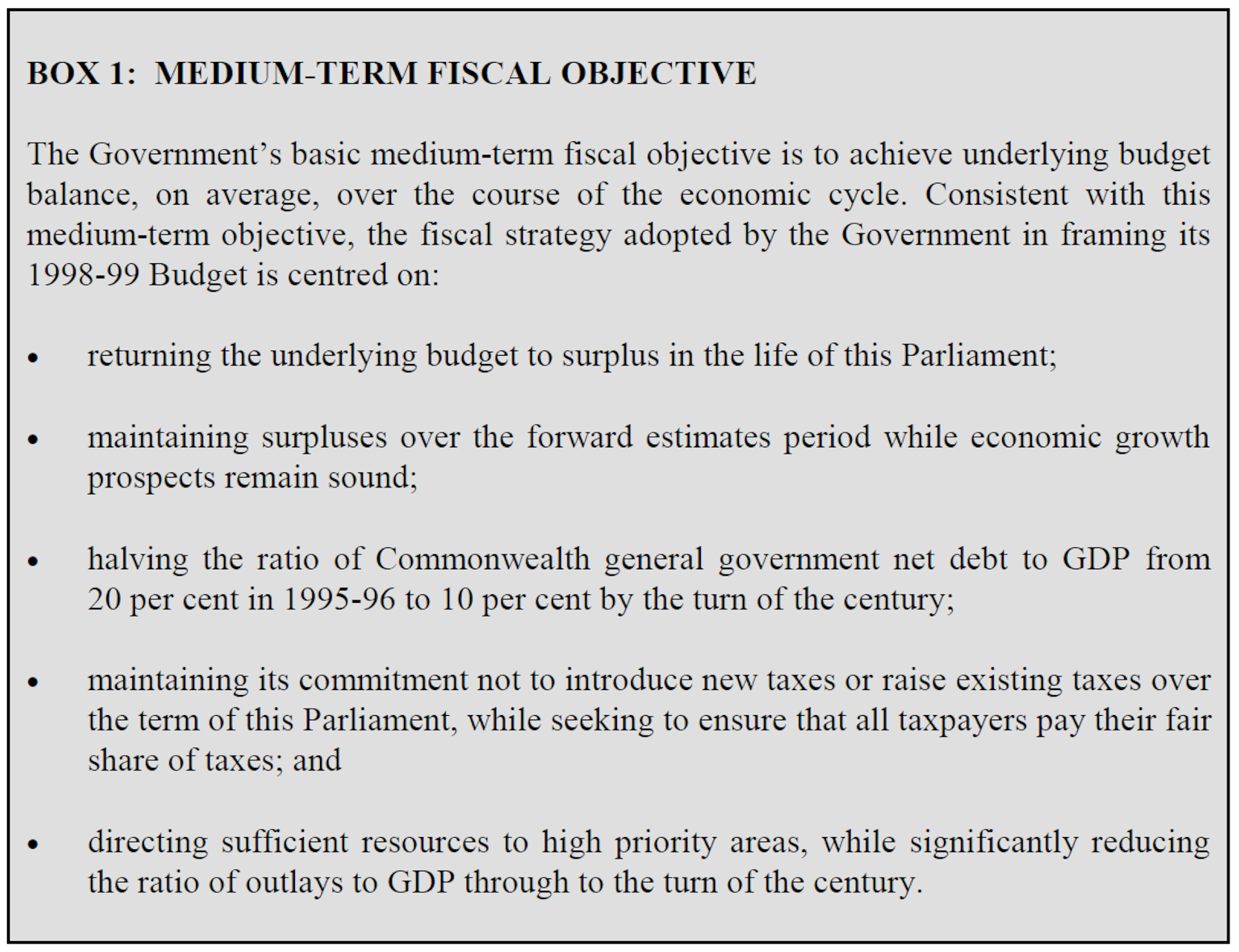
The first, in 1998, committed Costello and Howard to achieving a budget surplus on average over the economic cycle and whenever “growth prospects remain sound”.
Making that commitment more difficult was another “not to introduce new taxes or raise existing taxes over the term of this parliament”.
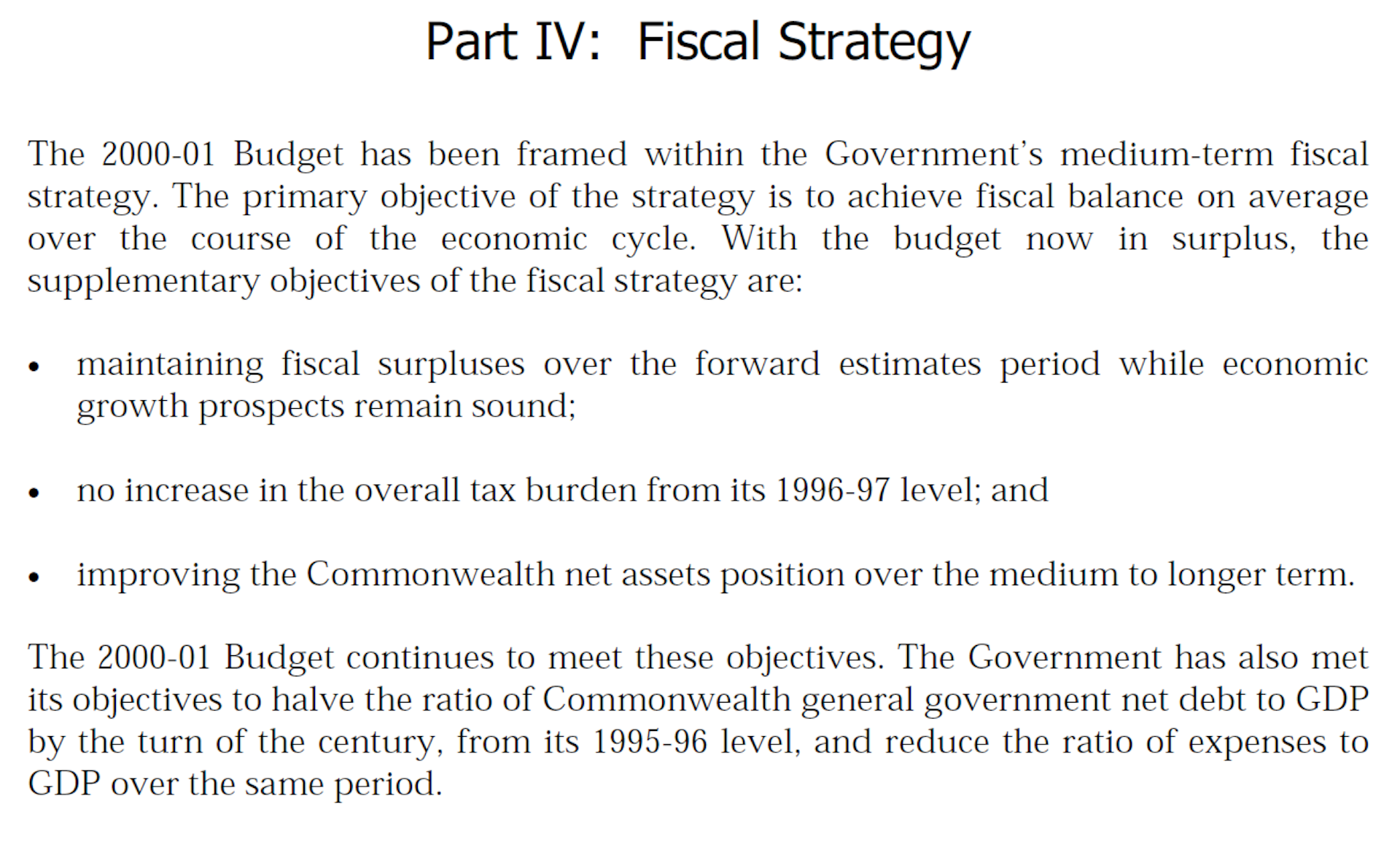
Two years later, after the government had won an election promising a new goods and services tax, that commitment was changed to “no increase in the overall tax burden from its 1996-97 level”, a condition met by calling the GST a state tax.
Hockey and Morrison wound back spending
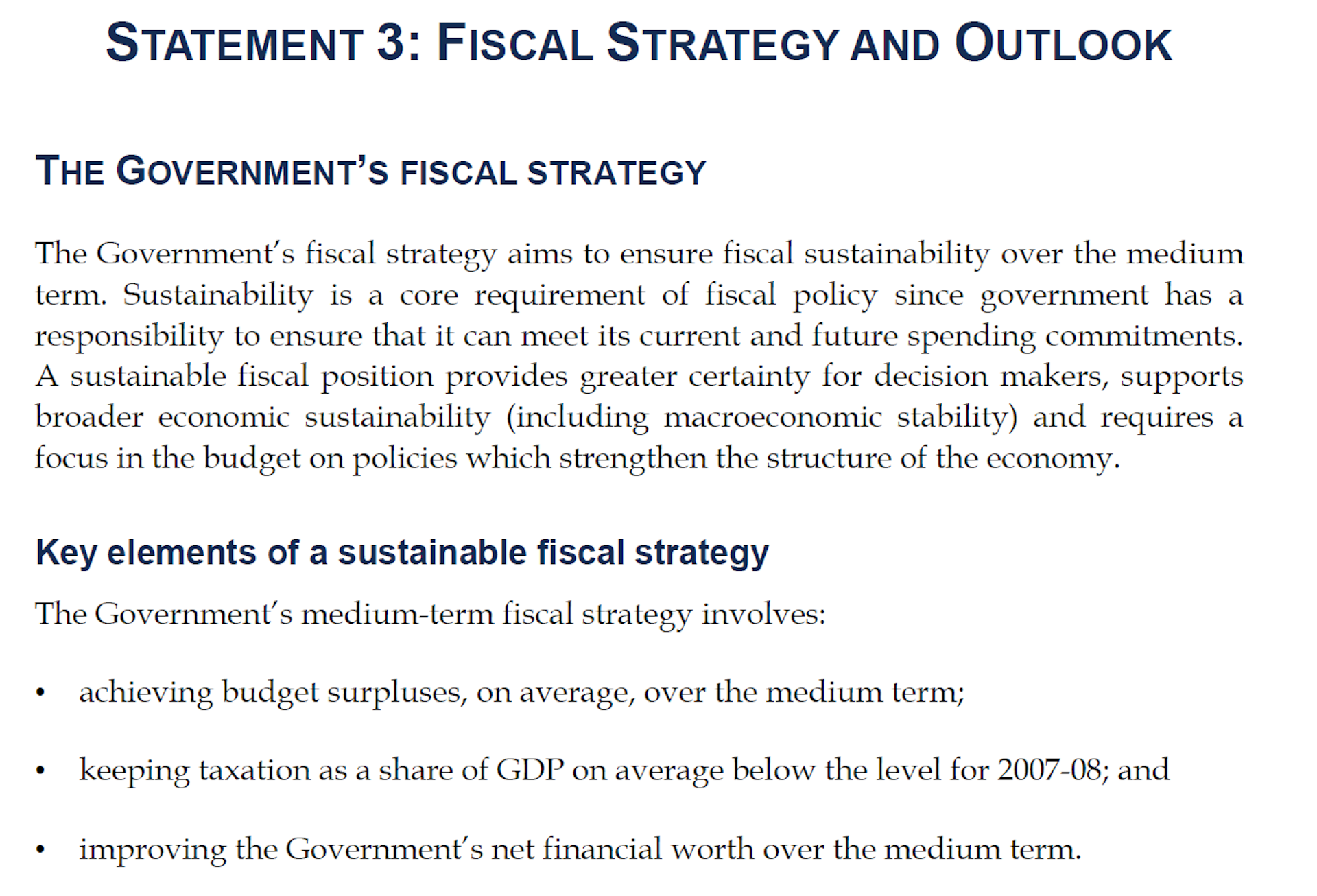
The Labor budgets from 2008 loosened the tax target to the average share of GDP below the reference year, which they changed to the higher-tax year of 2007-08.
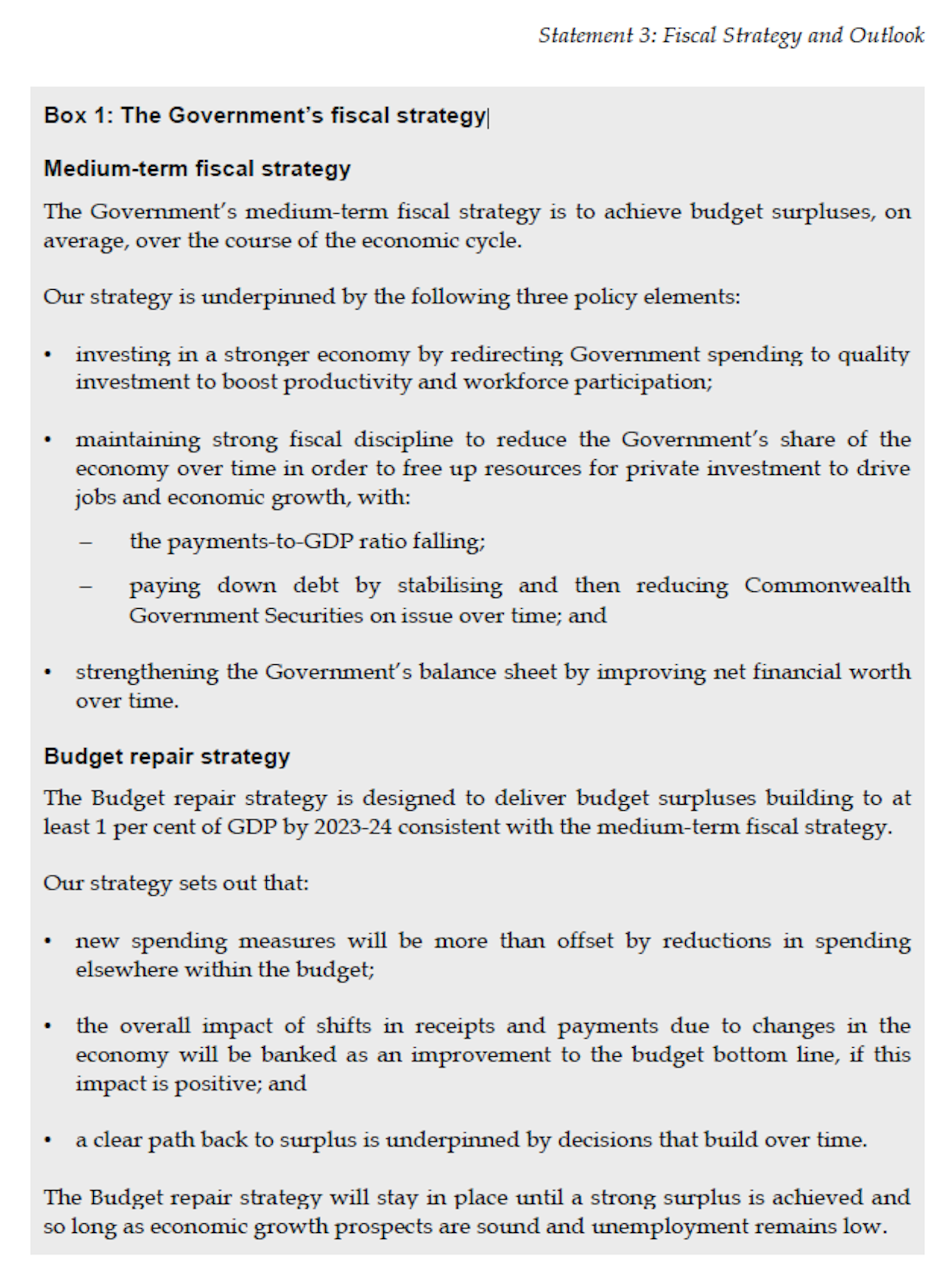
The first Coalition budget under Treasurer Joe Hockey in 2014 changed the target from tax to spending, pledging to bring down the ratio of payments to GDP, and pledging a surplus of 1% of GDP by 2023-24.
Any new spending would be more than offset by cuts elsewhere, and if the budget did receive a burst of unexpected revenue it would be “banked” rather than spent.
In 2018 Treasurer Scott Morrison reintroduced tax as a target, that he spelled out precisely. Tax was not to increase beyond 23.9% of GDP.
During COVID, Frydenberg spent big
 Frydenberg pushed unemployment well below 6%.
Lukas Coch/AAP
Frydenberg pushed unemployment well below 6%.
Lukas Coch/AAP
In 2020, in the face of a COVID-induced recession and soaring unemployment, Finance Minister Mathias Cormann and Treasurer Josh Frydenberg pushed the old strategy to one side.
They would spend big now to keep the economy afloat so they wouldn’t have to spend more bailing it out later, and they wouldn’t return to their old concern about the deficit until the unemployment rate was “comfortably below 6%”.
So well did they succeed that in 2021 Frydenberg made the momentous decision to keep going, abandoning the promise to return to worrying about the deficit when unemployment fell below 6%.
Instead he promised to keep spending big until unemployment was “back to pre-crisis levels or lower”.
The decision propelled unemployment down to a 50-year low of 3.5%.
Read more: Frydenberg spends the bounty to drive unemployment to new lows
Along with high iron ore prices, that one change of strategy has probably helped deliver Chalmers two consecutive budget surpluses – the one he announced last year for 2022-23, and the one he is set to announce this year for 2023-24. More of us have been in jobs paying tax, and fewer have been out of jobs on benefits.
It’s a powerful demonstration of the real-world difference budget decisions can make, and the way in which the fiscal strategy tells the story.