

Southern Australia is freezing. How can it be so cold in a warming climate?
- Written by The Conversation
People living in southern Australia won’t have failed to notice how cold it is. Frosty nights and chilly days have been the weather for many of us since the start of July.
As winter continues, we are left wondering how unusual the cold is and whether we can expect several more months of this. Warmer conditions are in the forecast but winter has a long way to go. Further cold snaps could occur.
Cold conditions have been in place across southern Australia for the past few days. Temperatures have fallen below zero overnight in many places.

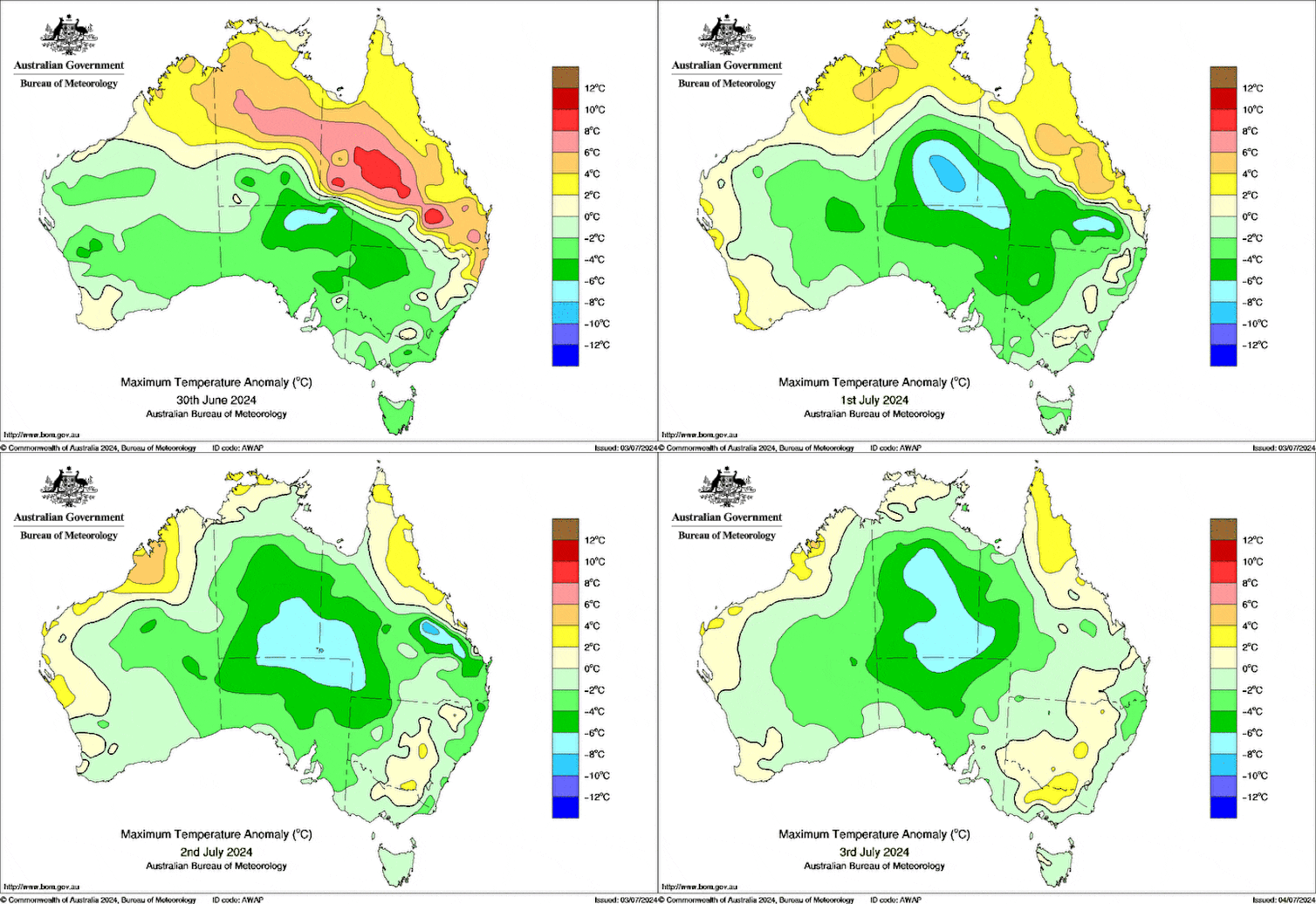
It’s not just the nights that have been cold. Maximum temperatures have also been below or well below average across most of the country.
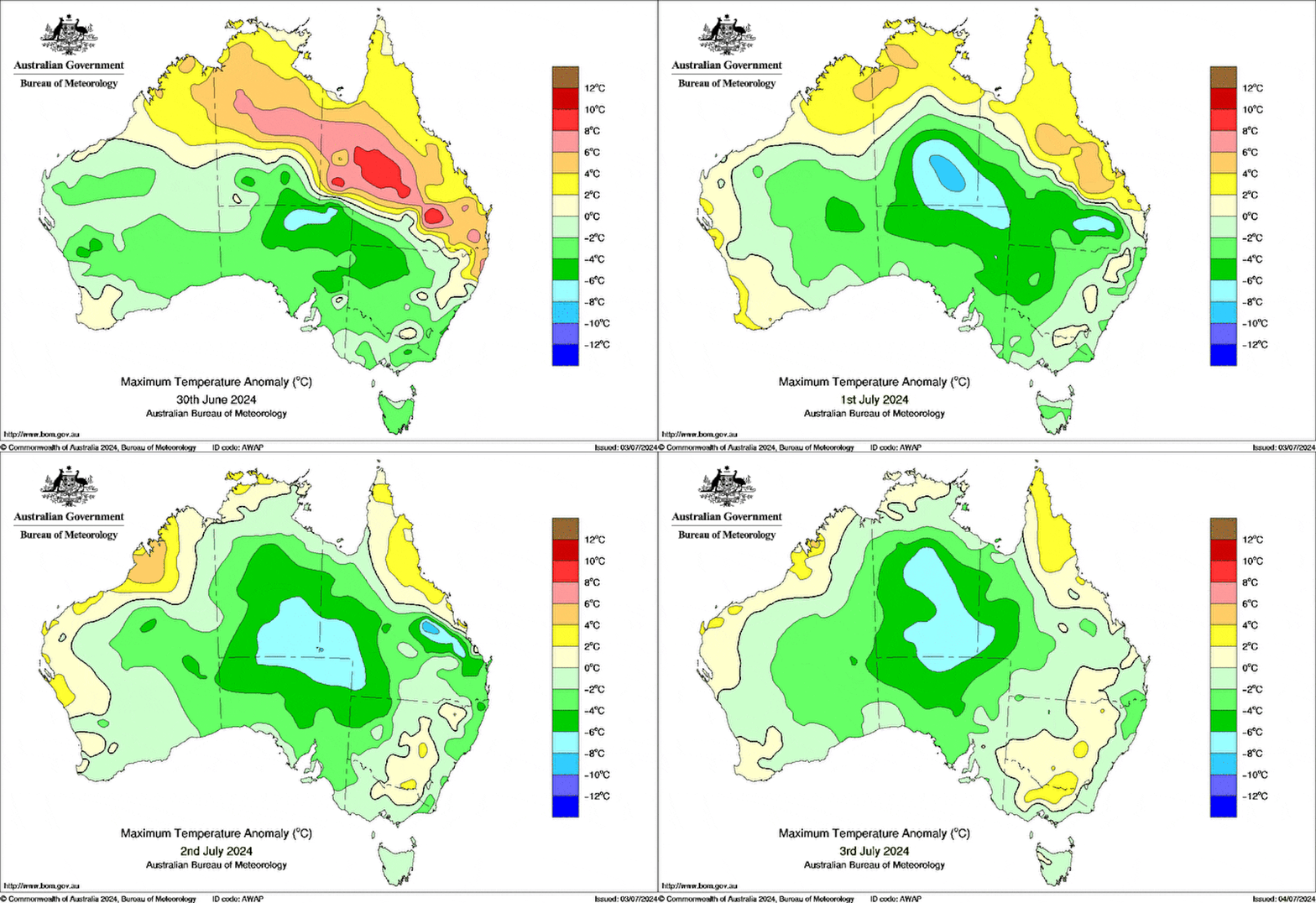 Maximum temperatures have been below average across most of the continent since the last day of June.
Bureau of Meteorology, CC BY
Maximum temperatures have been below average across most of the continent since the last day of June.
Bureau of Meteorology, CC BY
What’s causing the cold?
A persistent and strong high-pressure system has been hanging around over southeast Australia. The atmospheric pressure was so high it approached the Australian record of 1,044.3 hPa set on June 7 1967. An initial observation of a new record has since been disregarded, but nonetheless this is an exceptional, near-record high-pressure pattern.
This high-pressure system has kept the weather dry but clear nights have allowed strong cooling of the land surface. The long nights and short days of early July mean that temperatures struggle to rise during the day and can fall quickly in the evenings.
In winter we expect cold weather across most of Australia and occasional cold snaps that bring widespread frosty and icy conditions. However, this current cold weather is pretty unusual and we are seeing some records fall.
Notably, Tasmania has had its lowest July temperature on record and the second-lowest minimum temperature for any time of year with –13.5°C at Liawenee in central Tasmania early on Thursday morning.
While Tasmania has produced the most remarkable records, the cold conditions have been unusual elsewhere too. Adelaide recorded its lowest temperature in 18 years on Wednesday morning. And many suburbs of Melbourne experienced a sub-zero night and consecutive nights of ground frost.
Winters are warming but cold spells still occur
As the world is warming, it might seem surprising we can still break cold records. Indeed, across Australia winters have been warming. The frequency and intensity of very low temperatures have been decreasing over the past few decades.
We also see many more hot records than cold records being set in Australia and around the globe. This is due to human-caused climate change. However, when we have the right weather conditions, cold records are still occasionally broken locally.
As we continue to warm the planet, it’s getting harder for us to find cold records, particularly over larger regions or longer time periods. While we still see record cold temperatures at individual weather stations, we won’t see another cold record in the global average temperature and probably not even in the Australian average temperature.
As this week shows, we still occasionally get daily cold records in the current climate. But it’s much harder to get record cold months, and record cold years at a given location are almost impossible.
As we average weather conditions across locations or over time, the climate change signal becomes clearer over background weather variability. It makes new cold records much less likely to occur.
 The climate change signal is becoming clearer as Australia’s annual average temperature continues to increase with each decade, widening the difference from the long-term mean.
Bureau of Meteorology, CC BY
The climate change signal is becoming clearer as Australia’s annual average temperature continues to increase with each decade, widening the difference from the long-term mean.
Bureau of Meteorology, CC BY
How much longer will this cold snap last?
Southern Australia is experiencing a cold snap at close to the coldest time of year. It’s not long after the winter solstice, when we experience the longest night of the year. We still have a few more cold days and nights ahead in parts of southeastern Australia.
By early next week, the forecast suggests warmer conditions will return as the high-pressure system moves east and winds turn northerly.
The outlook for the rest of winter points firmly to above-average daytime and night-time temperatures. This is partly because a historical average (1981–2018) is used and warming since then means above-average temperatures are going to happen most of the time.
In any winter, Australia has cold outbreaks. So, even if the next few months are likely to be warmer than normal, we should expect a few cold days and nights at some point. Learning to live with the cold and improving the quality of insulation in Australian homes would help make our winter cold snaps seem a lot less harsh.


