

Maggie Beer’s aged care eating mission is feel-good TV – but is it a recipe for real change?
- Written by The Conversation
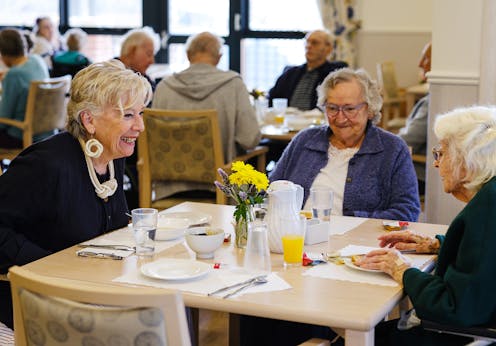
Australian celebrity cook Maggie Beer has long been an advocate for better quality meals in aged care. It led her to a four-month immersion in an aged care residence with the goal of transforming the meals and dining experiences there.
She and the producers of a three-part ABC documentary series, Maggie Beer’s Big Mission, which will premiere and stream from tonight, hope it will spark nationwide change.
The program was motivated by the high levels of neglect, malnutrition and social isolation identified by the Royal Commission into Aged Care Quality and Safety and a new rights-based Aged Care Act, which is currently being drafted.
Our team of speech pathologists, occupational therapists, dietitians, and researchers had a behind-the-scenes view of this “social experiment”. We helped evaluate its impact for residents and staff, to understand how other centres could use the same evidence-based approach.
Turning problems into solutions
The experiment took place in a section of Meath Care’s Dr Mary Surveyor Centre in Kingsley, Western Australia, home to 44 residents.
At the start of the experiment 78% of residents evaluated were at risk of malnutrition or malnourished and 46% experienced depression. These figures are confronting yet not unusual based on previous studies and the Royal Commission estimate that 68% of Australians in residential aged care are malnourished or at risk of becoming so.
The program hopes to provide a model for other aged care residences.Maggie, aged 79, and her team of experts worked alongside staff and residents to design and implement a new model of mealtime care. This included:
- making meals more nourishing, flavoursome and visually appealing, with increased protein and fresh ingredients
- giving residents variety, choice and independence with a buffet-style offering
- involving residents in mealtime roles such as setting tables and restocking supplies
- creating a calmer, more dignified and social mealtime experience.
These sound like simple changes, but they can be challenging given budget adjustments, physical renovations and staff training and support. Resident and staff responses revealed a pathway to better nutrition and socially engaging care.
Here’s what the experiment showed can work:
1. Influential leadership
Maggie Beer has championed this issue, modelling humility and openness to learning. She fronted a team with a shared vision – “to make every mouthful count”.
She shows leaders can work alongside staff to understand the challenges and identify solutions, share accountability for change and celebrate success.
2. Questioning habits and the status quo
Just because meals have always been prepared or served in a certain way, doesn’t mean it’s the best way. Standards of care can be re-imagined and the evidence translated into resident-centred care.
What the program shows is small changes (like making one’s own fresh toast, served hot) can make a difference to choice and mealtime enjoyment.
It also means being flexible enough for different needs and safety considerations. For example, texture modified diets – food textures that improve safety for residents with swallowing difficulties – can be hard to get right. But that doesn’t mean change can’t happen. As one senior staff member noted, there is dignity in having the same meal as others:
Traditionally, the aged care puree diet would be yesterday’s food or batch prepared and put in the freezer. Now, having the same food cooked out of the same oven and then modified, for me, I think that runs to dignity.

3. Experiencing change
Maggie and her team provided more than 175 hours of training to staff. Topics included nutrition, swallowing, oral health, as well as leadership and person-centred care.
Coaching, mentorship and support in the kitchen and dining room was also provided.
Staff valued seeing, feeling and experiencing the benefits that flowed from new ways of facilitating residents’ choice and independence during meals. This built momentum and shifted mindsets. As one care worker said:
[…] you don’t realise how independent some people [residents] can be. They’ve never had the opportunity. They never cease to amaze me about what they can do if they’re given the opportunity.
4. Harnessing mealtime expertise
We know there is not enough access to allied health care in residential settings. This means residents don’t always get the support of occupational therapists, dietitians or speech pathologists when they need it.
The series shows bringing allied health expertise into the dining room can enhance residents’ health and wellbeing. Mealtime interventions – making therapeutic changes such as suitable eating implements, modified diets and textures or assistance with eating in a real-life context – helps care staff see the residents’ potential.
5. Keeping the model going
The program and the changes it brought were not without tension. But these were viewed as a positive sign of change.
As part of the recipe for change it is important to set staff up for success, providing the knowledge, tools (such as self-assessments and mealtime auditing) and ongoing support to sustain change and recognise if the quality of meals and dining experiences are slipping. As one team leader said:
I’m probably most proud of the way the staff have been able to adapt […] I’m proud of how they’ve stood up and said, oh, hang on a minute, we’ve all learned that this is not a really good way of doing it.
Will it work on a bigger scale?
This real-life experiment successsfully improved residents’ appetite, mealtime satisfaction and mood, with full results being prepared for publication.
The standard of mealtime care was lifted with many residents enjoying increased choice and independence, as one resident said:
I can see what I’m getting, and I can get what I want.
It is a model that can be adopted nationwide if aged care organisations invest in the vision, training and ongoing support for staff to make the necessary change.
Tools have been created for other aged care organisations to replicate the model, considering self-service options for example.
We all have a role to play in supporting this mission and lifting the standard of care – ensuring residents are nourished, socially engaged and active partners in their care.


