

As the Paris Olympics try to go green, NZ sports bodies are stuck in the starting blocks
- Written by The Conversation
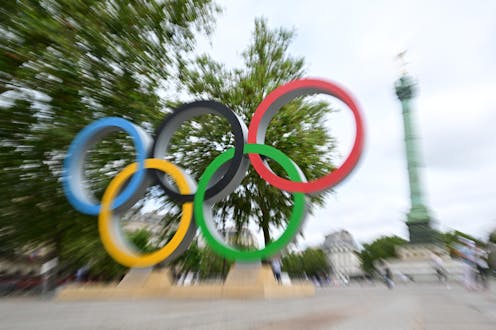
It’s one thing to aspire to be the “greenest games in history”, quite another to achieve it. While the Paris Olympics are responding to the threat to sport from the climate crisis, they also highlight the contradictions inherent in making global sport a platform for climate action.
Average temperatures in Paris are set to be 2.4–2.7°C higher than in 1924 when the city last hosted the games. Although the possibility of an extreme heatwave worried organisers, so far they’ve mostly contended with soggy skies and flood warnings.
But while the spotlight is on Paris, the impacts of climate change – higher temperatures, changes in rainfall patterns and extreme weather events – are already hitting the wider sporting world.
In Aotearoa New Zealand, the effects of climate change on sport are already evident. During the 2022–23 cricket season, for example, half of all recreational games were washed out in some areas. The future of snow sports is particularly uncertain as winter temperatures rise.
But sport is not an innocent victim in all this. The sports industry, and mega-events such as the Olympics in particular, have a substantial carbon footprint, and are showing few signs of scaling back their operations.
Sustainable sport
To be fair, the International Olympic Committee (IOC) adopted ideas of sustainability relatively early. In 1994, “environment” joined “sport” and “culture” as the third pillar of the Olympic movement.
And in 1996, the Olympic Charter was amended to include concern for the environment. Cities vying to host the games are also required to address environmental issues.
As a result, sustainability has become an essential part of Olympic hosting bids. Paris has taken this to a new level, with organisers promising to halve the carbon footprint of the London and Rio de Janeiro games.
This emphasis on “climate positivity”, they say, will also “supercharge” green initiatives in the city, make Paris 2024 the “greenest games in history”, and show “another model is possible”.
Other sporting organisations have followed the IOC’s lead. Of the 36 Summer Olympic sports federations, 17 have a sustainability strategy, and 23 have signed the United Nations Sports for Climate Action framework, which commits signatories to halve their emissions by 2030 and aim to reach net zero by 2040.
Extra challenges for New Zealand
Sporting organisations in Aotearoa New Zealand, however, have barely got off the environmental starting line.
The New Zealand Olympic Committee (NZOC) does not have a sustainability strategy. Moreover, of the 56 member federations identified by NZOC, only Yachting New Zealand and Golf New Zealand have their own sustainability strategies.
Notably, although Yachting New Zealand’s strategy is well developed, neither attempts to quantify their carbon footprint or address the impact of travel.
Equally, just ten member organisations even mention environmental sustainability in their latest strategic plans. The situation is similar among non-Olympic professional sporting organisations and leagues. Neither the New Zealand Warriors nor the Wellington Phoenix, for example, have published sustainability strategies, although the New Zealand Breakers have detailed a commitment to a “thriving environment”.
Realistically, genuine environmental action is difficult for New Zealand sport. Given the county’s geographical location, teams and competitors have no option but to travel long distances, as do visitors wanting to compete here.
Indeed, New Zealand’s remoteness means our per-capita emissions from air travel are the sixth highest in the world, and even travelling regularly to compete in Australian leagues produces a substantial carbon footprint.
Sport New Zealand has shown a willingness to drive this kind of action, sponsoring an environmental sustainability award. But reducing travel and international competition would have obvious repercussions. Perhaps tellingly, the commonest reference to “sustainability” by New Zealand sporting organisations is in a financial context, not an environmental one.
Another model?
These practical challenges to implementing noble goals have seen the sustainability in sport movement accused of “greenwashing gold”. And the Paris Olympics have been criticised for a “lack of transparency and precision” in measuring and reporting on their green goals.
Previous Olympics have also demonstrated that pledges and visions are not the same as outcomes, with environmental initiatives poorly monitored overall. The environmental and climate impacts of the 2014 Sochi Winter Olympics and 2022 FIFA World Cup in Qatar show how far mega-sport has to go.
Indeed, the Paris games will still produce 1.5 million tonnes of carbon – roughly comparable to Fiji’s entire annual emissions, with around half coming from international travel.
There have even been calls to halt the Olympics, or at least reduce their size, due to the climate crisis. Like global sport in general, the games are caught in the same tension between ecological sustainability and economic growth that hinders all attempts to combat climate change.
If commercial sport continues to encourage mass international travel from spectators and participants, as well as expanding fixtures and events in search of ever larger media audiences, its environmental initiatives will always fall short.
This may be especially true for a small, remote country like New Zealand. The claim by Paris that “another model is possible” might turn out to have a very different meaning than intended.


