

Imagine it's 2030 and Australia is a renewable energy superpower in Southeast Asia
- Written by The Conversation
We are into the final fortnight of the election campaign, and commentators have noted that climate change has been almost invisible. This is despite the latest IPCC report in April calling for urgent action to avoid catastrophic climate change.
So what would a positive vision for Australia as a climate leader look like?
Fast-forward 8 years
Imagine it’s 2030. Australia is a renewable energy superpower helping meet Southeast Asia’s energy needs. It exports renewable energy via cable from northern Australia and ships green hydrogen first from Queensland and Tasmania, and then from all around the country.
It is a significant exporter of green commodities - such green steel produced with renewable energy - and the critical minerals used in renewable technology such as solar panels and electric vehicles. It works closely with the region on climate risk assessment and disaster preparedness.
Seem fanciful? Not necessarily.
Southeast Asia’s needs
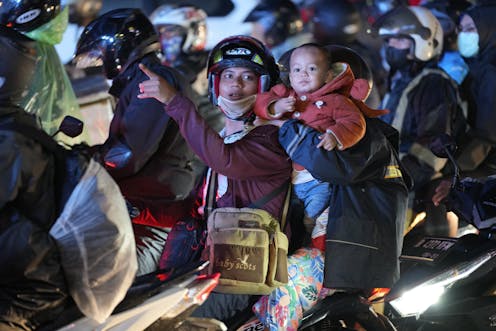
Southeast Asian countries are highly exposed to the effects of climate change, with ASEAN rating Southeast Asia as one of the world’s most at-risk regions. Southeast Asia is already experiencing the growing intensity and magnitude of extreme weather events including flash floods, forest fires, landslides and cyclones - and the economic, environmental and social damage they cause.
In an era of climate disasters, Australia needs to avoid getting caught in a spiral of simply responding to events. As one of the primary security threats of this century, we know climate change is a huge challenge for Australia’s strategic and foreign policy. But it is also an opportunity.
Southeast Asian countries will increasingly be looking for renewable energy sources, green commodities, critical minerals and associated technologies and infrastructure, with countries as diverse as Singapore, Vietnam and Cambodia and Laos all putting in place national green growth plans.
Australia’s resources
Australia should be in a position to facilitate this. It has a major competitive advantage thanks to its renewable energy resources.
One provider, Sun Cable, estimates its undersea cable from Darwin could provide up to 15% of Singapore’s electricity supply.
Australia’s natural endowment of nickel, copper, lithium and cobalt are critical to the development of solar panels and electric vehicles (which in turn can lead to job creation in raw materials, technological development and service delivery).
Read more: IPCC says the tools to stop catastrophic climate change are in our hands. Here's how to use them
Southeast Asian countries are looking for partners in their energy transition not just within ASEAN but among other countries. Australia’s recent green economy agreements with Singapore, Indonesia and Vietnam demonstrate this. But there are other countries who could also take advantage of this market. For example, major players in hydrogen include Japan, Korea, China and Germany.
There are barriers to overcome
To achieve this, Australia will need to overcome ambivalence and inconsistency around climate and energy policy. This has led to uncertainty for energy market operators meaning they can’t plan and commit to major projects.
In many Southeast Asian countries, there are also vested interests and political calculations that create barriers. For example, there are strong political incentives to subsidise fossil fuels in some countries that have to be managed, as Indonesia did when it scrapped petrol subsidies.
Finding ways for those who currently benefit from fossil fuel to benefit from renewables may be necessary to help them transition.
A window of opportunity
There is a window of opportunity for Australia to become actively involved in influencing Southeast Asian economies towards sustainable infrastructure and renewable energy sources.
Australia could use blended finance - where development finance attracts private finance - to support investment. For example, blended finance into Indonesia’s emerging car battery industry could help it become a global electric vehicle manufacturing hub, both securing a critical tech supply chain and expanding export markets for Australian lithium.
Government has a role in compiling and promoting up-to-date assessments of regional needs and Australia’s opportunity to supply these, including in critical minerals, green steel, green aluminium and hydrogen. As industry becomes more aware of the opportunities for Australian renewable exports, the volume will rise.
Australia should also work with regional bodies on related policy issues, including standards, certification and regulation and with Southeast Asian governments on policy creation and regulation. Australian can share its expertise around energy market design to assist with development of a region-wide ASEAN electricity market.
The pathways are there for Australia to be a significant partner to achieve the global goal of net zero by 2050 in Southeast Asia, a region that will be a litmus test for the rest of the world.
Read more: As Asia faces climate change upheaval, how will Australia respond?


