

Locking up young people might make you feel safer but it doesn’t work, now or in the long term
- Written by The Conversation
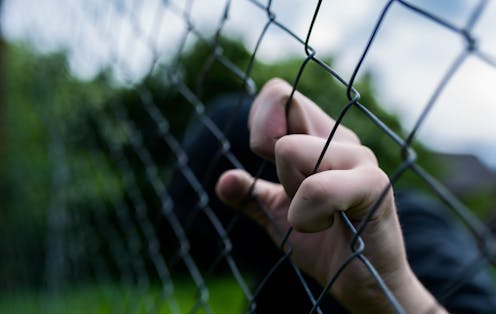
This article contains information on deaths in custody and the violence experienced by First Nations people in encounters with the Australian carceral system. It also contains references to and the names of people who are now deceased.
The treatment of Australia’s children and young people is back on the national agenda.
The inquest into the death of 16-year-old Yamatji boy Cleveland Dodd in Casuarina Prison has unveiled systemic failings in the Western Australian government’s management of youth justice. The former head of the Department of Justice deemed it “institutional abuse”.
Late last week, another 17-year-old boy was reported to have died in WA’s Banksia Hill Detention Centre.
In Queensland, the Inspector of Detention Services recently reported children and young people at Cleveland Youth Detention Centre were spending extended periods (more than 20 hours) in solitary confinement, either in their rooms or in designated separation rooms with no toilet, no running water and no furniture. Six young people were in “separation” for more than 71 consecutive days.
If there is a sense of déjà vu, it’s because we have been here many times before. These problems have been endemic to imprisoning children and young people throughout Australia for at least the past decade and a half.
And yet, we’ve seen political attempts to curb youth crime by lowering the age of criminal responsibility and putting more young people behind bars. Time and evidence have shown us while these messages appeal to the public’s genuine desire for safety, they don’t make us any safer at all.
The politics of youth crime
The new Country Liberal Party government in the Northern Territory wants to lower the age of criminal responsibility to ten, to change bail laws and introduce boot camps.
It comes off the back of widespread community concern about law and order during the election campaign.
In the lead-up to the Queensland election, both Labor and the Coalition are racing to outdo each other to adopt more punitive law and order policies towards young people.
The Coalition launched its “adult crime, adult time” policy which would see children and young people tried as adults for serious crimes.
The state Labor government recently passed a bill which, among other changes, waters down the sentencing principle of detention as a last resort.
The Queensland Human Rights Commission said the changes will likely increase criminalisation, increase the numbers of children held in youth prisons and police watch houses, and have a disproportionate impact on First Nations children.
Expectations vs reality
Politically inspired law and order policies operate in a parallel universe to the real effects of criminalisation and imprisonment.
For example, we know a low age of criminal responsibility is contrary to human rights standards, out of kilter with most countries, contrary to what we know of children’s developmental stages, and entrenches children in the criminal legal system.
Read more: Can a 10-year-old be responsible for a crime? Here's what brain science tells us
At the same time, it doesn’t build safer communities.
Nearly three-quarters of children aged 10–13 who were sentenced to community-based supervision returned to the youth justice system within 12 months.
Although First Nations children are overrepresented throughout the youth justice system – being 23 times more likely than non-Indigenous children to be under some type of supervisory order – First Nations children are especially overrepresented among younger cohorts.
Contact with youth justice at an earlier age means children become entrenched in the criminal legal system and increases the likelihood of future imprisonment.
It also has a disproportionate impact on young children from the child protection system. In 2014–15, three in five children aged ten under youth justice supervision were also in the child protection system. There’s also a failure to protect young children with mental ill-health and cognitive disability from criminalisation and incarceration.
Raising the minimum age of criminal responsibility has been under consideration for several years nationally. In 2023, the Standing Council of Attorneys-General’s Working Group provided guidance for lifting the minimum age.
It is an important part of the Closing the Gap strategy to reduce First Nations child incarceration rates. In wanting to lower the age, the NT Chief Minister Lia Finocchiaro is undermining the National Agreement.
In a jurisdiction where 30% of the population are First Nations, lowering the age would further entrench systemic racism within the justice system.
Children behind bars
Somewhat separate to the minimum age of criminal responsibility is the use of imprisonment for children and young people (which is euphemistically referred to as “detention”).
Some countries, such as Switzerland, have a legislative restriction on the use of child imprisonment. The youth court can only impose “educational measures” on children aged 10–14. Prison sentences are restricted to those aged 15 and above.
In Australia, except for those jurisdictions that have raised the minimum age of criminal responsibility (NT now and ACT from 2025), children aged ten and older can be and sometimes are imprisoned.
Victoria had committed to raising the age to 14 by 2027, but has revised it down to 12 in a bill before state parliament.
Tasmania has committed to raising the minimum age for the use of imprisonment to 16, from July 2029.
The negative effects of imprisonment on children have been well documented, including separation, isolation, trauma, violence and disruption to schooling and employment.
But for those more concerned about community safety, one simple statistic shows the failure of child imprisonment. Some 88% of First Nations children and 79% of non-Indigenous children will be back in the youth justice system within 12 months of being released from youth detention centres.
Just last month, the Australian Human Rights Commission released a report on transforming child justice. The children’s commissioner stated:
our communities will not be safer if we just keep punishing and locking up children who have complex needs caused by poverty, homelessness, disability, health and mental health issues, domestic, family and sexual violence, systemic racism and intergenerational trauma.
We need to question whether the use of imprisonment is suitable for any child or young person.
At a cost of more than $1 million every year to lock up a child, it does not come cheaply. Meanwhile First Nations community-led responses, plus community-based services in general, lack adequate, consistent and long-term funding.


