

Instagram has announced it will be removing beauty filters – but the damage is done
- Written by The Conversation
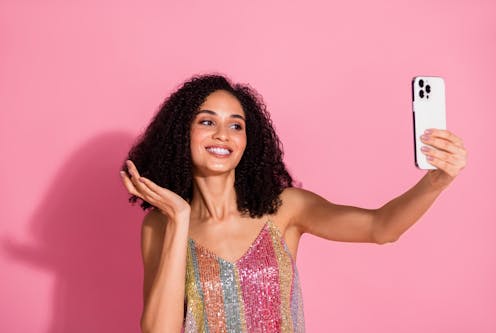
Meta has announced third-party augmented reality (AR) filters will no longer be available on its apps as of January 2025. This means more than two million user-made filters offered across WhatsApp, Facebook and, most notably, Instagram will disappear.
Filters have become a mainstay feature on Instagram. The most viral of these – which often involve beautifying the user’s appearance – are created by users themselves via the Meta Spark Studio.
But the use of beautifying AR filters has long been connected to worsened mental health and body image problems in young women.
In theory, the removal of the vast majority of Instagram filters should signal a turning point for unrealistic beauty standards. However, the removal comes far too late, and the move is more likely to instead push filter use underground.
Much like the newly announced teen accounts for Instagram, retracting and altering technologies years after the use has been encouraged offers little more than a band-aid approach.
Filters are popular – so why remove them?
Meta rarely volunteers information about technologies and business practises beyond what is absolutely necessary. This case is no different. Meta has previously demonstrated it is unmotivated by user harm, even when its own leaked internal research indicates the use of Instagram and filters contributes to worse mental health for young women.
So, why wait until now to remove a popular (but controversial) technology?
Officially, Meta states it intends to “prioritise investments in other company priorities”.
Most likely, AR filters are yet another casualty of the artificial intelligence (AI) boom. In April, Meta pledged to invest between US$35–40 billion in the technology, and is pulling AR technology in-house.
Filters will not be going away altogether on Instagram. First-party filters created by Meta will continue to be available. The offering of filters available on Instagram’s official account (140 at present) is insignificant compared to the library of millions of filters created by third-parties.
Instagram’s official filters also offer less diverse types of AR experiences, and its account does not feature any beautifying filters.
The end of beauty filters? Not quite
Meta removed filters once before in 2019, though the ban only applied to “surgery” filters and was reversed at Mark Zuckerburg’s request after a fleeting implementation.
Informally named for their ability to mimic the effects of cosmetic surgery, surgery filters are the most popular type of Instagram filter.
They are also the most controversial, with users seeking surgery and “tweakments” to mimic their filtered image. In my research, I found when analysing the design of the beautifying Instagram filters, 87% of the filters sampled shrank the user’s nose and 90% made the user’s lips larger.

The removal of third party filters will see these types of sophisticated and realistic beautifying filters gone from Meta platforms.
However, this is hardly cause for celebration. When analysing the media coverage of the first filter ban, we found users were upset with surgery filters being removed and intended to find ways to access them regardless.
Now, after having access to AR filters on Instagram for seven years, users are even more habituated to their presence. They also have many more alternatives to access a version of the technology inside another app. This is of concern for a few reasons.
Watermarking and photo literacy
When posting with a filter on Instagram, a watermark that links to the filter and its creator appears on the image.
This watermark is important to assist users in determining whether someone’s appearance is altered or not. Some users get around the watermarking by downloading their filtered photo, and re-uploading it so their filtered appearance is more difficult to detect.
By removing popular beauty filters from Instagram, this “covert” practice will become the default way for users to post with these filters on the platform.
 Left: an unfiltered selfie of the author. Right: a selfie taken with an Instagram ‘surgery’ filter, indicated by the watermark in the top left hand corner.
L.A. Miller, Visual Studies
Left: an unfiltered selfie of the author. Right: a selfie taken with an Instagram ‘surgery’ filter, indicated by the watermark in the top left hand corner.
L.A. Miller, Visual Studies
Forcing users into covert filter use adds another thorn to the already prickly case of visual literacy.
Young women and girls feel inadequate compared to edited and filtered images online (including their own).
Some newer TikTok filters, such as the viral “Bold Glamour” filter, use AI technology (AI-AR) which merges the user’s face with the beauty filter, trained on a database of “ideal” images.
By contrast, standard AR filters overlay a set design (akin to a mask) and contort the user’s features to match. The result of these new AI-AR filters is a hyper-realistic, and yet totally unachievable beauty standard.
The removal of beauty filters on Instagram will not stop their use. Instead, it will drive users to other platforms to access filters. Like Bold Glamour, these filters will be more sophisticated and harder to detect when they are re-posted cross platform, without the benefit of having the watermark indicator.
 Only 34% of Australian adults feel confident in their media literacy skills.
Dikushin Dmitry/Shutterstock
Only 34% of Australian adults feel confident in their media literacy skills.
Dikushin Dmitry/Shutterstock
Only 34% of Australian adults feel confident in their media literacy skills. Those with less developed digital visual literacies increasingly find it difficult to ascertain the difference between edited and unedited images. Add to this the rapid increase in generative AI images, and we are entering unprecedented territory.
While the removal of beautifying filters at a more pivotal time may have been meaningful, the genie is out of the bottle. By Instagram removing its already hugely popular beautifying filters now (and the watermarking that goes along with it), the problems associated with filter use on Instagram will not go away, but simply become harder to manage.


