

Is stress turning my hair grey?
- Written by The Conversation
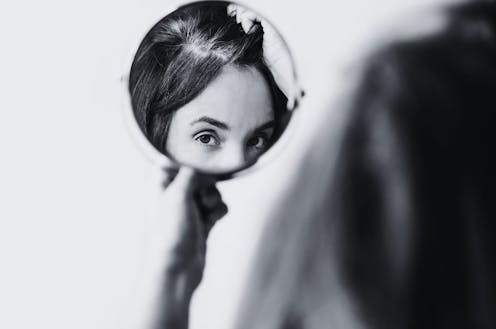
When we start to go grey depends a lot on genetics.
Your first grey hairs usually appear anywhere between your twenties and fifties. For men, grey hairs normally start at the temples and sideburns. Women tend to start greying on the hairline, especially at the front.
The most rapid greying usually happens between ages 50 and 60. But does anything we do speed up the process? And is there anything we can do to slow it down?
You’ve probably heard that plucking, dyeing and stress can make your hair go grey – and that redheads don’t. Here’s what the science says.
What gives hair its colour?
Each strand of hair is produced by a hair follicle, a tunnel-like opening in your skin. Follicles contain two different kinds of stem cells:
- keratinocytes, which produce keratin, the protein that makes and regenerates hair strands
- melanocytes, which produce melanin, the pigment that colours your hair and skin.
There are two main types of melanin that determine hair colour. Eumelanin is a black-brown pigment and pheomelanin is a red-yellow pigment.
The amount of the different pigments determines hair colour. Black and brown hair has mostly eumelanin, red hair has the most pheomelanin, and blonde hair has just a small amount of both.
So what makes our hair turn grey?
As we age, it’s normal for cells to become less active. In the hair follicle, this means stem cells produce less melanin – turning our hair grey – and less keratin, causing hair thinning and loss.
As less melanin is produced, there is less pigment to give the hair its colour. Grey hair has very little melanin, while white hair has none left.
Unpigmented hair looks grey, white or silver because light reflects off the keratin, which is pale yellow.
Grey hair is thicker, coarser and stiffer than hair with pigment. This is because the shape of the hair follicle becomes irregular as the stem cells change with age.
Interestingly, grey hair also grows faster than pigmented hair, but it uses more energy in the process.
Can stress turn our hair grey?
Yes, stress can cause your hair to turn grey. This happens when oxidative stress damages hair follicles and stem cells and stops them producing melanin.
Oxidative stress is an imbalance of too many damaging free radical chemicals and not enough protective antioxidant chemicals in the body. It can be caused by psychological or emotional stress as well as autoimmune diseases.
Environmental factors such as exposure to UV and pollution, as well as smoking and some drugs, can also play a role.
Melanocytes are more susceptible to damage than keratinocytes because of the complex steps in melanin production. This explains why ageing and stress usually cause hair greying before hair loss.
Scientists have been able to link less pigmented sections of a hair strand to stressful events in a person’s life. In younger people, whose stems cells still produced melanin, colour returned to the hair after the stressful event passed.
4 popular ideas about grey hair – and what science says
1. Does plucking a grey hair make more grow back in its place?
No. When you pluck a hair, you might notice a small bulb at the end that was attached to your scalp. This is the root. It grows from the hair follicle.
Plucking a hair pulls the root out of the follicle. But the follicle itself is the opening in your skin and can’t be plucked out. Each hair follicle can only grow a single hair.
It’s possible frequent plucking could make your hair grey earlier, if the cells that produce melanin are damaged or exhausted from too much regrowth.
2. Can my hair can turn grey overnight?
Legend says Marie Antoinette’s hair went completely white the night before the French queen faced the guillotine – but this is a myth.
Melanin in hair strands is chemically stable, meaning it can’t transform instantly.
Acute psychological stress does rapidly deplete melanocyte stem cells in mice. But the effect doesn’t show up immediately. Instead, grey hair becomes visible as the strand grows – at a rate of about 1 cm per month.
Not all hair is in the growing phase at any one time, meaning it can’t all go grey at the same time.
3. Will dyeing make my hair go grey faster?
This depends on the dye.
Temporary and semi-permanent dyes should not cause early greying because they just coat the hair strand without changing its structure. But permanent products cause a chemical reaction with the hair, using an oxidising agent such as hydrogen peroxide.
Accumulation of hydrogen peroxide and other hair dye chemicals in the hair follicle can damage melanocytes and keratinocytes, which can cause greying and hair loss.
4. Is it true redheads don’t go grey?
People with red hair also lose melanin as they age, but differently to those with black or brown hair.
This is because the red-yellow and black-brown pigments are chemically different.
Producing the brown-black pigment eumelanin is more complex and takes more energy, making it more susceptible to damage.
Producing the red-yellow pigment (pheomelanin) causes less oxidative stress, and is more simple. This means it is easier for stem cells to continue to produce pheomelanin, even as they reduce their activity with ageing.
With ageing, red hair tends to fade into strawberry blonde and silvery-white. Grey colour is due to less eumelanin activity, so is more common in those with black and brown hair.
Your genetics determine when you’ll start going grey. But you may be able to avoid premature greying by staying healthy, reducing stress and avoiding smoking, too much alcohol and UV exposure.
Eating a healthy diet may also help because vitamin B12, copper, iron, calcium and zinc all influence melanin production and hair pigmentation.
Read more https://theconversation.com/is-stress-turning-my-hair-grey-239100


