

More than 20% of Earth’s plant species are found only on islands – and time is running out to save them
- Written by The Conversation
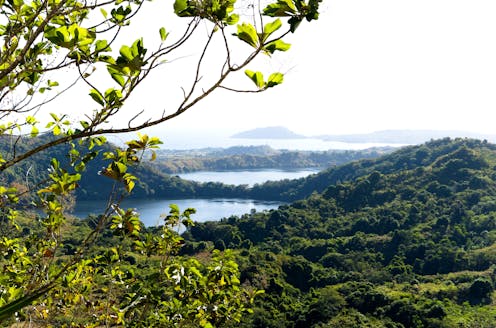
Islands have long intrigued explorers and scientists. These isolated environments serve as natural laboratories for understanding how species evolve and adapt.
Islands are also centres of species diversity. It has long been speculated that islands support exceptionally high amounts of global biodiversity, but the true extent was unknown until now.
In world-first research published in Nature today, my colleagues and I counted and mapped the diversity of plant life on Earth’s islands. We found 21% of the world’s total plant species are endemic to islands, meaning they occur nowhere else on the planet.
These findings are important. Island plants are at higher risk of extinction than those on mainlands. Detailed knowledge of plants species, and where they grow, is essential for monitoring and conserving them.
Mapping island floras worldwide
The study involved an international team of scientists. We developed an unprecedented database of vegetation information from more than 3,400 geographical regions worldwide, including about 2,000 islands.
The definition of an island is somewhat arbitrary. Conventionally, an island is a landmass entirely surrounded by water and smaller than a continent. This means Tasmania and New Guinea are islands, but mainland Australia – a continent in itself – is not. This is the definition we used.
We found 94,052 plant species, or 31% of the world’s total, are native to islands. Of these, 63,280 plant species, or 21%, only occur on islands.
Endemic species were concentrated on large tropical islands such as Madagascar, New Guinea and Borneo. On Madagascar alone, 9,318 plant species – 83% of its total flora – grow there and nowhere else.
Fewer plant species overall were found at ocean archipelagos such as Hawaii, the Canary Islands and the Mascarenes (east of Madagascar, including La Reunion and Mauritius). But a large share of their species were still unique to these islands.
Two palms are endemic to Australia’s Lord Howe Island – Howea forsteriana and H. belmoreana. They are one of the best-researched examples of “sympatric speciation”, or in other words, species that evolve from a common ancestor at the same location.
This mode of evolution has long been hypothesised to exist. But examples are rare, and highly useful for evolutionary research.
The Norfolk Island Pine (Araucaria heterophylla) is, of course, named after the tiny island where it is found. This species, while endangered in the wild, is now widely planted along Australia’s beaches where it is instantly recognisable to us.
Islands are of great conservation concern
Islands cover just 5.3% of the world’s land area, but contribute disproportionately to global biodiversity.
Island plants are at much greater risk of extinction than species found in mainland areas, for reasons such as:
- small population sizes
- unique evolutionary traits that make them vulnerable to invasive species such as herbivores
- specific habitat requirements
- habitat degradation
- threats from invasive plant and animal species
- climate change.
Some 57% of the island-endemic species we assessed are considered critically endangered, endangered, vulnerable, or near-threatened, according to the International Union for Conservation of Nature.
Alarmingly, 176 of plant species endemic to islands are already classified as extinct, accounting for 55% of all known extinct plant species globally. Among these is Hawaii’s vulcan palm (Brighamia insignis), which is now considered extinct in the wild. However, the species is popular as an ornamental plant and still survives in gardens.
Other species might be less lucky; extinction in the wild may mean being lost for ever.
So, assessing the conservation status of island floras is important. Under a globally agreed United Nations target, 30% of the world’s land and oceans should be protected by 2030. We calculated how much of global islands is conserved today. Disappointingly, only 6% of endemic plant species occur on islands that meet this target.
For instance, New Caledonia, Madagascar and New Guinea – known for their many endemic plant species – contain relatively low levels of protected areas.
Protecting our island plants
Urgent action is needed to protect island biodiversity. This includes expanding protected areas, prioritising regions with high numbers of endemic species, and implementing habitat restoration projects.
Without such measures, the unique floral diversity of islands may continue to decline, with potentially severe consequences for global biodiversity.
Much more research is needed to determined the best conservation strategies for all these plant species. Accurate data is vital to guide future conservation strategies and safeguard against further loss.
Our study also serves as a stark reminder of the urgent need for targeted plant conservation efforts on islands. Many species teeter on the brink of extinction, and time is running out to preserve this irreplaceable natural heritage.


