

How to stay safe in a New Year’s Eve crowd
- Written by The Conversation
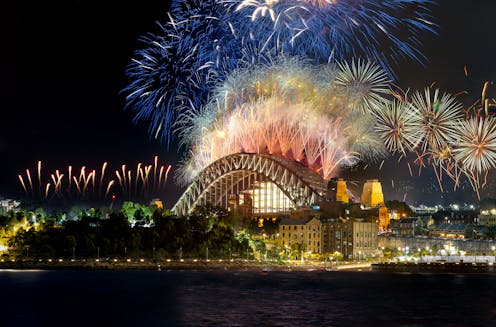
December 31 brings masses of people together to usher in the new year.
But when massive crowds gather to party, certain risks – such as overcrowding or alcohol-related violence – may increase.
Here are some tips to stay safe in packed public spaces, so your end-of-year celebration can be a happy one.
A surge of people in the city centre
New Year’s Eve celebrations are usually unticketed and free to attend. This can make it difficult to estimate how many people will show up.
But public events to watch midnight fireworks often attract hundreds of thousands of people in large city centres.
Revellers are spread over open public areas rather than within a structured venue, and there’s typically no formal security screening or restricted entry.
The risk of overcrowding often peaks shortly after midnight. During the night, the crowd usually builds up gradually over several hours. Then, after the fireworks display, everyone rushes to nearby transport hubs to get home.
This surge in movement – where people pour into stations and areas with limited capacity – increases the risk of a crowd crush.
How does a crowd crush happen?
A crowd crush is not necessarily the result of a “stampede”, although it’s a common misconception this is what causes death and injury in crowds.
In fact, a crowd crush, or surge, is a problem of extreme density.
In a crowd crush, you will start to feel pushed forward, often against your will, and this pushes others forward in a dangerous chain reaction.
In these situations, you lose the ability to move on your own accord. The crowd begins to behave more like a fluid.
This turbulence only happens in very dense crowds — usually when there are more than seven or eight people per square metre.
The danger escalates if the pressure on a person’s chest and lungs from overcrowding becomes too intense. This can lead to compressive asphyxia — when a person can’t breathe due to immense pressure on their chest.
A progressive crowd collapse can also occur. If someone falls, it can trigger a domino effect.
What can I do?
There are some things you can do to help lessen your risk of being involved in a crowd crush.
1. Plan your journey ahead: avoid areas likely to experience bottlenecks. Local authorities often plan how to spread crowds and avoid congestion, for example by setting up several celebration sites. Know where you’re going ahead of time.
2. Delay your departure: if possible, wait a little after the fireworks display ends to avoid the surge of movement towards public transport.
3. Monitor for overcrowding: look for early signs of a crush, such as movement slowing or stopping. Try to avoid packed areas and move towards less crowded spaces (for example, to the sides). Listen for signals of distress from people around you or downstream in the crowd. And if you can, pass this information further upstream – for example, by saying “stop moving” or “slow down”, which can lessen the pressure.
People who are shorter or have mobility issues or crowd anxiety (agoraphobia) may be more at risk – so take extra care if this applies to you or someone you’re with.
What about other risks?
Severe heat
New Year’s Eve in Australia is often hit with extreme heat. The good news is severe weather alerts are usually issued well in advance, so you can be prepared. Check the forecast, dress appropriately and carry water with you.
If you’re in an at risk group (including older people, very young children and people with chronic conditions) be prepared to make the choice not to go, if unfavourable weather is predicted.
Read more: 4 ways to support someone with dementia during extreme heat
Fireworks
Fireworks are an iconic part of New Year’s Eve. There can be safety risks, but these come from private fireworks that are prone to misfire and cause accidents.
Public fireworks displays today are incredibly safe compared to private fireworks. Public displays are licensed by experts who follow strict regulations.
Alcohol
For many people, a cheeky champagne is a must on December 31.
Unfortunately where excessive drinking is involved, risks increase – including violent behaviour in public or drink driving incidents.
A Victorian Health Promotion Foundation study found ambulance call-outs and emergency department presentations increase six-fold on New Year’s Eve.
Hospital admissions related to alcohol intoxication increase five-fold.
Emergency department visits for assault more than triple during this time.
But you can drink, party and travel responsibly. Pace yourself, and always have a safe way to get home. Designate a driver, use public transport, or call a ride-share or taxi.
Terrorism
For the first time in a decade, Australia will be celebrating New Year’s Eve at a “probable” terror threat level. This means the possibility of an attack — though not imminent — remains significant enough to warrant vigilance.
If you notice any suspicious activity, report it immediately to your local designated hotline.
In an emergency, follow instructions from authorities and be aware of your surroundings. Avoid filming incidents as they unfold – prioritise your safety and that of others over documentation.
The likelihood of something going wrong is generally quite low. But with millions of people participating in many events across the globe, it’s good to be aware of what the risks might be.
Being prepared means you can enjoy the festivities more safely.
Read more https://theconversation.com/how-to-stay-safe-in-a-new-years-eve-crowd-239200


