

Cane toads on the barbie? How eating invasive species might help manage them
- Written by The Conversation
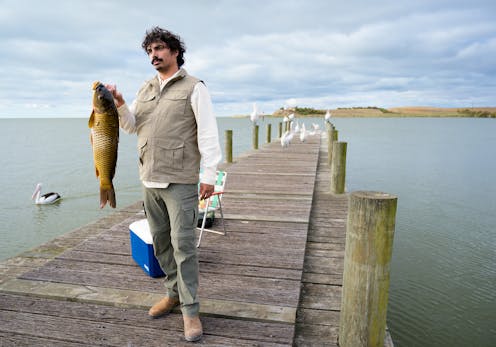
Eating rabbit, camel, carp, feral cat, deer and cane toad might sound extreme to some, but it’s gaining attention as a solution to tackle the growing impact of invasive species.
Now, Tony Armstrong hosts the ABC series Eat the Invaders, inspired by artist Kirsha Kaechele’s 2019 cookbook and MONA exhibition Eat the Problem.
Over the course of the series, Armstrong talks to chefs, conservationists, Indigenous Elders, researchers, food producers and the general public to explore the idea of eating these species to reduce their populations.
Over each of the six episodes, the show features a different invasive species, transforming them from something perceived as an unwanted pest into a desirable food you may order off a menu.
Invasive species in Australia
Episode one poetically begins at ground zero of the rabbit invasion, Barwon Park in Winchelsea, Victoria, where 24 rabbits were introduced in 1859.
Ever since, invasive species like the rabbit have caused significant harm in Australia, now impacting 82% of our threatened species – a rate much higher than global norms. Feral cats and foxes are responsible for the deaths of 2.6 billion native vertebrates annually.
Invasive species disproportionately affect Indigenous lands in Australia compared to the global average, emphasising their cultural toll.
In the agricultural sector, invasive species cause significant damage, and cost Australian producers up to A$5.3 billion in management costs and losses annually.

Cane toads have toxic skin that poisons native predators like goannas, crocodiles and quolls, who lack natural defences.
To combat this, researchers are testing innovative solutions, such as “cane toad sausages”, to train native mammals and reptiles to avoid the toxic toads.
Could invasive species belong on our plates too?
I’ll eat a cow, but not a camel
While we may accept animals like cows, chickens or pigs as food, species like rabbit, camel and carp remain off the menu for many Australians.
This is a form of cognitive dissonance, where we perceive some animals as pests but are also hesitant at the idea of turning them into food.
Adding invasive species back into culinary culture can increase public awareness of invasive species, assist in early detection and response efforts, and boost local economies.
Re-branding invasive species as a culinary opportunity isn’t a new concept. Carp is often sold in America under the name “copi”.
This idea is explored during episode three, as a marketing company is given an opportunity to re-brand cane toad meat. The final hypothetical product is a packaged “toad nugget” product called “Croaky Crunchers”.
Eating invasive species
A central theme of Eat the Invaders is that eating invasive species is good for the environment, while also being delicious.
Armstrong meets up with the Country Women’s Association to learn about how rabbits were once common on Australian dinner tables, while cooking a tomato and rabbit stew.
Carp is a staple food in China and Europe but is rarely found in Australian supermarkets.
Here, carp appears in fish and chips and as part of an experimental dish at MONA, served with invasive weeds and “edible plastic” made from corn flour and the invasive plant kudzu.
 The carp as served up as part of an experimental dish at MONA.
Jesse Hunniford/ABC
The carp as served up as part of an experimental dish at MONA.
Jesse Hunniford/ABC
Bob Katter might not be the first person you’d expect to make a cameo, but it makes sense given far-north Queensland is one of the most densely populated regions for cane toads in Australia.
The main challenge with eating cane toads is the risk of bufotoxin, which is toxic to humans. Armstrong meets a former chef who prepares and eats cane toad – but Armstrong can’t get the meat safety-tested to try it himself.
Establishing safe processing, like Japan’s fugu system of safely processing the tetrodotoxin poison from puffer fish, could help to create an export market for toads. This might benefit conservation by reducing pressure on native frogs harvested in Indonesia and Vietnam.
 Jodie Ward talks with Tony Armstrong about the Kiwirrkurra cat hunters and rangers.
ABC
Jodie Ward talks with Tony Armstrong about the Kiwirrkurra cat hunters and rangers.
ABC
The show stops short of serving feral cats on the menu at MONA.
Instead, Armstrong travels to Kiwirrkurra Country in the Gibson Desert and joins the Kiwirrkurra rangers and cat hunters who protect wildlife like the vulnerable greater bilby by hunting feral cats.
They show him how the feral cats are prepared as food. He told the Guardian “it tasted like the most delicious rotisserie chicken I’ve ever had”.
Worth the watch
Changing our diets is a simple yet powerful way to tackle Australia’s extinction crisis. Eat the Invaders creatively explores this idea.
Armstrong’s style is approachable and engaging for people who are unfamiliar with the impact of invasive species. Especially as he himself is trying many of these species for the first time.
The show balances perspectives on food, conservation, Indigenous knowledge, and consumer experiences, creating a well-rounded narrative.
 Eat the Invaders introduces thought-provoking ideas that challenge perceptions of invasive species.
ABC
Eat the Invaders introduces thought-provoking ideas that challenge perceptions of invasive species.
ABC
Throughout the show, Armstrong highlights the profound impact of invasive species on Indigenous Australians’ connection to Country, and how these species disrupt ecosystems and threaten culturally significant totem species.
While eating invasive species is innovative, it’s not a standalone solution.
As invasive species spread, management often shifts from eradication to long-term control. Policy contradictions, like deer being protected under some laws but considered threats in others, complicate management efforts.
Promoting invasive species consumption through eating them could help, but risks creating a business case to maintain or even expand invasive populations, undermining eradication goals.
Eat the Invaders is on the ABC from tonight.


