

E-bike popularity is booming. But are they as safe as regular bikes?
- Written by The Conversation
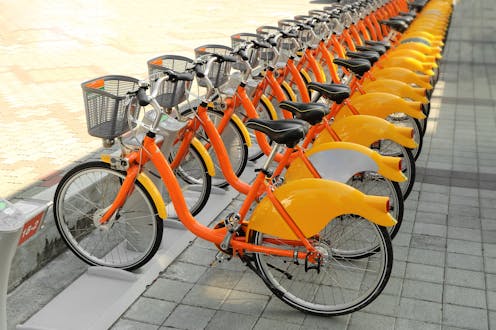
The popularity of e-bikes has soared over the past decade. Shared electric bikes for rent have become a common sight in major cities worldwide, while private ownership is also rising.
Since 2020, both sales and import of e-bikes have nearly tripled in Australia.
In Germany, nearly half of all bike sales are now e-bikes.
Trends suggest these bikes – equipped with battery-powered motors that assist the rider – will continue to replace many conventional car and bike trips.
But some serious questions about safety remain – and in Australia we still don’t have the data to know how many injuries and even deaths e-bikes are connected to.
What international data tells us
The Netherlands is sometimes called a “cycling paradise” thanks to its extensive cycling infrastructure and high volume of bike riders.
For researchers, there’s another plus: the country maintains thorough records on cycling injuries and fatalities from all types of bikes.
Data collected since 2000 shows Dutch cyclist fatalities remained relatively stable for almost two decades.
However, since 2018, this trend has begun to shift. Cyclist deaths hit a record high in 2022, with 291 fatalities reported — a nearly 25% increase on this century’s previous record (233 deaths in 2000).
This increase coincides with the rapid uptake of e-bikes. Between 2018 and 2021 the number of Dutch e-bike owners shot from 2.2 million to 3.1 million, while the number of regular bike owners declined.
Are e-bikes more deadly?
The Dutch data shows a higher number of cycling crashes still involve regular bikes compared to e-bikes. However, that’s likely because there are simply more regular bikes overall.
When we control the data for the number of e-bikes versus regular bikes, as well as the distance they tend to travel, we can compare the risk.
A clear trend emerges: e-bike riders face a higher risk of dying.
Data from China shows a similar trend.
Between 2011 and 2021, the number of accidents and fatalities per 100,000 people in the city of Guangzhou increased for e-bikes, but decreased for regular bikes.
E-bike fatalities in Guangzhou have continued to rise since 2018, while deaths linked to regular bikes have plateaued.
What about injuries?
Cycling also has non-fatal risks. To look at what kind of injuries e-bikes are involved in, and how severe they are, we can examine hospital data and compare this to regular bikes.
One clinical study looked at 557 patients who presented to a Swiss trauma centre from 2010 to 2015. Traumatic brain injury was more frequent and more severe in e-bikers than in regular bike riders.
In Israel, the National Trauma Registry records all hospitalisations. Between 2013—17 it revealed a dramatic increase in hospitalisation rates for injuries related to e-bikes, while those related to regular bikes decreased. E-bikers were also at greater risk of head injuries compared to regular bike riders.
However, other clinical studies have suggested the patterns of injury severity are similar in riders of e-bikes and regular bikes. For example, a Dutch study found no difference in the frequency or severity of traumatic brain injuries.
So, are e-bikes more unsafe?
Clearly, there is variability across individual studies. But when we combine findings from multiple countries, some clear patterns emerge.
E-bike users are more likely to sustain injuries to their spine and lower extremities (hips, legs, ankles and feet) compared to regular cyclists.
When injured, they are more likely to be admitted to hospital wards or intensive care units, where they also have a higher chance of undergoing surgery – and of dying.
Do we know why e-bikes have greater risks?
Not exactly.
But speed is one prominent factor. E-bikes reach higher speeds with less effort – e-bike riders average around 13.3 km/h compared to 10.4 km/h for regular cyclists.
E-bike riders may often be older and inexperienced cyclists.
This combination of speed and potential physical limitations, along with the heavier weight of e-bikes, increases crash and injury risk.
In the Swiss study above, injured e-bike riders admitted to hospital were significantly older compared to regular cyclists.
The Dutch data also shows number of e-bike fatalities increases by age, especially for those aged 60 and older.
E-bikes may be linked to other risky behaviours, including not wearing helmets, violating traffic rules and riding under the influence of alcohol – although we don’t have data to know if e-bikers do these more than regular cyclists.
But riders on shared e-bikes in particular are often less likely to wear helmets compared to those on their own bikes. There may be hesitation around using shared helmets, for example, due to hygiene concerns.
What needs to change?
Trends suggest this green mode of transport is here to stay. But two key changes are needed to make e-bikes safer for riders, pedestrians and other road users in Australia.
First, Australia should establish a national registry that tracks injuries and fatalities related to e-bikes. As we don’t currently collate these statistics, policymakers are forced to rely on international data.
Second, we need regulations tailored and proportional to the specific risks of e-bikes. This could mean stricter enforcement of helmet use, speed limits and better regulation of shared e-bike services, such as ensuring helmets are available and well-maintained.
As e-bikes increase in popularity, raising awareness about their risks remains key.


