

What is a ‘crime scene’, really? An expert explains how it’s more than just blue police tape
- Written by The Conversation
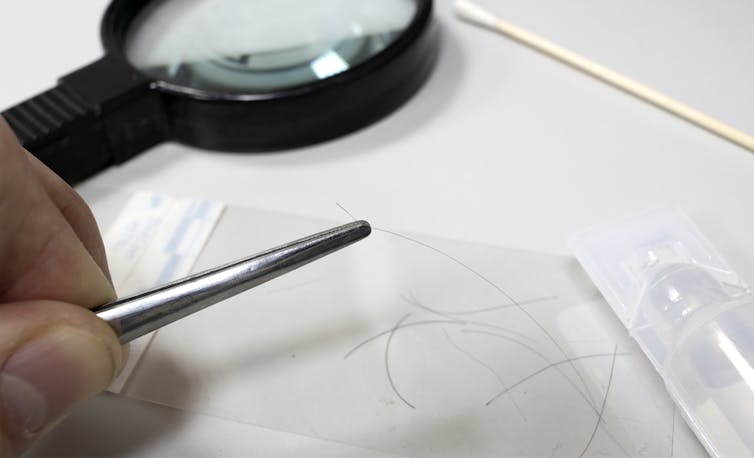
When you watch the news, one phrase usually comes up as soon as crime is mentioned: “police have established a crime scene”.
If you’re a fan of the forensics crime drama CSI: Crime Scene Investigation, it will conjure up images of police waving a blue, fluorescent UV light in a darkened room looking for blood, saliva, fingerprints, footprints or tooth impressions.
CSI has influenced an entire generation – this year, the franchise will celebrate its 25th anniversary. But the reality of crime scene investigation is far more complex.
As a criminology lecturer and ex-police officer, I know a thing or two about crime scenes, having managed hundreds of them. I have even been a crime scene myself. Here’s what they really entail.
There’s usually more than one crime scene
In the early 20th century, French forensic science pioneer Edmond Locard noted it’s impossible for criminals to act “without leaving traces of this presence”. No matter where a criminal steps or what they touch, they leave behind, even unconsciously, evidence that serves as a silent witness against them.
The idea that criminals will leave something behind at the crime scene while taking something with them is known today as Locard’s principle.
Crime scenes are incredibly diverse. They don’t just involve the physical location. A person’s body and any objects found in relation to the crime are also part of a crime scene.
The primary crime scene is where the event took place – for example, where a murder, arson attack or drive-by shooting occurred.
There will be several additional crime scenes, too. In the course of the investigation, a second crime scene might be established where the criminal planned the crime. If they dumped a getaway vehicle, that’s a third crime scene. If they stashed a weapon, clothes or other objects in a safe house after the crime, that’s a fourth crime scene.
A fifth crime scene will be established when the criminal is arrested – they themselves are also a crime scene. Their hair, clothing and fingernails will be tested for various residues, such as the skin or blood of a victim, or even illicit substances if the crime involves drug trafficking.
Lastly, the victim is a crime scene, too. They may have body fluids, skin, hair and other material from the criminal on them.
In my detective career, I myself have been a crime scene when I found a badly injured abduction victim who collapsed in my arms. At that point, traces of the offender’s blood and hair transferred onto my clothing. I had to take the clothes off and they were kept as evidence.

Crime scenes are confusing
Shows like CSI often portray crime scenes as neat and clear cut, with evidence easily obtained.
In reality, crime scenes are chaotic. They are full of clutter and the police don’t know what’s relevant and what’s not.
During a crime scene search, police have to speculate about what happened, as often there are no eyewitnesses. A bullet casing or a bloody knife would be obvious. But what of the more common household items in the house or room? Who owns the shirt or jumper? Why is the bedroom in disarray, is that normal? What did the criminal touch or not touch? Was there just one criminal or two? What belongs to the victim?
Unlike on TV, police don’t always know what they are looking for because often they don’t know how the crime occurred. The cause of a death can be obvious, but how it unfolded is not.
Crime scenes are fragile
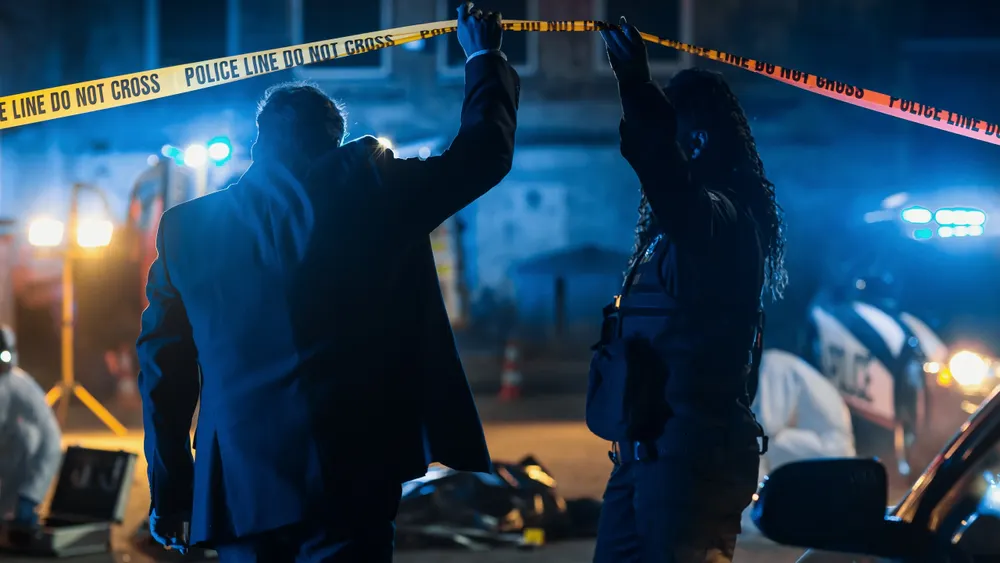
With a murder on a TV show, the CSI team usually arrives at a home or an outdoor crime scene, surrounded by crime scene tape. The first thing they do is lift the tape and walk straight to the body.
This is the worst possible crime scene practice.
The detectives would be walking directly on and over the same entry or exit path the offenders used. This would destroy fragile microscopic residues of blood, dirt or plant vegetation.
In reality, walking in and out of a crime scene this way does not happen. Prior to entering any crime scene, police look around and try to figure out which way the offender may have come and gone.
Once weighing up the advantages and disadvantages of each option, they’ll pick a specific entry and exit point, and stick to that until the scene has been completely examined.
A systematic search – and not just for DNA
Crime scenes are also searched in different ways.
One way to ensure no evidence is missed is with a “grid and height” search. This means searching one square metre at a time. As the police get closer to the walls of the room, they start looking from the floor up to the height of their knees.
Once this is done, they go from their knee to their waist, then from their waist to their shoulder, then their shoulder to the top of their head, and then from the top of their head to a metre above it – until they reach the ceiling. Then they examine the ceiling.
Police don’t look solely for the holy grail of DNA. Rather, they are trying to piece together a jigsaw puzzle of what happened, why it happened, and what the criminal unintentionally left behind.
Decades of forensic TV dramas have resulted in the “CSI effect” – the idea that finding, collecting and analysing evidence at a crime scene is straightforward, and that the evidence is infallible. This is not so. But shows like CSI have also spawned a generation of people interested in becoming real crime scene investigators and forensic scientists.


