

Fiji’s HIV crisis is a regional challenge that demands a regional response
- Written by The Conversation
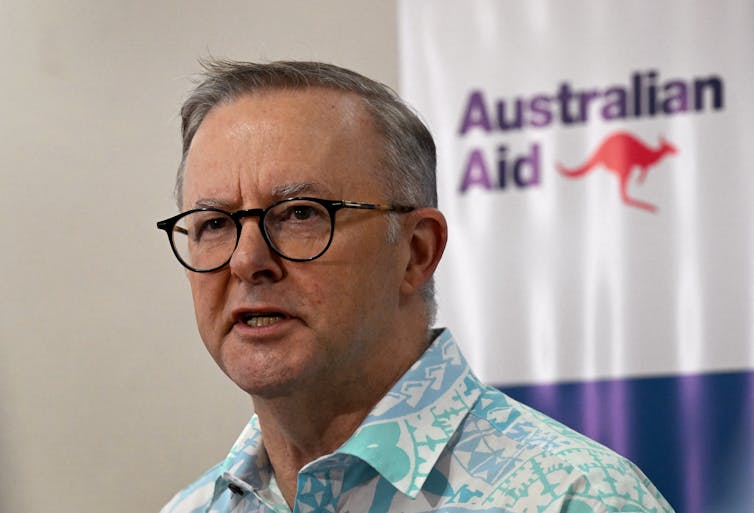
In the words of UNAIDS Asia Pacific Regional Director Eamonn Murphy, rising HIV infections in Fiji “put the entire Pacific region at risk”.
Fiji’s minister of health declared an official HIV outbreak in January, citing 1,093 new cases from January to September 2024 – triple the number from the same period in 2023.
The World Health Organization defines a disease outbreak based on the number of cases being in excess of normal expectations. Similar to an epidemic, an outbreak typically refers to a more limited geographic area.
Declaring an outbreak enables prompt public health response measures and mobilises domestic and international resources to respond to the crisis.
Why is there an HIV outbreak?
The outbreak has been attributed to Fiji’s ongoing methamphetamine crisis. The island nation is a major hub for drug trafficking to Australia and New Zealand, contributing to an upsurge in drug use.
Preliminary Ministry of Health data show half of the newly diagnosed individuals receiving anti-retroviral therapy contracted HIV through injecting drugs.
However, the crisis extends beyond drug use. Increasing urbanisation, homelessness and unemployment, coupled with disconnection from traditional land and culture, contribute to risky health behaviours.
Many Fijians express concern that eroding family values are driving this behaviour, with reports of children as young as eight using drugs, engaging in prostitution or begging.
Low HIV awareness and social stigma compound these factors. Many Fijians are reluctant to get tested and, if positive, to receive care. Knowledge of HIV prevention is low: a 2021 survey found less than a third of those aged between 15 and 24 had comprehensive HIV knowledge.
A decade of underfunding and reduced international support has also undermined Fiji’s HIV prevention strategies and service. This has exacerbated low levels of HIV/AIDs awareness, and the deterioration of health and treatment services.
Why is the region at risk?
Fiji is a regional hub for education and business, attracting students and economic migrants from across the region. There’s a real risk the virus will spread to other island nations via returning workers and students, potentially undetected for long periods.
Fiji is also a major tourist destination. Unsuspecting visitors, whose fun in the sun extends to drug use or unsafe sexual activities, may be at risk.
There is also a risk of reputational damage for the tourism industry, whose success relies on marketing Fiji as a safe and happy destination. With Fiji still recovering from COVID’s impact on tourism, the new crisis is a major threat.
Fiji is also experiencing significant outward migration (5% net in 2023), mostly to Australia and New Zealand. This raises the risk of virus spread through established migration pathways, including labour mobility policies such as the Pacific Australia Labour Mobility scheme and New Zealand’s Recognised Seasonal Employer schemes.
The HIV surge will be costly for the country and the region. HIV/AIDS strains household finances through lost income and increased healthcare costs, diverts public spending from other areas, with flow-on impacts for national and regional economies.
What is being done to combat the outbreak?
The Ministry of Health’s 90-day HIV Outbreak Response Plan fast-tracks high-impact interventions. These include harm-reduction programs, condom distribution, and prophylactic pre-exposure treatment.
This complements the HIV Surge Strategy 2024–2027, a long-term road map for strengthening Fiji’s health system based on the United Nations’ global “95-95-95” targets: 95% rates of testing, treatment and viral suppression in the population.
However, as the health minister noted, the outbreak declaration “reflects the alarming reality that HIV is evolving faster than our current services can cater for”.
Consequently, external assistance is ramping up. The UN Development Programme has delivered 3,000 anti-retroviral drugs to Fiji. The Australian government’s Indo-Pacific HIV Partnership with UNAIDS is also supporting Fiji to scale up prevention.
Funding is starting to trickle down to the front lines. For example, with support from Australia and New Zealand, the Fiji Reproductive and Family Health Association is working with experts on awareness, prevention and care strategies to reverse the surge.
Fiji is not immediately affected by US President Donald Trump’s decision to withdraw the US from the World Health Organization and a threatened defunding of HIV treatment programs around the world. But the uncertainty makes addressing the outbreak even more urgent.
What can Australia and New Zealand do at home?
Both countries bear particular responsibility and face specific risks. Their domestic drug markets drive regional trafficking, fuelling Fiji’s meth crisis and the HIV outbreak.
Continued support for regional anti-narcotics initiatives is crucial, as is addressing domestic drug demand.
As beneficiaries of Fijian labour migration, Australia and New Zealand also have a duty of care for migrants. This includes education, screening and treatment for Pacific communities, and access to preventive treatments which are currently not funded for migrants in either country.
Finally, tourists and travellers need to be educated about the risks, and take precautions.
The outbreak declaration demonstrates Fiji’s commitment to addressing the crisis but success will require regional cooperation.
Australia and New Zealand are key stakeholders whose domestic policies and support can significantly affect the outbreak’s trajectory, contribute to a unified Pacific response and protect regional public health.
Sharon McLennan gratefully acknowledges the valuable input and guidance of Avendra Prakash (Chair, Reproductive & Family Health Association of Fiji), Dr Akisi Ravono (University of Fiji) and Dr Johanna Thomas-Maude (Victoria University of Wellington).


