Could I still be infectious after COVID isolation? And should I bother wearing a mask once I'm all better?
- Written by The Conversation
If you are at home with COVID, you might be wondering how long you’re really infectious for. You don’t want to isolate longer than necessary but you also don’t want to risk your friends’ and workmates’ health – or vulnerable strangers for that matter.
In Australia, people with COVID are required to isolate for seven days, unless they have significant ongoing or new symptoms (then the fine print in state and territory rules says they should stay away for longer).
So, what’s the risk of leaving home after a week and still being infectious?
Read more: Cases are high and winter is coming. We need to stop ignoring COVID
What does the research say about Omicron’s infectious period?
The incubation period of Omicron – the period from being infected to getting symptoms – is around three days, with the person often becoming infectious a day or two before symptoms emerge.
The average duration of Omicron symptoms is also quite short – often 5–6 days compared with 7–10 days with Delta and earlier variants. Omicron is more infectious because the increased number of mutations on its spike protein make it better at evading the body’s immune system.
It appears the Omicron variant causes milder disease and more asymptomatic infections, and it is better at dodging our immune system – hence the high rate of breakthrough cases with the Omicron variant is to be expected.
What if I still test positive on RAT on day 6 or 7?
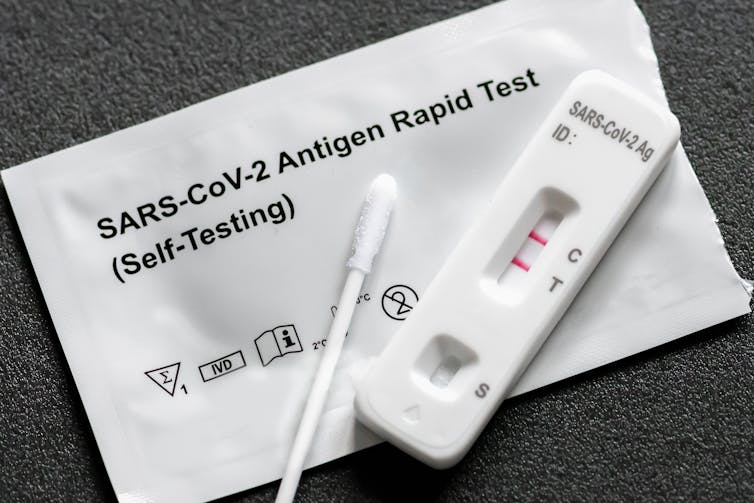
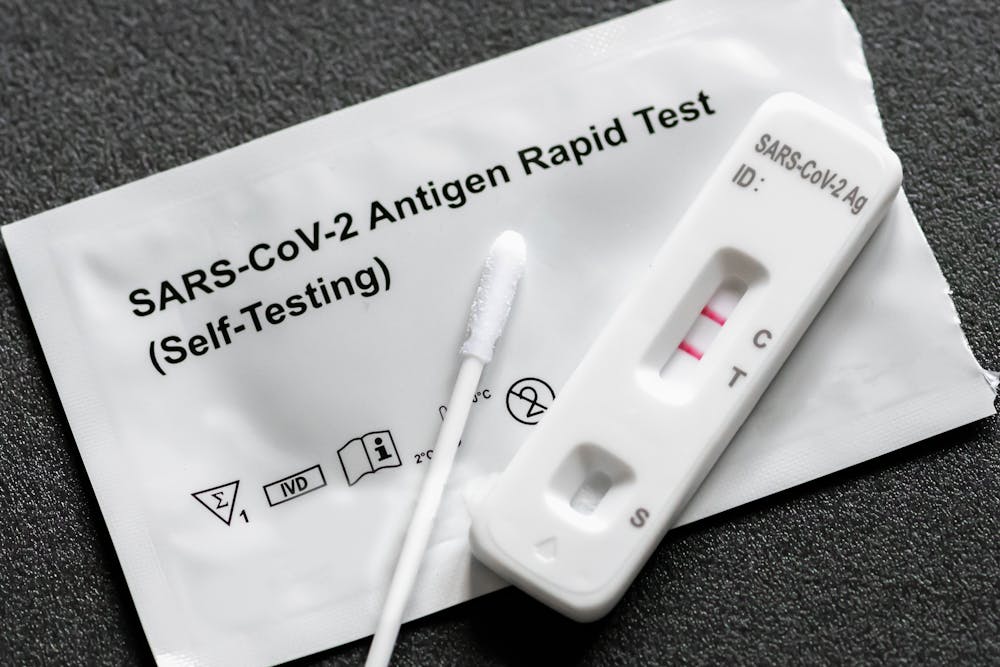
Data on the Omicron outbreak suggests rapid antigen tests (RATs) may not detect COVID until at least two days after exposure to the virus.
And the Therapeutic Goods Administration (TGA) says RATs are not as accurate if you do not have symptoms. So it’s likely you won’t test positive on a RAT until a few days after exposure. And, if you don’t have symptoms, you might get a false negative result in the days that follow.
PCR tests are likely to detect the virus earlier than RATs because of their high sensitivity, and PCR will also continue to detect virus particles for longer. Relying on this test could extend the period of isolation even if the person is not infectious. That said, a PCR test is still considered the “gold standard” for detection of SARS-CoV-2 infection.
Most states don’t require a clear RAT or PCR test for release from isolation but say those who still have certain symptoms (such as sore throat, cough, shortness of breath or runny nose) should extend their isolation. If you do have symptoms and take a RAT test, a positive result may indicate you’re still infectious to others.
The goal of COVID testing is to identify people who are currently transmitting the virus. So RATs are able to detect the vast majority of contagious cases and they work well in congregate settings, such as long-term care facilities, workplaces or schools.
Meanwhile, emerging science (including data from the [National Basketball Association’s extensive COVID testing program] suggests that, with the Omicron variant, as many as half of the people infected could still be infectious on day five (the end of the recommended isolation period in the United States) – and possibly beyond.
In Australian states and territories, isolation is for seven days, provided the person has no symptoms.
It has been suggested it might be safer to isolate for eight days and wear a mask to protect others for a total of ten days. In the Northern Territory, those who exit isolation are told to wear a mask for an additional seven days. South Australians are told to mask for three days after isolation.
What about masks after that?
So, there is potential for people to be infectious beyond their seven-day isolation if they are still symptomatic. After ten days, most people are not infectious. Multiple studies have shown there is very little, if any, transmission after day ten, regardless of the variant.
However, for those who are immunocompromised, waiting 20 days to exit isolation is recommended as it has been shown that such patients tend to shed virus longer.
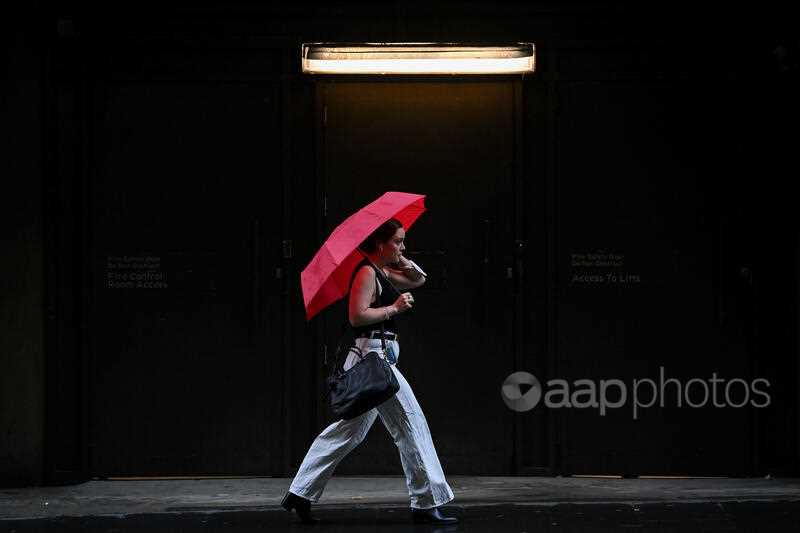
 Once recovered, you probably don’t need to wear a mask out and about for a while.
AAP Image/Bianca De Marchi
Once recovered, you probably don’t need to wear a mask out and about for a while.
AAP Image/Bianca De Marchi
Read more: Got COVID again? Your symptoms may be milder, but this won't always be the case
Once people are fully recovered from the disease and have no symptoms, they are considered non-infective, as the virus load they carry is very low.
A person recently fully recovered from COVID does not need to wear a mask, as there is no risk for them to be reinfected with the same variant. Accordingly, they pose no COVID threat to others.
However, they will need to reconsider this advice after 12 weeks, when reinfection is possible.
The level of protection you have from vaccination or previous COVID infection can also depend on factors like your age and immune status. It’s also worth noting that recovery from Omicron won’t protect someone against seasonal colds and flu or subsequent COVID variants – but a mask might.
Read more: COVID vaccination recommendations evolve over time. Who is due for which dose now?
Take-home advice on when to leave home
Protecting ourselves and community from the transmissible diseases including COVID relies on early detection of infection and implementation of the public infection prevention measures.
Until RAT tests are uniformly sensitive enough to detect with certainty the absence of the virus, we need to supplement this testing with preventative measures such as, isolating until symptoms subside, and wearing masks in indoor areas and at public events.