

Tiger Woods and Serena Williams were sporting prodigies but children shouldn’t train like them
- Written by The Conversation
Most children have now returned from their summer holidays and are perhaps considering what sports to play this year.
For some, this means sampling a wide range of sports, but others might continue to focus on the same one they’ve been addicted to since they were able to walk and run.
But when it comes to possible sporting success, is it best to concentrate on one or give many a go?
Early specialisation
As the name suggests, early specialisation is typically defined as participation in one task or activity, with the aim to improve subsequent performances.
The rationale for its purported benefit can be traced to the theory of deliberate practice – or what some readers may have colloquially encountered as the “10,000-hour rule”.
Broadly, this theory proposes the attainment of excellence is proportionate to the number of accumulated hours invested into deliberate skill rehearsal.
So, the earlier someone specialises via deliberate practice, the more likely they’ll expedite the acquisition of expertise – or so the theory suggests.
While first explored in the musical domain, there are some examples of athletes who specialised early in a sport who went on to highly successful careers.
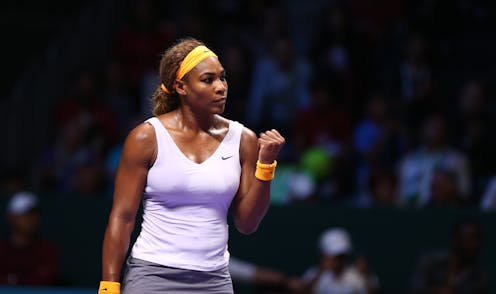
These include Simone Biles (who started gymnastics at the age of six), Tiger Woods (who hit a golf ball on the Mike Douglas TV show at the age of two) and Serena Williams (who was profiled hitting tennis balls on CNN at the age of nine).
There are also a host of athletes who specialised early and achieved outstanding success as a junior but never reached sporting success as an adult for myriad reasons.
Doesn’t practice make perfect?
Everyone would have encountered the saying “practice makes perfect”.
But does it really?
Of course, practice is an integral component of acquiring, developing and sharpening any skill. But perhaps we should be a little cautious.
Let us explain by first asking a few key questions that we encourage readers to ask themselves as the article unfolds: how much practice is needed to be perfect? What type of practice is needed to be perfect? And can “perfect” practice actually help us develop skills that are transferable between sports?
In other words, if practice makes perfect, should we not be advocating for sporting specialisation as early in life as possible?
It may seem logical, but is this belief – held by many parents, youth sport coaches, and perhaps children themselves – actually supported by evidence?
A 2022 systematic review suggested most elite, professional and Olympic level athletes engaged in multisport activities during their youth.
That is, they did not specialise in their chosen sport but actually diversified their sporting experiences up to the age of about 12, with some level of specialisation occurring from the age of 13 onward.
That was not all they found.
Youth sport specialisation was actually linked with increased risks of injury in athletes at the highest levels of competition when compared to those who engaged in multisport activities.
A similar review noted there was no evidence to support specialisation prior to puberty in the attainment of sporting excellence later in life.
What sport specialisation did increase, however, were risks of injury, psychological stress and sporting drop out.
A model to follow
In support of these findings, Jean Côtè (a leading expert in the field of youth psychology) and colleagues proposed a developmental model of sports participation.
This model is broken into three general stages of participation: the sampling years (between the ages of 6-12), the specialising years (13-15), and the investment years (16 and beyond).
As the name of each stage suggests, they are defined by unique types of participation.
For example, the sampling years are characterised by the acquisition of functional motor skills (such as running, throwing and jumping), developed through a wide variety of experiences.
The specialising years feature a progressive increase in focus on the deliberate practice of one or two sports, while the investment years are characterised by more deliberately increasing the volume of practice around one sport. In Australia, this may be the stage where seasonal sports become year-long through the establishment of pre-season training.
Since its inception nearly two decades ago, there has been a growing amount of research supporting these suggestions.
Food for thought
So what does this all mean for parents, youth coaches and children?
We suggest not to rush the process even if your child dreams of an elite sporting career: children under the age of 16 should engage in a wide variety of sporting experiences.
This is not only fun, but the research shows us diversity is likely to reduce the risk of overuse injuries and increase the likelihood of sporting excellence later in life, should that be their ambition.


