

Like the gig economy, crypto gaming is sold with promise of convenience and riches. In practice it’s deeply exploitative
- Written by The Conversation
Video games are increasingly incorporating blockchains, the decentralised databases that underpin cryptocurrencies, as well as NFTs and other “digital assets”. New games are emerging expressly to support blockchain technology, while traditional games are being updated to incorporate blockchains.
As of October 2021, “crypto gaming” accounted for more than half of the blockchain activity over that quarter. At the same time, a treasury inquiry has led to consumer groups calling for regulation in the crypto market.
Crypto evangelists say blockchains are the future of gaming, and crypto gaming is ushering in “Web3” – the so-called next iteration of the internet built on blockchain technology. How true are these promises?
How video games use blockchains
The advent of crypto gaming roughly coincides with the rise of the Ethereum blockchain, launched in 2015.
Ethereum emerged as a platform for building and hosting of decentralised apps (applications designed to run on a blockchain, rather than a singularly owned computer network), as well as ownership over digital assets within those apps.
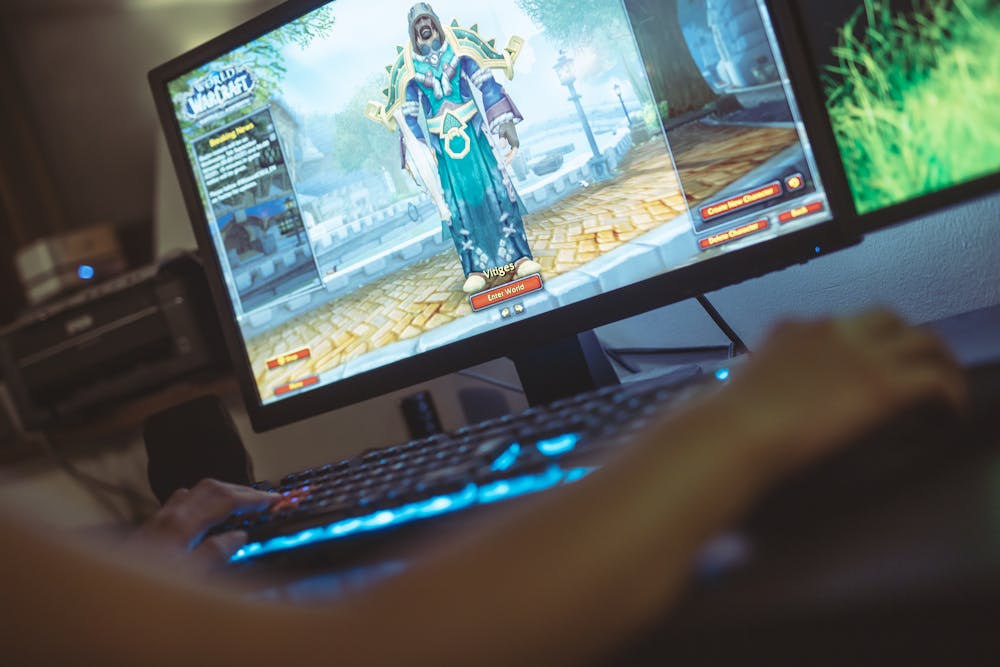
Video games have a history of sophisticated virtual economies. Games such as World of Warcraft and EVE Online – where items are bought and sold for virtual currencies – became a popular test case for these Ethereum features.
The promise of ‘retaining value’
A common model in crypto games is to include two types of crypto tokens. One is a governance token, which generally allows players a say in the governance of a game, and in some instances a share in its revenue. The other is a utility token, which is used to perform certain actions within the game.
Game assets (such as a sword or an e-sports trading card) can also take the form of non-fungible tokens (NFTs), with each unique token represented on the blockchain.
It’s common for NFTs and governance tokens to double as speculative assets that can be bought and sold across crypto or NFT exchanges. But it’s questionable whether they have any fundamental value. Many gaming tokens are at best volatile and at worst worthless.
Yet proponents of crypto gaming try to sell it as the future. Take crypto venture capitalist and Reddit cofounder Alexis Ohanian, who says crypto gaming will allow players to “actually earn value” through accruing assets that have some value in traditional or “fiat” money.
In essence, he says people would no longer need to “waste time” gaming for leisure. Crypto gaming advocates often don’t understand why one might play games for no reason other than to have fun or unwind (or myriad other motivations).
In the crypto gaming vision, play becomes the act of seeking “valuable” tokens, and extending the game into a 24/7 market that pressures players to constantly seek profit. This marketisation of all activity is the very thing that has turned so many off of crypto gaming, and crypto more broadly.
The notion of retaining value is also framed in terms of developers and audiences being better remunerated for making and playing games. On game-distribution platforms such as Phantasma, developers deposit a given amount of the platform’s cryptocurrency in exchange for having their game hosted.
But it’s difficult to see how this differs from the current model, in which distributors charge a flat fee. In fact, hosting in exchange for cryptocurrency is arguably more problematic when you consider that token prices are subject to volatility.
Read more: Apple, Google and Fortnite's stoush is a classic case of how far big tech will go to retain power
Some people, including Web3 advocate Greg Isenberg, believe blockchain-enabled games might redistribute some of the revenue generated by game companies to players.
Players create value for these companies through practices such as “modding” (which refers to modifications, and other in-game activities), and even by contributing to a game’s culture.
Isenberg and others claim blockchains would provide a reliable record of players’ contributions, and therefore help set up a base for remuneration.
Playing to earn
An increasingly common pitch from blockchain game projects is “if tokens are valuable, then play itself can become a form of work”. Players can “play to earn” (commonly referred to as “P2E”).
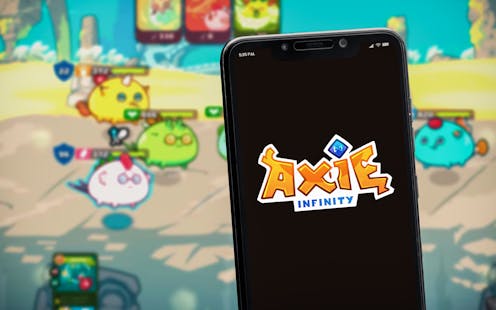
The best known example is Axie Infinity, a Pokémon-style game where playing yields tokens that (at least at some point) had a high monetary value.
In one podcast on P2E games (hosted by the venture capital fund Andreesen Horowitz, which has invested heavily in them), Gabby Dizon, the co-founder of a P2E gaming guild, claimed P2E was a “way to escape … economic hardship”.
Like the gig economy, P2E promises convenience, flexibility and prosperity at a time of widespread immiseration. Also like the gig economy, it’s deeply exploitative in practice.
As recently reported, Axie and other companies like it have a setup in which players must buy an expensive NFT before they can even start playing and participating in the P2E model.
A popular business tactic among some wealthy investors is to lease out their Axies (which are linked to NFTs) and take a cut of any money made by players, many of whom are from developing countries such as the Philippines. The result? All but the best players end up earning below minimum wage.
Responses from industry
Some traditional game developers have embraced blockchains. Last year, French gaming giant Ubisoft launched its own crypto gaming platform called Quartz.
Others have been reluctant. Big distributors including Valve have rejected blockchains, whereas Epic Games has embraced them under strict conditions.
Many indie game developers have pushed back, saying blockchains (and particularly NFTs) are scams that have a disastrous environmental impact, and which exacerbate the negative effects of capitalism.
A crash in the crypto market earlier this month has seen most crypto gaming tokens lose value. Yet this hasn’t deterred fervent investment.
More importantly, ups and downs in the crypto market don’t affect the fundamental problems in the value proposition of crypto gaming.
While blockchains and Web3 are viewed as an investment opportunity by large tech companies and investment funds, ordinary people continue to get scammed out of their money.


