

Is my dog too cold? How cold is too cold for a walk? Here's how to tell
- Written by The Conversation
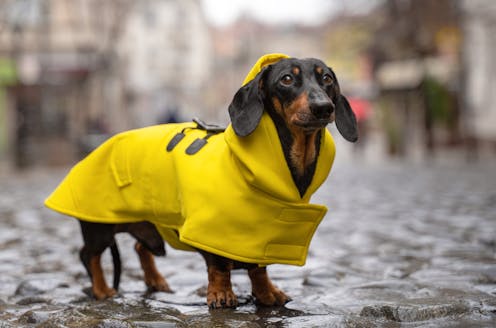
As winter sets in, you might be wondering: how do you know if your dog is warm enough? And how cold is too cold to take them for a walk?
It’s a tricky one; much depends on their natural coat. We go through this question on a daily basis in my household in winter because one of my dogs is small and hasn’t got much coat – she is currently wearing a jumper and on my lap, under a blanket.
But the majority of breeds are probably OK in most Australian temperatures. In many ways, it’s easier to keep a cold dog with a thin coat warm than to keep a hot, thick-coated dog cool when the mercury climbs.
That said, there are some good general rules to follow to ensure your canine friends don’t suffer when an Antarctic blast hits.

Read more: How hot is too hot? Here's how to tell if your dog is suffering during the summer heat
Some guidelines to follow
My rule of thumb is to feel their extremities. If I can feel their ears or feet are a bit chilly to touch, that suggests their core temperature might be a bit low. Then I would provide a coat or put the heater on (if we’re staying in).
Much depends on whether your dog has a double coat or not – many dogs do. You can see if your dog has an undercoat by parting their hair and seeing if there is a downy layer of pale hair between the glossy top coat and the skin.
Breeds that have a double coat include most kelpies, cattle dogs, German shepherds, and huskies. Some breeds, like Samoyeds, have really dense undercoats and can tolerate cold really well. A dog with a thick undercoat doesn’t need anything more to stay warm on a cold day.
If your dog has a single coat, you might need to think a bit more carefully about the cold. Breeds in this category include maltese, cavaliers, greyhounds, whippets, and staffies.
In addition to coat, also consider the golden rule of surface area to volume ratio.
Smaller animals have more surface area for their weight than larger animals, which means they have more surface area to lose heat from compared to a dog that is bigger and heavier.
Small, lean dogs will generally struggle with the cold a bit more than other dogs for this reason. For example, Italian greyhounds are much more vulnerable than regular greyhounds.
If we feel cold then they probably do too. A thicker coat helps slow down heat loss, which is good if you live in a cold environment, but not so great if you live in a warm environment.
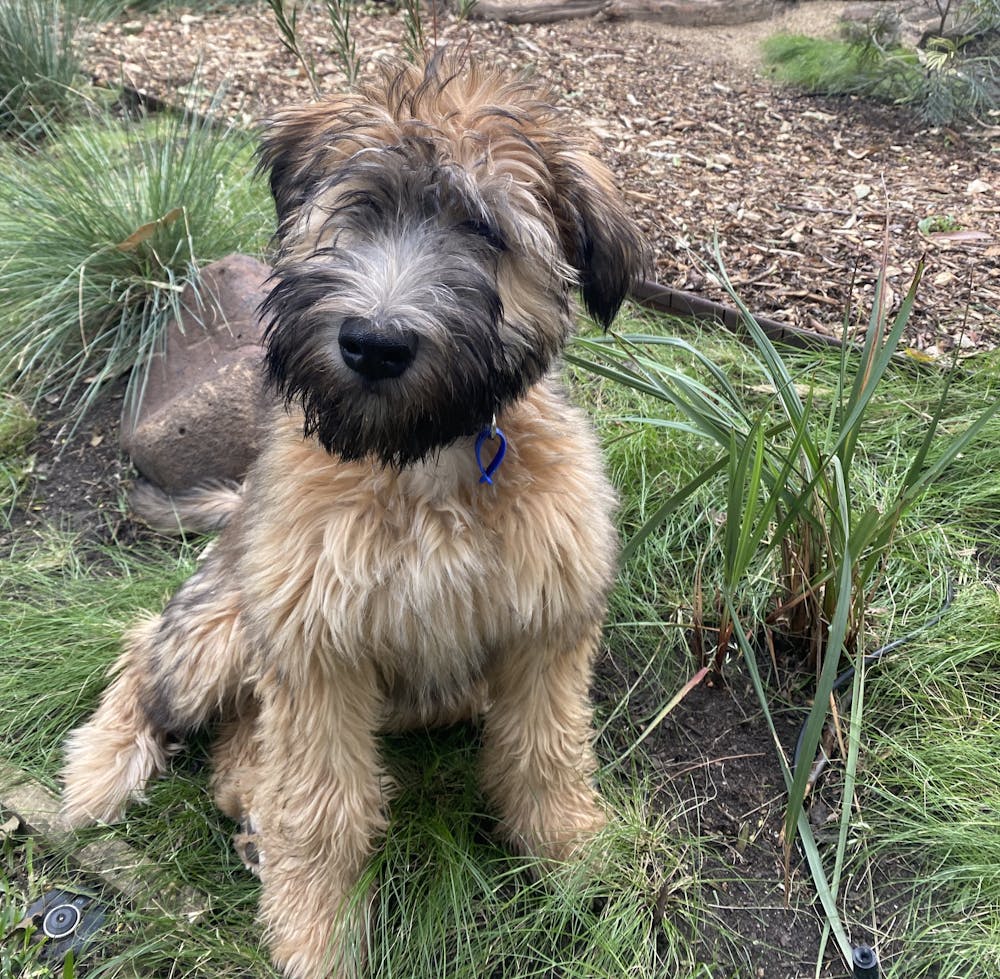 Wheaten terrier puppy Cookie has thick fur.
Lucy Beaumont
Wheaten terrier puppy Cookie has thick fur.
Lucy Beaumont
What behaviours can we look for?
If your dog is shivering, hunched with tail tucked, trying to tuck their paws in close to their body or lift them off the cold ground, they’re uncomfortably cold.
If the dog is being still, they are at more risk of getting cold. For example, we wrap our smallest dog in a blanket when she’s in the car – but once she’s running around, she seems to generate enough heat to stay comfortable.
At home, pay attention to where the dogs are sleeping. If they are curled up in a tight ball on the thickest bed they can find, or nuzzling under blankets, they are trying to keep themselves warm.
My small dog has learned to show me if she wants a jumper on by wagging her tail and sticking her head in it if I hold it out to her. So we might be able to teach our dogs to answer the question “Do you want another layer on?”
If dogs are not sleeping well at night or getting up a lot in the wee hours, it’s a good idea to check how cold they feel and try offering them some warmer sleeping options.
If you’ve got a dog in the yard, make sure they have access to shelter and a bed to get them off the cold ground, especially when there is a cold wind.
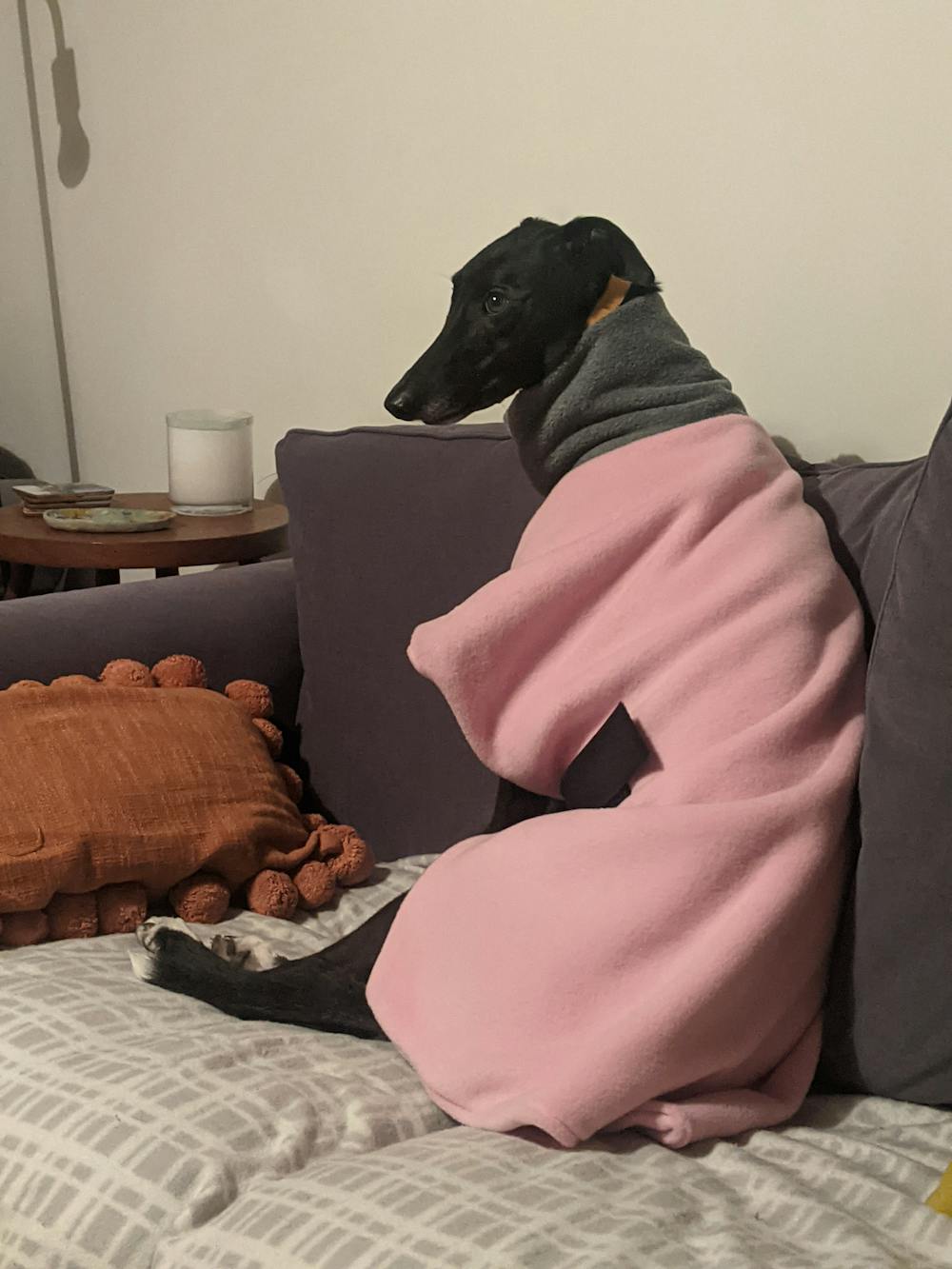 Greyhounds, which have short fur and little body fat, really feel the cold. Here is Walnut wearing her warm pyjamas.
Anthea Batsakis
Greyhounds, which have short fur and little body fat, really feel the cold. Here is Walnut wearing her warm pyjamas.
Anthea Batsakis
Letting your dog choose
In Australia, a cold day is generally easier to manage for dogs than a hot day.
So yes, you could have an Italian greyhound as a pet in southern Tasmania, as long as you add layers when needed and maybe accept they are going to sleep in bed with you under the covers.
I like to let dogs choose, as much as possible, what they need to manage their core temperature.
For example, you might provide a bed with a cover, or extra bedding and blankets on a cold day, so they can use what they need and move away from it when they have warmed up enough.
Once I put a jacket on my dog, she is unable to take it off herself, so I am relying on being able to tell somehow that she doesn’t want it on anymore.
Still, this is an improvement on her simply climbing into my jacket with me all the time, which she still does sometimes even when she’s got her own extra layers on.
Sometimes you just want to cuddle up to a warm friend, though. It’s hard to argue with that!
 Walnut, a two-year-old greyhound, wearing a warm, waterproof coat on a walk near Kinglake, Victoria.
Anthea Batsakis
Walnut, a two-year-old greyhound, wearing a warm, waterproof coat on a walk near Kinglake, Victoria.
Anthea Batsakis


