

Working dogs and horses have tax-deductible upkeep. But Australia’s thousands of working cats go unrecognised
- Written by The Conversation
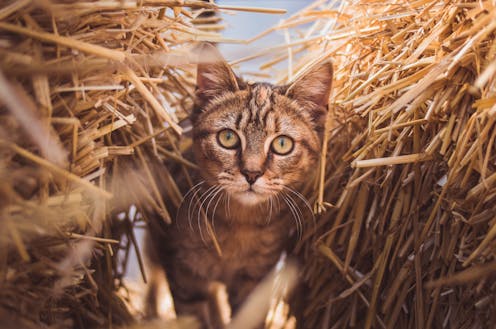
Cats and milk often go hand in hand in popular culture. But on dairy farms, cats do much more than enjoy a saucer of milk – their mousing skills are essential. That’s because dairy farms often have a problem with rats and mice due to their large grain and feed stores and a continuous supply of water and shelter.
Cats are thought to have been domesticated to protect granaries from rodents some 9,000 years ago. In our time, cats are widely used to keep rat and mouse numbers down around houses, farms, horse barns and factories.
But while you can make tax deductions on the upkeep of your working cats in the United Kingdom and United States, Australia’s thousands of working farm cats are not eligible. By contrast, farm dogs and horses in all three countries are recognised for the work they do. Their care is a tax-deductible business expense.
Our new research explores how cats are used as working animals on dairy farms. We found many dairy farmers preferred using cats over using poison for rodent control. For all farmers, the cost of sterilisation was too much, which can create problems of unchecked breeding. Registration fees are also a barrier.
If the care and upkeep of working cats was tax deductible, Australian farmers could manage their cats better without extra financial strain.

Why are working cats needed?
Dairy farming is Australia’s third-largest agricultural industry after cattle and wheat, and Australia is the world’s fourth-largest dairy exporter.
Within the industry, there are major changes underway. Small dairy farms are declining due to economic pressures. Financial returns are dropping and recent natural disasters have taken their toll.
To find out about how small and medium scale dairy farms rely on cats, we interviewed 15 dairy farmers in New South Wales and Queensland who had between three and 60 cats on their farms. Our sample of farmers is not representative, as we restricted the study to dairy farmers who had enrolled their cats in a free desexing program.
The dairy farmers we interviewed had come to rely heavily on their cats for ratting and mousing. Cats were not optional – they were essential for pest control.
Dairy farms are increasingly automated, with automatic milking machines taking over from humans. But rodents can cause real problems by nibbling through crucial wiring and rubber hosing, causing expensive and disruptive equipment breakdowns. As one farmer told us:
cats are cheaper than an electrician bill.
Another said:
we haven’t had [an equipment] breakdown in seven years since the cats turned up […] That on its own is worth thousands, plus no [downtime] with the milking machines out of action […] yeah, the pluses are just massive.

Rodents also eat and contaminate cattle feed and can spread diseases to livestock and humans. More mice and rats means more snakes, posing risks to humans, working dogs and cattle.
One farmer told us:
the cats […] work everyday where baits are only ever any good while you’ve got bait out.
Most of the farmers we interviewed said they would never farm without cats. “We couldn’t do without them now. Otherwise, you’d be overrun with rats”, one said.
Of our 15 interviewees, ten had previously relied on rat poison. The farmers told us poison was less effective, expensive and unsafe. Rat poison poses risks to wildlife, working dogs, pets and children. Rats and mice are also developing resistance to some poisons. Rat poison has to be continuously applied and can be expensive.
One farmer said:
baiting’s not great for the other wildlife, and we’ve got dogs and I’d prefer not to use the baits.
By contrast, the farmers told us working cats offered a long-term, low-maintenance solution. Farmers reported fewer rodents and fewer snakes.
Farmers clearly saw their cats as working animals. As one said:
they’re dead set working cats because of […] the saving on repairs, the saving on baiting and yeah, the cats are doing their job, they’re basically working for me.
While some farmers saw the cats as purely functional, others appreciated their companionship, especially during solitary early morning milking.
 For some farmers, cats provide companionship during early morning milking.
Aleksandr Lupin/Shutterstock
Is it time for cat deductions?
While our interviewees reported strong upsides to using working cats, there are downsides.
Registration fees and permits can cost thousands of dollars, as an average sized dairy might have 20 or more working cats. There are other costs too, from desexing to tick treatment to vaccination to microchipping. Our recent research suggests desexing would reduce the risk from cats going feral.
As one farmer said:
the cost is too great to have to get all those cats done [sterilised] ourselves.
For farmers, these fees may be having unintended consequences such as added stress from financial worries and damage to mental health if farmers are forced to euthanise cats and kittens for population control. Waiving registration costs for working cats and providing funding to ensure cats are desexed would reduce the impact on wildlife.
At present, the Australian Tax Office recognises horses and dogs as working animals – provided they have been “trained for their role from a young age” and are not pets.
State and federal laws would have to be updated so working cats would be considered domestic cats, not feral cats, and biosecurity laws in states such as Queensland would have to be clarified. Tax rules would have to be changed too, as working cats would not meet the training requirement for working animals, given cats are natural predators of rodents.
But if these changes were made and farm cats were legally recognised, dairy farmers would have clear incentives to ensure their working cats are desexed, vaccinated and cared for.


