

Why can’t I keep still after intense exercise?
- Written by The Conversation
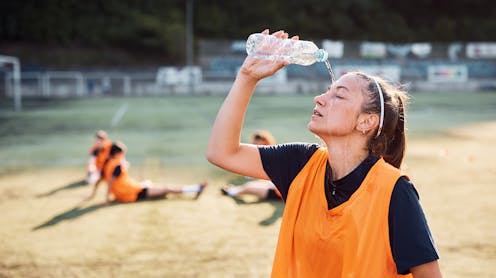
Do you ever feel like you can’t stop moving after you’ve pushed yourself exercising? Maybe you find yourself walking around in circles when you come off the pitch, or squatting and standing and squatting again when you finish a run.
Sometimes the body knows what’s best for us, even if we’re not aware of the science.
Moving around after intense exercise actually helps the body recover faster. Here’s how it works – plus a tip for if you feel exactly the opposite (and just want to lie down).
What is ‘intense’ exercise?
There are different ways to measure exercise intensity. One is simply how hard it feels to you, known as the “rating of perceived exertion”.
This takes into account how fast you’re breathing, how much you’re sweating and how tired your muscles are. It also considers heart rate.
The average resting heart rate when you’re not exerting yourself is around 60–80 beats per minute, although this can vary between people.
The maximum healthy heart rate is based on subtracting your age from 220. So, if you’re 20 years old, that’s 200 beats per minute when you’re exercising as hard as you can.
This decreases as you age. If you’re 50 years old, your maximum heart rate would be around 170 beats per minute.
An increased heart rate helps pump blood faster to deliver fuel and oxygen to the muscles that are working hard. Once you stop exercising your body will begin its recovery, to return to resting levels.
Let’s look at how continuing to move after intense exercise helps do this.
Removing waste from the muscles
Whenever the body converts fuel into energy it also produces leftover substances, known as metabolic byproducts. This includes lactate (sometimes called lactic acid).
During intense exercise we need to burn more fuel (oxygen and glucose) and this can make the body produce lactate much more quickly than it can clear it. When lactate accumulates in the muscles it may delay their recovery.
We can reuse lactate to provide energy to the heart and brain and modulate the immune system. But to do this, lactate must be cleared from the muscles into the bloodstream.
After intense exercise, continuing to move your body – but less intensely – can help do this. This kind of active recovery has been shown to be more efficient than passive recovery (meaning you don’t move).
Returning blood to the heart
Intense exercise also makes our heart pump more blood into the body. The volume pumped to the muscles increases dramatically, while blood flow to other tissues – especially the abdominal organs such as the kidneys – is reduced.
Moving after intense exercise can help redistribute the blood flow and speed up recovery of the respiratory and cardiovascular systems. This will also clear metabolic byproducts faster.
After a long run, for example, there will be much more blood in your leg muscles. If you stand still for a long time, you may feel dizzy or faint, thanks to lowered blood pressure and less blood flow to the brain.
Moving your legs, whether through stretching or walking, will help pump blood back to the heart.
In fact around 90% of the blood returning from the legs via veins relies on the foot, calf and thigh muscles moving and pumping. The calf muscle plays the largest role (about 65%). Moving your heels up and down after exercising can help activate this motion.
What if you don’t feel like moving?
Maybe after exercise you just want to sit down in a heap. Should you?
If you’re too tired to do light movement such as stretching or walking, you may still benefit from elevating your legs.
You can lie down – research has shown blood from the veins returns more easily to the heart after exercise when you’re lying down, compared to sitting up, even if you’re still. Elevating your legs has an added benefit, as it reverses the effect of gravity and helps circulation.
Read more https://theconversation.com/why-cant-i-keep-still-after-intense-exercise-247555


