

The Liberals’ women problem may seem intractable, but here’s what they could learn from the Teals
- Written by The Conversation
The impression of the Liberal Party as out of touch with women persists in this year’s election.
The party’s “women problem” was brought into sharp focus by the backlash to its now-abandoned policy to stop public servants working from home.
Then there was a candidate claiming women should be removed from the military, and misogynistic social media posts from a Liberal campaign manager. These recurring issues suggest there are larger problems that have not been dealt with.
Until the party does so, Liberal claims of broad representation remain in doubt. It also makes the party more vulnerable to independent insurgencies, making its path to majority government unclear.
My new research shows how a key Liberal weakness became an independent success for “Teal” candidates. The results provide key lessons for the Liberals on how the Teal campaigns that won against them in the previous election recruited women to their movement.
Read more: When 'equal' does not mean 'the same': Liberals still do not understand their women problem
An intractable problem
The Liberal Party has long had a lack of female representation in its ranks.
Although only 29% of federal Liberal MPs are women, the party has been reluctant to adopt gender quotas.
It’s instead adopted a gender parity by 2025 target, which will almost certainly not be met. Recent research has shown women still make up only one in three Liberal candidates and are less likely to run in safe seats.
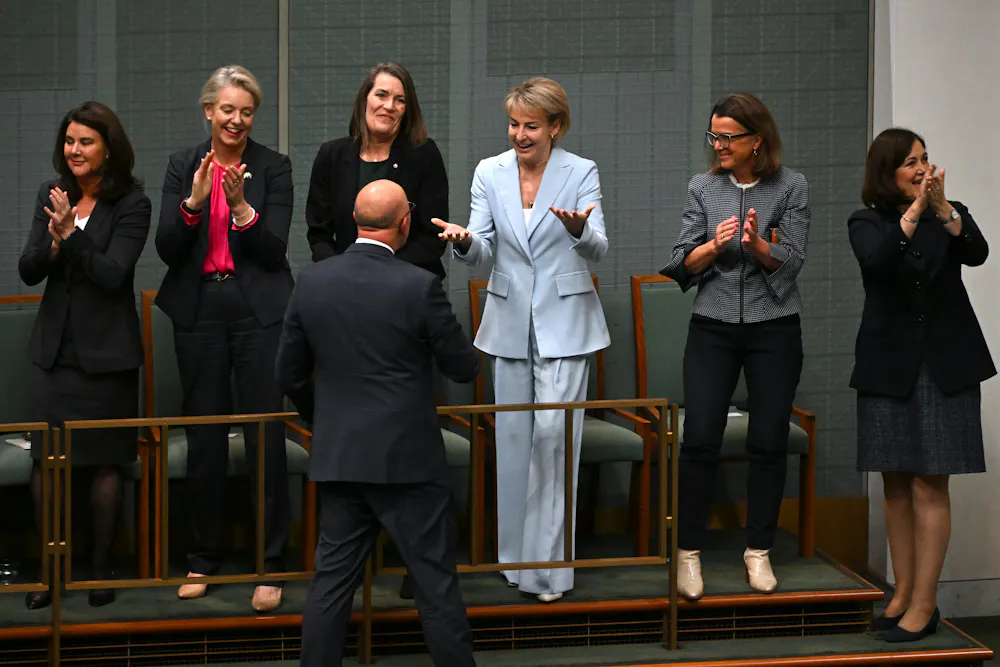
A review of gender within the Liberal Party in 2020 found women made up 34.8% of Young Liberals and only 23.4% of branch presidents or similar leaders. Despite targets, these numbers have remained sticky.
Recruiting more women to take up positions throughout the organisation is vital. Without this, parties have a smaller pool of prospective women candidates and are less likely to preselect women.
My study
As part of my recently published study, I conducted 55 interviews in 2022 with volunteers, campaigners and candidates to examine how Teal campaigns recruited.
This study found women’s social and professional networks are vital for recruitment, for everyone from boots-on-the-ground volunteers to candidates.
Recruiting through personal networks is more effective than other means often used, such as individuals signing themselves up alone. Interviewees gave examples of recruiting their friends and family members into independent campaigns, like the woman who designed the graphics for a campaign because she was an old schoolmate of the candidate.
People’s social networks are often full of people who are similar to them. Among the independents, the women who volunteered were often skilled professionals, who recruited other professional women.
This recruitment developed organically through friendships and colleagues. Interviewees gave examples, such as a volunteer who:
[…] invited eight or ten of her own friends, who she knew were pretty well onside, but asked them to bring friends to that gathering, which ended up being 50 or so people.
Many independent volunteers had also been active in local community organisations. As one interviewee put it:
it’s women who get things done. It’s always the women who are organising barbecues and whatever needs to be done at school and whatever community organisation there is, whether it’s a community garden or a football club. It always seems to be women who just quietly go about the work.
There is a long literature exploring who is a “joiner” and why that supports this approach. Women involved in other causes and organisations – political or not – are more likely to participate and be effective.
Recruiting from civic organisations is not unique to independents. The Liberal Party effectively engaged with the Women’s Leagues in its formative years. Doing so again would likely provide volunteers who are well-known and connected in their communities, enthusiastic and full of expertise the campaigns could draw on.
Women seeing potential in other women
As the independent campaigns developed, they required supporters with specialist skills, such as website development. To find these people quickly, campaign leaders recruited trusted friends and professional contacts instead of advertising externally.
This meant women were recruited directly to the higher levels of the campaign, making up the majority of leaders across the movement.
In turn, these leaders shaped the candidate-selection processes, searching for “the candidate from central casting”, as one interviewee described Allegra Spender. Most saw a professional woman as the ideal candidate in 2022.
Women are more likely to believe women candidates are electable, shaping who gets preselected to run as a candidate.
Within the Liberal Party, women campaigned for more female candidates last year. To succeed in these factional battles, more women must hold leadership positions.
The continued lack of progress on gender parity suggests the Liberal Party needs to do more to actively engage with the women who are already members of the party and engage with leaders across civic and political organisations that already exist within the community. Members may be their most important resource in achieving parliamentary gender parity.
However, achieving this means first having women in the room. Independent interviewees viewed parties as masculine and hierarchical organisations.
Dealing with this perception will be no easy feat, but must be the first step in any attempt to bring women back to the Liberal Party.


