

Urban rewilding has brought back beavers, hornbills and platypuses to city parks – and that’s just the start
- Written by The Conversation
By 2050, almost 70% of the world’s population will live in cities – 20% more than today. As cities expand, the natural world around them contracts. Species decline faster in and around cities than almost anywhere else. But what if cities could become part of the solution — places to actively restore biodiversity rather than just areas of loss?
Our new research explores whether reintroducing native animals to cities can restore ecosystems and reconnect people with nature.
To date, the rewilding movement has largely focused on reintroducing animals to “wilder”, more remote areas. Our review of more than 2,800 rewilding papers found only 17 in urban environments.
While these numbers are low, their successes show rewilding cities can and does work. Beavers now swim in a wetland in London for the first time in 400 years, platypuses are once again breeding in Sydney’s Royal National Park and hornbills fly amid Singaporean skyscrapers.

Most nature restoration in cities forgets about the animals
Many cities are working to bringing back nature through tree planting, wetland restoration and expanding green spaces. These projects offer real benefits: cooler streets, cleaner air and healthier places for people to live.
But when it comes to wildlife, most urban nature restoration stops at plants, birds, bees and beetles. Less mobile animals such as reptiles and mammals are often left out.
For years, urban restoration has been done on the assumption that if you build it, they will come. That works for birds, bats and insects, who can fly in from outside a city. But reptiles and mammals are usually unable to return on their own in fragmented cityscapes – even if enough large and suitable habitat has been restored.
As a result, many restored parks look lush but are often ecologically incomplete or overrun with invasive species, such as highly adaptable rats, cats and foxes.
Bringing back small mammals and reptiles has to be done actively. Once back, these animals can take up vital ecological roles such as digging, scavenging and predation, which boost the health of soils, cycle nutrients and keep pests under control.

Beavers, hornbills, monkeys and platypuses
What does it look like to reintroduce animals to cities?
The red squirrel (Sciurus vulgaris) was once common across Portugal but died out in the 16th century. In the early 1990s, Portuguese authorities successfully reintroduced the red squirrel to urban parks in two cities.
For decades, conservationists have worked to bring back urban forests in Rio de Janeiro in Brazil. In 2015, they successfully brought back the brown howler monkey (Alouatta guariba) and the red-rumped agouti (Dasyprocta leporina) to these forests.
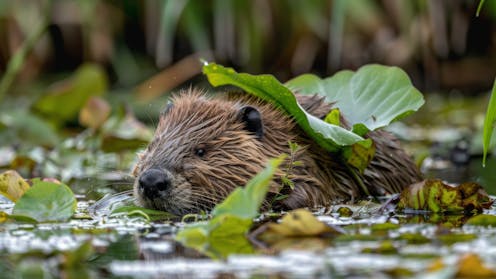
By the end of the 16th century, beavers had been hunted to extinction across the United Kingdom. But in 2023, rewilding efforts in the countryside expanded to cities. A family of beavers now swim in wetlands in Ealing, 20 kilometres outside London’s centre.
The city-state of Singapore has successfully added a great deal of greenery to urban areas, from parks to green buildings. Creating this habitat enticed back the adaptable oriental pied hornbill (Anthracoceros albirostris) which is now breeding amid skyscrapers. Conservationists helped by building nesting boxes.
In 2023, platypuses (Ornithorhynchus anatinus) were reintroduced to the Royal National Park on Sydney’s urban fringe for the first time in more than 50 years. Recent monitoring confirms they are breeding.
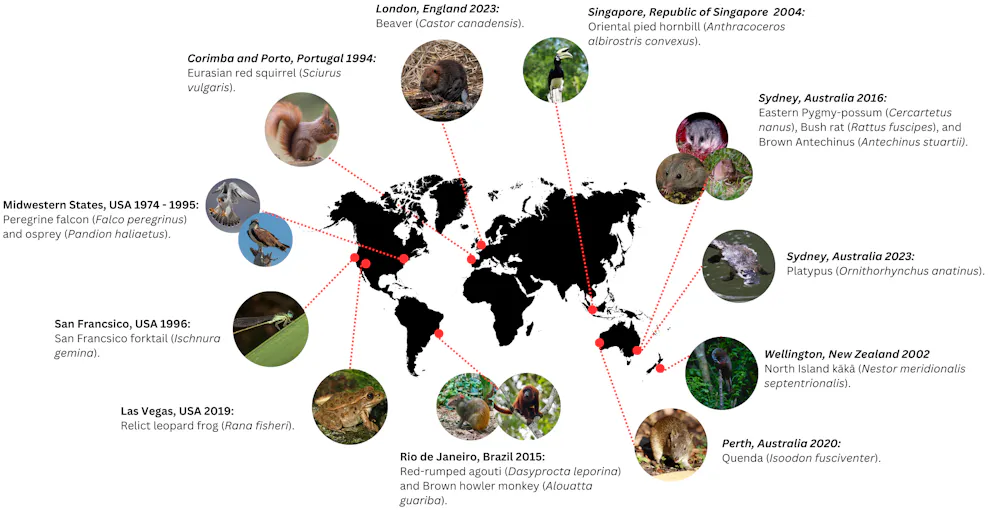 This figure shows successful urban rewilding projects around the world.
Patrick Finnerty, CC BY-NC-ND
This figure shows successful urban rewilding projects around the world.
Patrick Finnerty, CC BY-NC-ND
What makes urban rewilding successful?
Understanding why a species disappeared in the first place is just as important as bringing it back. It’s no good just bringing back native animals only to watch them be devoured by foxes or cats, or run over by cars. The original threats need to be addressed.
Of the successful projects we found, there were common themes, such as artificial nest boxes, supplementary feeding, predator control and community engagement. Good projects chose their species well and planned for the long term.
Selecting the best species for rewilding can be tricky, but our recent research outlines a simple framework to identify those most likely to succeed. A good first step is to start with regionally common but locally missing species. This helps keep common species common.
If cities want to bring wildlife back, rewilding must be ecologically smart, socially inclusive, and built to last.
In countries with colonial histories, working with Traditional Owners and embedding Indigenous knowledge should be central to urban rewilding, not just for cultural inclusion but to ground projects in Country and ensure they endure.
Why rewilding cities matters for people, too
More and more, humans are disconnecting from nature. As more people live in cities, daily encounters with wildlife have become rare. This fuels what’s been dubbed nature deficit disorder.
In the United States, for instance, children can recognise over 1,000 corporate logos, yet struggle to name even a handful of native plants and animals. Australians, too, are interacting with nature less. If we don’t experience nature, we’re less likely to support conservation efforts to protect it.
Urban rewilding offers a way to change this. By bringing native animals back into city parks and reserves, we can create everyday opportunities for people to see, hear and connect with wildlife.
Where to next?
Urban rewilding is still in its early days. But the method shows promise, and can build on existing work to green cities.
Actively bringing wildlife back will mean pairing habitat restoration with targeted species returns, supported by tools like predator control, artifical habitat and movement corridors.
We also need better research – long-term studies to track which rewilding efforts actually work and new tools to help cities choose the right species, balance ecological goals with public support, and plan for the long haul.
If we want greener, wilder and more resilient cities, we can’t stop at plants. It’s time to bring the animals back too.


