News Daily


Men's Weekly

Australia

  • Written by The Conversation
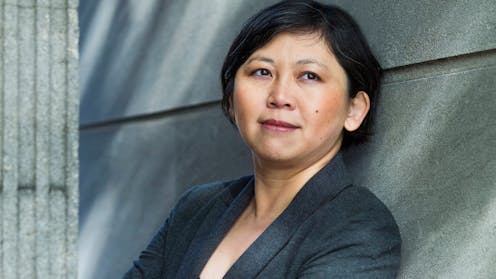
‘Radical acceptance’: Yiyun Li lost both her sons to suicide. Her rigorous memoir reveals her as a very special writer

“My husband and I had two children and lost them both,” writes Yiyun Li early in her latest book, Things in Nature Merely Grow. And then, with harrowing directness, “Both chose suicide”.

Such loss might seem at odds with the title of growth, but as she explains in her deeply thoughtful, rigorous account of a family tragedy, it reflects insights developed through the practice of gardening. “Things in nature merely grow until it’s time for them to die” – and gardeners must learn to develop patience, flexibility and openness to what may come.

Such capacities are very useful for writers, and Li is a prolific author who brings to her writing a forensic, incisive perspective, along with a marvellous deployment of language and tone.

Review: Things in Nature Merely Grow – Yiyun Li (Fourth Estate)

Born and raised in China, Li migrated to the United States in 1996 with the intention of completing a doctorate in immunology. But, she says, “I wanted to do something I loved”. That turned out to be writing. In 2005, she added a master of fine arts (MFA) from University of Iowa to her bachelor of science and research masters in immunology.

I imagine these qualifications, along with her nuclear physicist father, provided deep immersion in the scientific method – and led to her writing style, imbued with systematic observation and analysis.

Li’s first book, the short-story collection A Thousand Years of Good Prayers, was the inaugural winner of the Frank O'Connor International Short Story Award. In 2010, she was included in the New Yorker’s 20 best writers under 40 and won a MacArthur “genius” grant. Since then, she has received cabinets of further awards.

Across her work, Li consistently explores difficult issues – as writers generally do. In many cases, the topic and content draw on her experiences as the child of an abusive mother, and as a young woman living under the strictures of China in the post-Tiananmen Square period.

Years after her migration, she experienced a major depressive episode and was hospitalised following suicide attempts. Out of this experience, she wrote her first memoir (in essays), Dear Friend, From My Life I Write to You in Your Life (2017).

Her collection explores what it means when one finds, or feels, that “all the things in the world are not enough to drown out the voice of this emptiness that says: you are nothing”. It is a deeply moving book, while managing to avoid becoming bleak or sentimental. She writes in ways that illuminate what reading can do for a person who is suffering, offering techniques for living well – or well enough.

Improbably, impossibly cruel

But when she wrote Dear Friend, she had not yet experienced how much sorrow was to come. Just months after its publication, her elder son Vincent, then 16, died by suicide.

She responded by writing a novel, Where Reasons End (2019), which takes the form of a conversation between a mother and the son who, like Vincent, had decided not to remain among the living. Anthony Cummins writes its, “tone is both astringent and faintly mischievous”: an extraordinary achievement under such circumstances.

Six years later, in what seems an improbably, impossibly cruel event, her second son James, aged 19, also died by suicide. Again, Li turned to reading and to writing. This time, she selected nonfiction, resulting in Things in Nature Merely Grow. She explains this decision:

Vincent lived feelingly. James lived thinkingly. When Vincent died, I was able to conjure him up in a book by feeling, but I knew, right after James died, that I would not be able to do that for him. James would not like a book written from feelings.

This book is James’ story; but it is also the story of Vincent, his beloved older brother – and of Li herself and her husband, and their life in the permanent absence of their sons.

A very special kind of writer

It is not an easy book. I had to take a break after each chapter or two, to reset my emotional state so that I could read it as a reviewer, and not as a parent. The first line of the first chapter warns readers: “There is no good way to say this”. A bit further into the volume, she writes:

This book is about life’s extremities, about facts and logic, written from a particularly abysmal place where no parent would want to be. This book will neither ask the questions you may want me to ask nor provide the closure you may expect the book to offer.

What she does provide is clarity, precision, close observation. Despite the “extremities”, she reports on the situation – from the moment of the police arriving to announce James’ death, right through to her arriving at a “radical acceptance” of how she must now live.

This approach reminds me forcibly of Joan Didion’s account of the sudden death of her husband, in The Year of Magical Thinking (2005). Robert McCrum argued this book changed the pattern of grief writings, which evolved from “misery memoir” to literature. He observes, “you have to be a very special kind of writer to find the detachment to examine a devastating personal loss”. Li is, like Didion, that “very special kind of writer”, and it is her capacity to observe and examine that makes this volume such a significant contribution to the literature on mourning. Is it detachment? The tone is thoughtful; in a way, both scientific and analytical. In an interview, Li noted both she and Didion “focus on their thoughts, rather than their feelings”. This is, I imagine, a useful way of getting by, rather than collapsing from the overburden of feelings. But I suspect the voice both Li and Didion use models detachment, rather than in fact being detached or aloof. They attend to the “what is” of where they find themselves – and this choice affords a clarity of seeing and writing. There seems to me a deep investment in such writing: not striving to “make sense” of something that exists outside sense, but rather finding a way to look at it directly. It is, perhaps, akin to Graham Greene’s “splinter of ice in the heart of a writer”: a splinter that provides a standpoint from which one can build at least temporary stability in the midst of turmoil. A primer for mourning The terms very much in my own mind as I read this book were “clarity” and “precision”. Li applies both as she lays out the way such losses alter the world; or rather, alter one’s being in the world. She reads copiously and cites widely – Euclid, Shakespeare, Euripides, Montaigne, C.S. Lewis, Albert Camus, Henry James, Wallace Stevens. And while she observes there may be consolations in writing and reading, she does not offer either as treatment, or panacea. Instead, she writes: Writing, offering a transient refuge, is an approximation of salvation, nothing more. Who among us stands a chance facing an abyss? There are no empty consolations, no promises of resolution. But there is a great deal of wisdom and discussion of how one might come to understand and accommodate loss. Manifestly, she loved and continues to love her sons. But “more important than loving”, she writes, “is understanding and respecting my children, which includes, more than anything else, understanding and respecting their choices to end their lives”. In this respect, the book is something of a primer for those who mourn. She models how she came to the point of radical acceptance, and offers insights and advice to the freshly bereaved. For example: get enough rest; eat, and exercise; work; find ways to live in this new state. Because, she writes: If an abyss is where I shall be for the rest of my life, the abyss is my habitat. One should not waste energy fighting one’s habitat. The book also offers advice for those seeking to engage with mourners. If you’re sending flowers, she suggests, deliver them in a vase – the mourner will lack the energy to find a vase and trim and arrange the flowers. Also: don’t offer advice; don’t avoid the mourner; do talk about the person they have lost. Not consoling, but wise Things in Nature Merely Grow is an essay as much as it is a memoir. An essay in what death can mean, and does mean, and might be. An essay on suicide; on the loss of a child or children; the complexities of parenting; the joys of loving. It unfolds the paths that emerge from initial shock through to capacity to reflect on what this entails. It is – and I use the term advisedly – wise. It draws on literature, philosophy, maths: all that deep knowledge we humans have been collecting over centuries and millennia. Do they provide consolation? Probably not. But they provide context. And context can bring at least an intellectual understanding – and hope that an emotional understanding, or at least an accommodation, might follow. If this article has raised issues for you, or if you’re concerned about someone you know, call Lifeline on 13 11 14.

Read more https://theconversation.com/radical-acceptance-yiyun-li-lost-both-her-sons-to-suicide-her-rigorous-memoir-reveals-her-as-a-very-special-writer-258111

Lighting Stores Perth: Expert Guidance for Inspired and Functional Spaces

Choosing the right lighting can completely change how a space feels, functions, and flows. Trusted lighting stores Perth play a crucial role in helping homeowners and businesses make confident lighting decisions that go beyond appearance alone. Lighting influences mood, productivity, comfort... Read more

Why Retail Cleaning Plays a Key Role in Customer Experience

In retail environments, cleanliness directly shapes how customers perceive a brand. Retail cleaning is not just about appearance but about creating a space where shoppers feel comfortable, confident, and welcome. From small boutiques to large shopping centres, a clean retail environment... Read more

Cleaner Floors, Healthier Homes: Lefant M3L Arrives as Australians Prioritise Pet-Friendly Hygiene

As pet ownership continues to rise, Australians are placing greater emphasis on maintaining a hygienic indoor environment for both family members and their animals. Issues such as dander, loose fur, and tracked-in dirt require consistent cleaning to support better home... Read more

How Home Removalists Save Time, Money, and Energy During Your Move

Moving to a new home is an exciting chapter in life, but the process of getting there can be overwhelming. From packing and organizing to transportation and unpacking, relocation involves a long list of tasks that can consume both your... Read more

Fulfilment Australia: Streamlining ECommerce Operations for Business Growth

As eCommerce continues to thrive, efficient order fulfilment has become one of the most critical components of customer satisfaction and business success. Companies across the nation are turning to professional fulfilment Australia providers to manage inventory, packaging, and shipping operations... Read more

Evaporative Cooling Cleaning Melbourne: Keeping Your System Fresh, Efficient, and Healthy

As Melbourne’s summers grow hotter, many homes rely on evaporative cooling systems to stay comfortable. While these systems are energy-efficient and environmentally friendly, they require regular maintenance to perform at their best. Professional Evaporative Cooling Cleaning Melbourne services are essential... Read more