

Many fish are social, but pesticides are pushing them apart
- Written by The Conversation
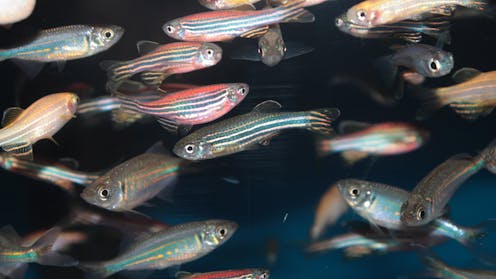
Scientists have detected pesticides in rivers, lakes and oceans worldwide. So what are these pesticides doing to the fish?
Long before pesticides reach lethal doses, they can disrupt hormones, impair brain function and change fish behaviour. Many of these behaviours are essential for healthy ecosystems.
In a new study, my colleagues and I found that pesticides affect many different behaviours in fish. Overall, the chemical pesticides make fish less sociable and interactive. They spend less time gathering in groups, become less protective of their territory, and make fewer attempts to mate.
Imagine the ocean without the vibrant schools of fish we’ve come to love – only isolated swimmers drifting about. Quietly, ecosystems begin to unravel, long before mass die-offs hit the news.

Fish are living and dying in polluted water
Australia is a major producer and user of pesticides, with more than 11,000 approved chemical products routinely used in agricultural and domestic settings. Remarkably, some of these chemicals remain approved in Australia despite being banned in other regions such as the European Union due to safety concerns.
When a tractor or plane sprays pesticides onto crops, it creates a mist of chemicals in the air to kill crop pests. After heavy rain, these chemicals can flow into roadside drains, filter through soil, and slowly move into rivers, lakes and oceans.
Fish swim in this diluted chemical mixture. They can absorb pesticides through their gills or eat contaminated prey.
At high concentrations, mass fish deaths can result, such as those repeatedly observed in the Menindee Lakes. However, doses in the wild often aren’t lethal and more subtle effects can occur. Scientists call these “sub-lethal” effects.
One commonly investigated sub-lethal effect is a change in behaviour – in other words, a change in the way a fish interacts with its surrounding environment.
Our previous research has found most experiments have looked at the impacts on fish in isolation, measuring things such as how far or how fast they swim when pesticides are present.
But fish aren’t solitary — they form groups, defend territory and find mates. These behaviours keep aquatic ecosystems stable. So this time we studied how pesticides affect these crucial social behaviours.

Pesticide exposure makes fish less social
Our study extracted and analysed data from 37 experiments conducted around the world. Together, these tested the impacts of 31 different pesticides on the social behaviour of 11 different fish species.
The evidence suggests pesticides make fish less social, and this finding is consistent across species. Courtship was the most severely impacted behaviour – the process fish use to find and attract mates. This is particularly alarming because successful courtship is essential for healthy fish populations and ecosystem stability.
Next, we found pesticides such as the herbicide glyphosate, which can disrupt brain function and hormone levels had the strongest impacts on fish social behaviours. This raises important questions about how brain function and hormones drive fish social behaviour, which could be tested by scientists in the future.
For example, scientists could test how much a change in testosterone relates to a change in territory defence. Looking at these relationships between what’s going on inside the body mechanisms and outward behaviour will help us better understand the complex impacts of pesticides.
We also identified gaps in the current studies. Most existing studies focus on a limited number of easy-to-study “model species” such as zebrafish, medaka and guppies. They also often use pesticide dosages and durations that may not reflect real-world realities.
Addressing these gaps by including a range of species and environmentally relevant dosages is crucial to understanding how pesticides affect fish in the wild.
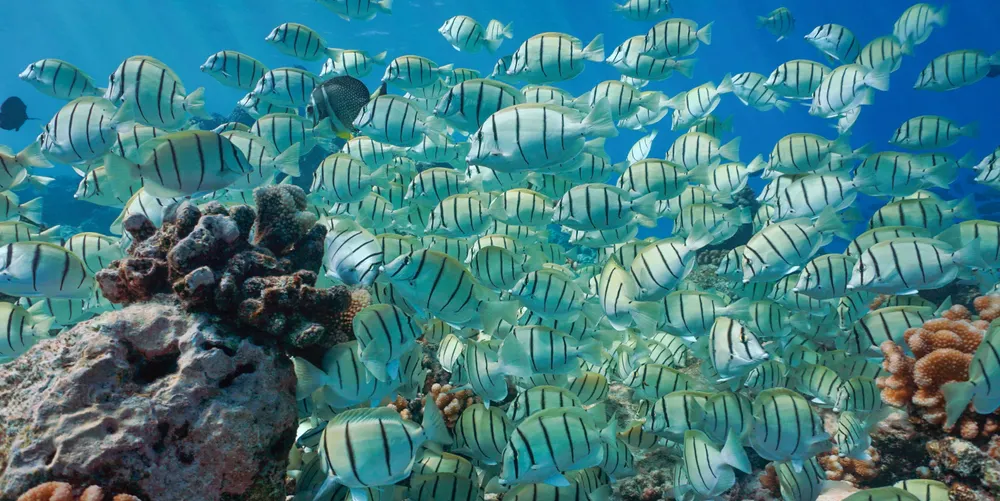 One of the experiments in our study involved convict surgeonfish, which gather in large groups or ‘shoals’.
Damsea, Shutterstock
Behaviour is a blind spot in regulation
Regulatory authorities should begin to recognise behaviour as a reliable and important indicator of pesticide safety. This can help them catch pesticide pollution early, before mass deaths occur.
Scientists play a crucial role too. By following the same methods, scientists can produce comparable results. A standardised method then provides regulators the evidence needed to confidently assess pesticide risks.
Together, regulatory authorities and scientists can find a way to use behavioural studies to help inform policy decisions. This will help to prevent mass deaths and catch pesticide impacts early on.
Leave no stone unturned in restoring our waters
Rivers, lakes, oceans and reefs are bearing the brunt of an ever-growing human footprint.
So far, much of the spotlight has focused on reducing carbon emissions and managing overfishing — and rightly so. But there’s another, quieter threat drifting beneath the surface: the chemicals we use.
Pesticides used on farms and in gardens are being detected everywhere, even iconic ecosystems such as the Great Barrier Reef. As we have shown, these pesticides can have disturbing effects even at low concentrations.
Now is the time to cut pesticide use and reduce runoff. Through switching to less toxic chemicals and introducing better regulations, we can reduce the damage. If we act with urgency, we can limit the impacts pesticides have on our planet.
Read more https://theconversation.com/many-fish-are-social-but-pesticides-are-pushing-them-apart-256230


