

The Murray–Darling Basin Plan Evaluation is out. The next step is to fix the land, not just the flows
- Written by The Conversation
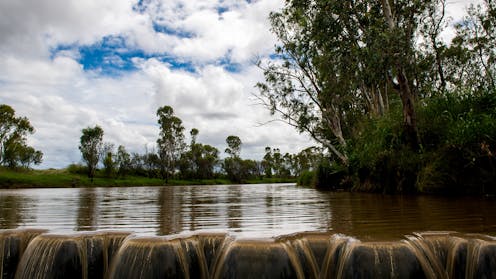
A report card into the A$13 billion Murray–Darling Basin Plan has found much work is needed to ensure the ecology of Australia’s largest river system is properly restored.
The assessment, by the Murray–Darling Basin Authority, is the most comprehensive to date.
The authority says the river system is doing better now than it would have without the plan, which aims to ensure sustainable water use for the environment, communities and industries. But it found there is more to be done.
We are water, economics and environmental researchers with many years of experience working in the Murray-Darling Basin. We agree more work is needed, but with a more local focus, to restore the basin to health.
This requires more than just more water for the environment. Coordinated local efforts to restore rivers and the surrounding land are desperately needed. There’s so much more to the river system than just the water it contains.
Preparing for the 2026 Basin Plan Review (Murray–Darling Basin Authority)What’s the plan?
The Murray-Darling Basin is Australia’s food bowl. But for too long, the health of environment was in decline – rivers were sick and wildlife was suffering. The river stopped flowing naturally to the sea because too much water was being taken from it.
Poor land management has also degraded the river system over time. Floodplain vegetation has been damaged, the river channel has been re-engineered, and pest plants and animals have been introduced.
The Murray-Darling Basin Plan was established in 2012. It aimed to recover water for the environment and safeguard the long-term health of the river system, while continuing to support productive agriculture and communities. It demanded more water for the environment and then described how this water would be delivered, in the form of targeted “environmental flows”.
Since 2012, the allocation of water to various uses has gradually changed. So far, 2,069 billion litres (gigalitres) of surface water has been recovered for the environment. Combined with other earlier water recovery, a total of about 28% of water previously diverted for agriculture, towns and industry is now being used by the environment instead.
A mixed report card
The evaluation released today is the first step towards a complete review of the plan next year. The 2026 review will make recommendations to Environment and Water Minister Murray Watt. It will then be up to him to decide whether any changes are needed.
It is a mixed report card. Ecological decline has been successfully halted at many sites. But sustained restoration of ecosystems across the basin is yet to be achieved, and native fish populations are in poor condition across 19 of the basin’s 23 catchments.
Climate change is putting increasing pressure on water resources. More intense and frequent extreme climate events and an average 20–30% less streamflow (up to 50% in some rivers) are expected by mid-century.
The evaluation also called for better policy and program design. Specifically, flexible programs have proven more effective than prescriptive, highly regulated programs.
Finally, the report also highlights that the cost of water reform is increasing.
Direct buybacks of water licences, mostly from irrigators, account for around two-thirds of the water recovered for the environment under the basin plan. Buybacks are the simplest and most cost-effective way to recover water but are controversial because of concerns about social and economic impacts.
Much of the remaining water has been recovered through investment in more efficient water supply infrastructure, with water savings reserved for environmental use.
The authority suggests different approaches will be needed for additional water recovery.

Healthy rivers need more than water
For the past two decades, measures to restore the Murray-Darling Basin have focused largely on water recovery. But research suggests attention now needs to be paid to other, more local actions.
In March, one author of this article – Samantha Capon – identified nine priority actions to restore Australia’s inland river and groundwater ecosystems at local levels. They included:
- revegetating land alongside waterways
- retiring some farmland
- modifying barriers to fish movements
- installing modern fish screens on irrigation pumps.
The study estimated such actions would cost around A$2.9 billion a year, if completed over the next 30 years.
Works to restore vegetation or other environmental conditions at these critical habitats will only occur with landholders, as well as Traditional Owners.
That’s because most of the basin’s wetlands and floodplain areas are on private property, including in irrigation districts.
Irrigator involvement is needed to place fish screens on private irrigation pumps or retire farmland. There is a growing interest and some early experience in using private irrigation channels to deliver environmental water. This also requires local partnerships.
The basin plan should include targets for environmental outcomes, not just water recovery. This will allow the benefits from local restoration measures and environmental flows to be included when tracking the plan.
Such ecosystem accounting tools already exist. Research is urgently needed to make these tools both locally relevant and suitable for the basin plan.
Time for a local approach
To date, water for the environment under the basin plan has been recovered largely through centralised government-led programs. Decisions around the delivery of environmental flows are also largely in the hands of government agencies.
But other local restoration actions are also needed.
A business-as-usual approach would leave responsible agencies struggling to complete these vital local measures with limited funding, resources and accountability.


