

Top Australian writers urge Albanese to abolish Job-Ready Graduates, calling their humanities degrees life changing
- Written by The Conversation
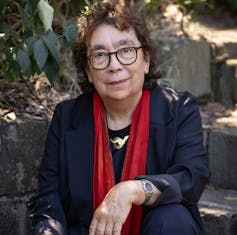
“Earning a humanities degree was not only life changing, in terms of opening up a world of knowledge otherwise beyond my reach, it also turns out to have been enormously productive – for me and many, many people around me,” said Tim Winton this week. “My little arts degree has created jobs and cultural value for over 40 years.”
Winton is one of more than 100 high-profile Australians with Bachelor of Arts degrees who have signed an open letter by the Australian Historical Association (AHA). It urges Anthony Albanese to abolish the Morrison government’s widely condemned Job-Ready Graduates package and establish an equitable university fee system that “does not punish students who choose to study the humanities and social sciences”.
Writers who have signed include Nam Le, Helen Garner, Tim Flannery and Kate Grenville, who said her humanities and history studies were “absolutely essential” to the writing of her books. The signatories range widely across Australian intellectual life, from Megan Davis, co-chair of the Uluru Dialogue and chair of Australian Studies at Harvard, to musician and former Labor minister Peter Garrett.
In the lead-up to the 2022 election, Labor promised a review of the scheme. Two years and two federal elections later, it remains in place. “The idea that a Labor government would do nothing at all to right this wrong is utterly mystifying,” said Winton.

A sustained political attack
Job-Ready Graduates claimed to guide students toward areas of national need by reducing fees for degrees in STEM, education and nursing – while raising fees for other degrees, including the humanities. Philosophy, history and literature bore some of the steepest increases.
The cost of an arts degree now exceeds A$50,000. History fees alone jumped 117% when the policy took effect. The result? Humanities enrolments have dropped to a ten-year low.
Historian Michelle Arrow, AHA president, is the convener of the letter. “There has been a sustained political attack on the humanities,” she recently told Good Weekend. That attack now spans two governments and three education ministers.
The Job-Ready Graduates policy did not increase places in those cheaper degrees. Instead, it penalised students who chose disciplines with more ambiguous career outcomes. These shifts reinforced a message: that such choices are self-indulgent and economically irrational.
Universities, meanwhile, face escalating costs and volatile revenue from international students. In that context, humanities departments are an easy target.
At the University of Wollongong, up to 124 full-time jobs are being cut as part of a $30 million cost-saving restructure, with significant losses across the humanities. At Macquarie, entire majors in sociology and politics are being eliminated. The University of Tasmania is shedding up to 13 arts and humanities roles.
These are not isolated incidents; they are part of a broader pattern of disinvestment. This is not drift; it is deliberate dismantling.
Humanities faculties are being restructured not because they cost too much to run, but because they are perceived to return too little. Yet the skills they foster – interpretive reasoning, ethical judgement, historical understanding – remain essential to democratic life.
Teaching us to sit with contradiction
Teaching literature at university, I have seen how the study of complex texts fosters not just critical thinking, but a slower, more deliberative mode of engagement.

Wrestling with Alexis Wright’s Carpentaria, Kim Stanley Robinson’s The Ministry for the Future or George Eliot’s Middlemarch is not about extracting quick answers.
Wright’s novel grapples with sovereignty, environmental stewardship and intergenerational trauma. It invites us into a kind of intellectual disorientation – which is the beginning of serious thinking. Robinson imagines a near-future world on the brink of climate collapse, and how we might respond to its challenges. Middlemarch is a slow education in moral attention.
These works cultivate patience, tolerance for ambiguity and the ability to sit with contradiction. These are not only academic skills; they are habits of mind essential to civic life.
At St Andrew’s College within the University of Sydney, I recently observed students engaging with the poetry of John Keats and Emily Dickinson, Pascal’s Wager and the Ship of Theseus, an ancient paradox regarding identity and change over time. Not as academic curiosities, but as frameworks for judgement and moral reasoning.
Students practised a kind of learning that is increasingly rare: slow, rigorous and open-ended. It required nuance, comparison and a tolerance for uncertainty. These were not exercises in arriving at answers, but in developing the capacity to think clearly when no obvious answer exists.
Take Keats’s idea of “negative capability”: the capacity to remain “in uncertainties, Mysteries, doubts, without any irritable reaching after fact and reason”. In a world of polarisation and misinformation, this disposition is more relevant than ever. Reading Keats doesn’t just inform us about Romantic poetry – it models how to remain intellectually and ethically open.
Pascal’s Wager, a philosophical argument that frames belief in God as a rational bet under uncertainty, reframes the question of belief. Rather than ask if God exists, it does not ask is it true?, but what happens if you bet wrongly? It opens a door beyond theology – to ethics, probability and decision-making under uncertainty.
This is something the broader university system is increasingly struggling to preserve: learning as a form of ethical formation, rather than mere information transfer.
This kind of learning is slow. It resists metrics of productivity. It can’t be sped up or automated. But it is precisely what builds ethical capacity in future lawyers, teachers, doctors, journalists and citizens.
We risk leaving students ‘soul starved’
There is irony in this moment. As Nick Bryant writes in his Good Weekend article, history podcasts are booming. Philosophy books routinely shape national conversations. Humanities graduates remain employable across sectors precisely because they can read closely, write clearly and think critically. The appetite for big, messy human questions is real – and yet the institutions that trained people to ask them are shrinking.
Reports from employers continue to cite communication, judgement and adaptability among the most desirable graduate traits. These so-called “soft skills” are essential in law, health, diplomacy and policy – all fields where decisions carry real moral weight. When pandemic responses required weighing privacy against public safety, or vaccine equity against speed, the skills in play weren’t just technical. They were interpretive. Ethical. Human.
This is not abstract. During myriad global crises, humanities-trained advocates and writers play key roles in reshaping public messaging. Indigenous-led campaigns for Voice, Treaty and Truth from the Uluru Statement of the Heart have drawn not only on legal frameworks, but on storytelling traditions, cultural knowledge and historical understanding – all core to the humanities. These moments remind us: change isn’t only engineered. It’s narrated, debated, imagined into being.
The Universities Accord Final Report has now acknowledged that the Job-Ready Graduates scheme “failed to meet its objectives” and recommended urgent reform. Not all learning is “job-ready.” Some forms of knowledge are valuable because they deepen our understanding, sharpen our empathy, or expand our imagination.
The erosion of the humanities is not just a policy failure. It is a failure of imagination. We make students ready for the job market. But without the tools to think deeply, imagine ethically and reason clearly, we risk leaving them soul-starved.


