

Australia has 120 health workforce policies. But with no national plan, we’re missing the big picture
- Written by The Conversation
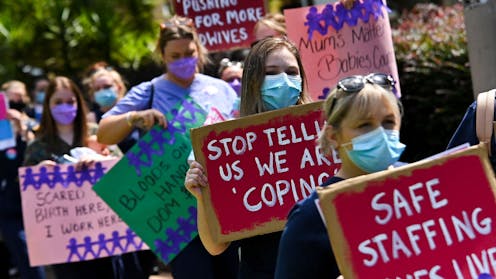
Australia’s health workforce is under pressure. Wait times are growing. Burnout is rising. Yet the country is awash in policy – just not the kind that solves these problems at the root.
This can explain why you’re struggling to see a GP, can’t find a dentist, or struggling to coordinate care between a mental health professional and aged-care nurse.
These issues aren’t isolated problems. As we outline in research published in the Medical Journal of Australia, they reflect a deeper issue in how Australia plans and governs its health workforce.
Despite long-standing concern about shortages of health workers in both rural and urban areas, there’s no overarching national strategy for health workforce planning in Australia.
That’s the type of long-term strategy that helps a country make sure it has enough trained health workers in the right places to meet people’s health needs, now and in the future. Instead, there is fragmentation.
When we reviewed all 121 current federal health workforce policy documents, we found a patchwork of policies for specific professions (for example, doctors, nurses and midwives) that were often short term. These rely heavily on grants and programs rather than long-term strategies and operate in parallel rather than in concert.
They also don’t seem to pay attention to key professions – especially pharmacy, public health and emergency care.
So with more than 850,000 registered health professionals, there are still not enough to meet demand, particularly in regional and remote areas. This is also the case in sectors with rising demand, such as aged care, mental health and rehabilitation.
What should we do?
More than a decade of reports have recommended improvements to national health workforce governance or strategy. Our study shows why those recommendations still matter.
In 2025, the challenge isn’t just to add more staff – it is to coordinate the system and the policy better, and plan for a future where health care is sustainable, equitable, and fit for purpose.
Australia once had a national body to guide health workforce planning – Health Workforce Australia. It was established in 2009 but disbanded in 2014 (ironically) as part of a government efficiency drive.
Since then, the responsibility for workforce planning has been split across multiple government departments, statutory authorities, and state and territories.
For instance, five states have their own individual ten-year health workforce strategic plans.
Some professions have their own national strategies. There’s a national medical workforce strategy, a nurse practitioner workforce plan and a mental health workforce strategy. Others are still being developed, such as the allied health workforce strategy, which would cover health workers such as physiotherapists, occupational therapists, speech therapists and podiatrists.
But there’s no effective mechanism to ensure these strategies work together coherently – or to ensure important professions or service areas aren’t left behind.
More programs, fewer solutions
Of the 121 federal policies we analysed, 81% were time-limited grants, programs or sub-programs. These types of policies are typically designed to respond quickly to a specific gap – such as with scholarships, rural relocation bonuses, or individual professional development. But they’re not necessarily designed to create sustained change.
We found 23 policies that could set longer-term direction. But it was not clear how these relate to each other. Few documents cross-referenced one another or reflected on the way solutions in one would impact on the solutions in another.
Most federal documents focus on workforce supply – such as training or recruitment. Fewer tackle the arguably harder, but equally important, issues.
These include how to improve workforce performance, such as by addressing skills mismatch or under-use (where individuals are not able to use their qualifications or skills as part of their job), or how to better distribute staff across regions.
So what needs to change?
In Australia, the federal government funds most of primary care, aged care and Indigenous health. But states and territories employ most health workers. So governance is decentralised.
Private providers, Primary Health Networks (federal government-funded organisations that support services to meet local health needs) and Aboriginal and Torres Strait Islander Community Controlled services (which provide primary health care to Aboriginal and Torres Strait Islander people) add further complexity to the health workforce landscape.
So without national coordination, workforce policy and planning risks being reactive, inconsistent, and susceptible to political cycles. This risks focusing on what’s most visible, and apparently urgent, rather than what’s systemic and enduring.
Here’s what needs to change:
Australia needs to re-establish a national body for health workforce planning, similar to the former Health Workforce Australia. A recent independent review agrees the current meeting of health ministers is not an effective way to govern health workers. Without a national hub, the current patchwork approach will continue
policymakers must shift from profession-specific and short-term responses to a system-wide approach. This means recognising how different parts of the health workforce interact as part of a broader labour market, and how policies for doctors, nurses, pharmacists and allied health professionals need to work together, especially in rural and remote care
we need fewer ad hoc grants that turn over with each new federal government. Instead, we need greater emphasis on durable strategies and agreements that can guide action over time, while allowing states and territories to adapt them if needed. These should be backed by clear data, and be evaluated and accountable.


