

Air temperatures over Antarctica have soared 35ºC above average. What does this unusual event mean for Australia?
- Written by The Conversation
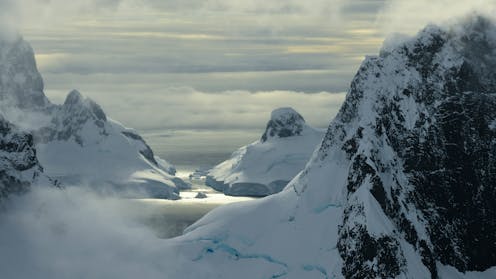
Right now, cold air high above Antarctica is up to 35ºC warmer than normal. Normally, strong winds and the lack of sun would keep the temperature at around –55°C. But it’s risen sharply to around –20°C.
The sudden heating began in early September and is still taking place. Three separate pulses of heat have each pushed temperatures up by 25ºC or more. Temperatures spiked and fell back and spiked again.
It looks as if an unusual event known as sudden stratospheric warming is taking place – the unexpected warming of the stratosphere, 12 to 40 kilometres above ground.
In the middle of an Antarctic winter, this atmospheric layer is normally exceptionally cold, averaging around –80°C. By the end of September it would be roughly –50ºC. This month, atmospheric waves carrying heat from the surface have pushed up into this layer.
In the Northern Hemisphere, these events are very common, occurring once every two years. But in the south, sudden large-scale warming was long thought to be extremely rare. My research has shown they are more common than expected, if we group the very strong 2002 event with slightly weaker events such as in 2019 and 2024.
Sudden warming may sound ominous. But weather is messy. Many factors play into what happens down where we live.
A drier, warmer spring and summer for southeastern Australia usually follow these warming events. But at present, forecasters are predicting warmer than usual temperatures across Australia alongside a wetter spring in the east.
What’s happening in the skies over Antarctica?
High above both the Arctic and Antarctic is a large area of rotating winds called the stratospheric polar vortex. By definition, sudden stratospheric warming events affect these two systems.
Over Antarctica, these events are usually detected about 30 kilometres above the Southern Ocean, just to the north of Antarctica’s coastline.
The Antarctic winter runs from March to October. During this period, the continent and the atmosphere above it are dark and very cold, as the sun doesn’t rise until September.
The polar vortex traps intensely cold air and keeps it isolated from the warmer air at lower latitudes. But every now and then, this can change.
Just like the ocean, the atmosphere has waves. What’s happening at present is that large-scale atmospheric waves have spread from the surface up into the stratosphere above Antarctica, bringing heat energy with them. As these waves interact with the strong winds of the vortex, they transfer this heat.
This is only possible during the Antarctic winter, as the polar winds are only strong during these months.
While these events are called “sudden”, it’s not sudden in the sense we would commonly use. The warming takes place over days or weeks. But they are sudden in the sense they’re often unexpected, as they are difficult to predict.

What does this mean for us?
What happens in Antarctica doesn’t stay in Antarctica. When a sudden warming event arrives, it can have flow-on effects for the weather.
We would usually expect southeastern Australia to be drier and warmer after sudden stratospheric warming above Antarctica.
In 2019, sudden warming over Antarctica led to drier conditions in Australia. Research has shown this influenced the megafires over the Black Summer of 2019–2020. These events can create prime conditions for bushfires.
The opposite is also true: If the polar stratosphere is even colder than usual, we expect wetter and cooler conditions over southeastern Australia.
For instance, over the 2023-24 spring and summer, forecasters predicted a dry spell driven by an El Niño event in the Pacific. But this didn’t happen. Instead, the very cold polar stratosphere produced a rather cool and wet summer.
There’s another effect, too. When the stratosphere is warmer, less ozone is destroyed in the ozone layer and more ozone is carried from the equator towards the poles.
That’s good for humans, as it means more dangerous ultraviolet rays are blocked from reaching the ground. But changing ozone levels can also contribute to the arrival of unexpected weather systems caused by a warmer stratosphere.

How often does this happen?
Media coverage has suggested these events are rare. But that isn’t entirely correct.
These events were first discovered in the Northern Hemisphere, where they happen roughly every second year.
But the northern polar stratosphere is warmer and has weaker winds. This means it’s easier for atmospheric waves to disturb the vortex. In the Northern Hemisphere, sudden stratospheric warming is defined as a complete disappearance of the polar vortex.
When the same definition is used for the Southern Hemisphere, only the 2002 event would meet the criteria in our entire observational record. That’s because the intense stratospheric winds of up to 300kmh over Antarctica are extremely difficult for atmospheric waves to penetrate.
Using this narrow definition, these events in Antarctica are estimated to happen about once every 60 years – and are expected to become even rarer.
But if we define these southern events more broadly as a weakening of the polar vortex producing sudden warming, the frequency is more common. Using this definition, we estimated the frequency of events like the 2019 event to be once every 22 years.
At present, I am leading international work to find better ways of detecting these events in the Southern Hemisphere.
What will this event lead to?
Forecasting chaotic systems such as the weather is a hard job. The sudden warming of the stratosphere over Antarctica will have some influence over spring and summer weather in Australia and New Zealand. But the stratosphere is just one factor among many in shaping the weather as we experience it.
At present, the Australian Bureau of Meteorology is forecasting a warmer spring, and wetter in the southeast. This is because the sudden warming event is happening at the same time as ocean temperatures remain very warm, and hotter oceans lead to more evaporation and thus more rain.
But this could still change. Not all sudden stratospheric warming events end up influencing the weather near the surface. It’s worth keeping an eye on the seasonal forecasts this summer.


