

To read or not to read? Is that the question?
- Written by The Conversation

In June this year, a six-month-old interview went viral.
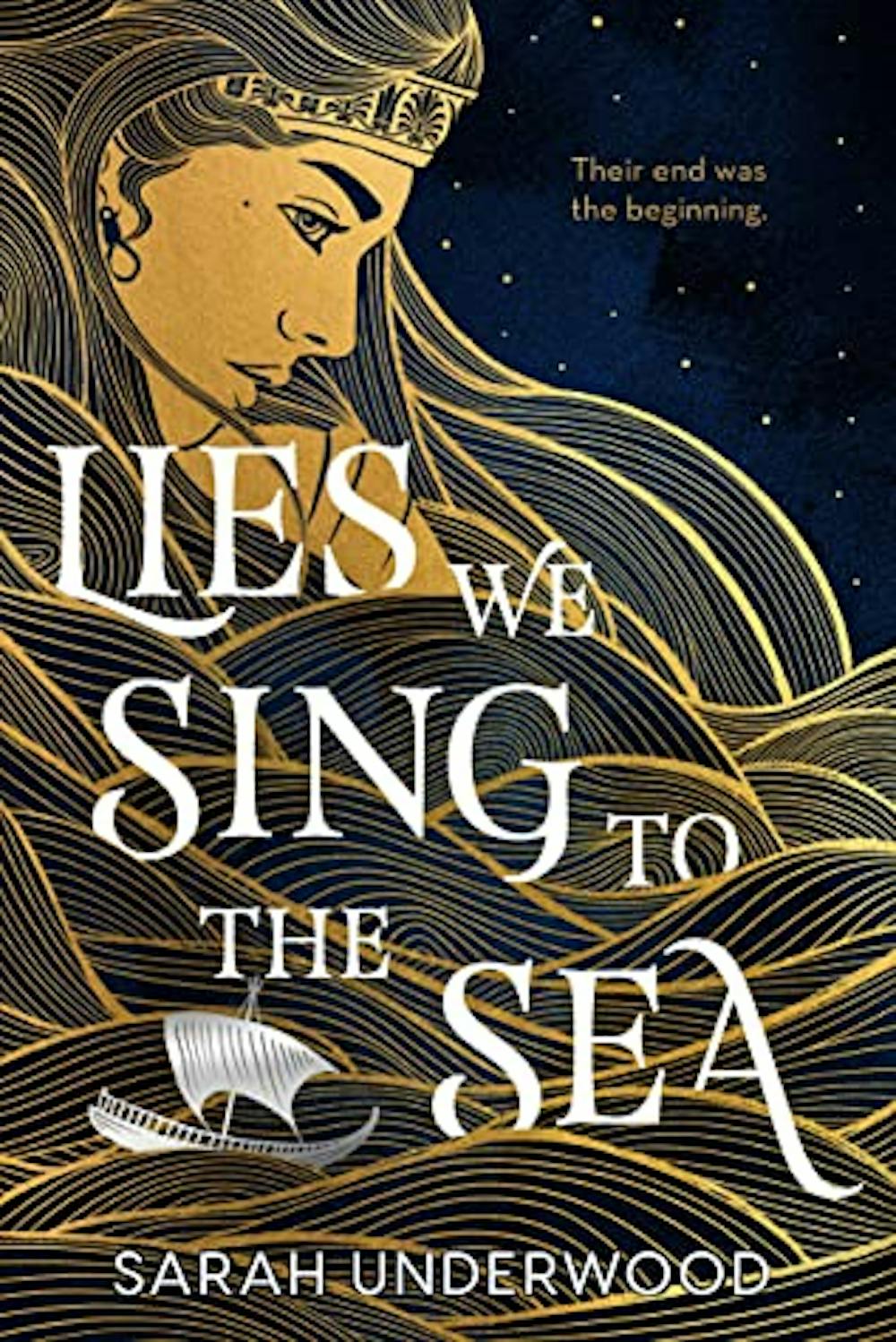
Sarah Underwood is a 23-year-old British author whose debut YA novel, Lies We Sing to the Sea, has been described as a “sapphic reimagining of the Odyssey”. In an interview with a student magazine at Imperial College London, Underwood said that she had never read the Odyssey. No, not even in translation.
Mockery ensued. Underwood was declared “Twitter’s main character” for the day. In a tweet liked by 11,290 people, the literary writer Brandon Taylor shared screenshots of the interview, commenting: “Some people should not be allowed to write books.”
Taylor’s acerbic takes are always a delight, and to any lover of reading the response to Underwood’s statement is understandable.
But there is another way to look at it. Declarations of not-reading are not just complacent admissions of ignorance. Not-reading is not a simple absence of reading, a blank space where a text should be. It can be a mode of engaging with a text.
After all, the decision not to read a text is based on a belief that we already know what it contains. We know (or think we know) what we are choosing to read or not read.
In the case of the Odyssey, there is a lot of material to base that decision on. The orally-composed ancient Greek epic poem, first fixed in written form around the late 8th century BCE, is referenced in thousands of poems, stories, songs, films, video games, and other art forms. These works have been created over millennia, across hundreds of countries, languages and cultures.
The Odyssey has been translated, rewritten, reimagined and riffed on in a myriad ways; it has meant many different things to many different people.
Read more: Guide to the Classics: Homer's Odyssey

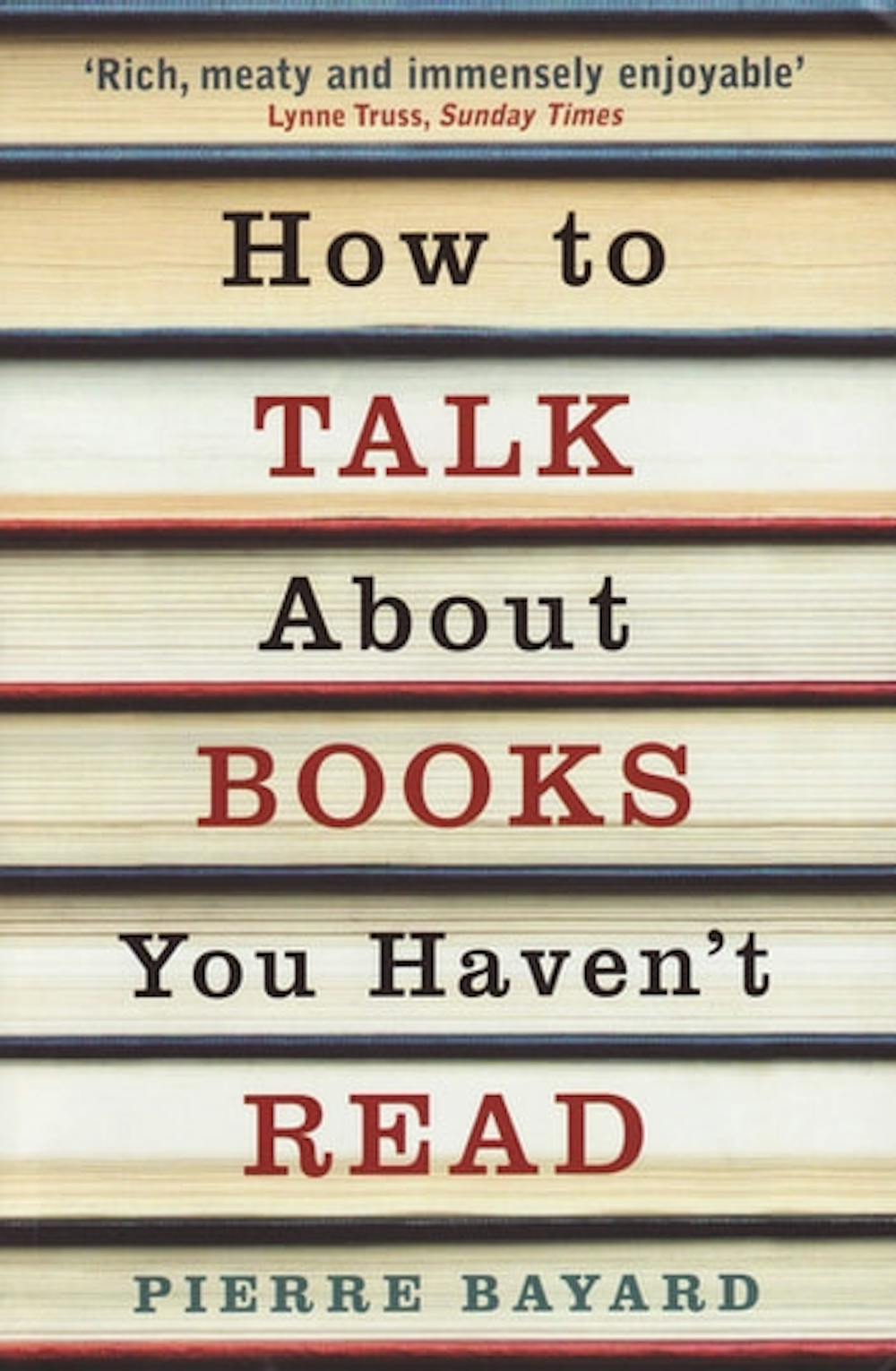 Pierre Bayard, the world’s funniest literary theorist (and one of the sharpest), takes this argument further in How To Talk About Books You Haven’t Read (2007).
He says that after a person has read a book, they have only the memory of it, an image in their head. But a person who hasn’t read the book may have a very similar image of it in their head, gleaned from second-hand sources, in much the same way that Albrecht Dürer drew his “Rhinoceros” without ever having seen a real rhinoceros.
Reading (or not-reading) is a fuzzy phenomenon that, as Bayard observes, “does not obey the hard logic of true and false”.
But isn’t there something to be said for going directly to a text, rather than looking at it through a filter of other people’s interpretations? This idea also turns out to be a mirage.
Even if Sarah Underwood had read the Odyssey in the original Greek, she would not have been accessing it directly. The text she read would be compiled by a modern-day editor, who has made thousands of interpretative choices, adjudicating between conflicting manuscript versions. Underwood’s reading would be guided by the introduction and notes in the edition she chose, and by her access to multiple other modern-day interpretative aids, such as dictionaries and commentaries.
When the distinction between reading and not-reading is so blurry, an open declaration of not-reading can be seen as a rhetorical device, a position statement.
In this context, Sarah Underwood is in good company. There are many other famous not-readers of the Odyssey, including the filmmakers Joel and Ethan Coen, who claimed they had only read the classic comics version before making
O Brother, Where Art Thou?.
In his epic poem Omeros, the Nobel Prize winner Derek Walcott has his poet-narrator address the spirit of Homer and admit
I never read itNot all the way through.
Pierre Bayard, the world’s funniest literary theorist (and one of the sharpest), takes this argument further in How To Talk About Books You Haven’t Read (2007).
He says that after a person has read a book, they have only the memory of it, an image in their head. But a person who hasn’t read the book may have a very similar image of it in their head, gleaned from second-hand sources, in much the same way that Albrecht Dürer drew his “Rhinoceros” without ever having seen a real rhinoceros.
Reading (or not-reading) is a fuzzy phenomenon that, as Bayard observes, “does not obey the hard logic of true and false”.
But isn’t there something to be said for going directly to a text, rather than looking at it through a filter of other people’s interpretations? This idea also turns out to be a mirage.
Even if Sarah Underwood had read the Odyssey in the original Greek, she would not have been accessing it directly. The text she read would be compiled by a modern-day editor, who has made thousands of interpretative choices, adjudicating between conflicting manuscript versions. Underwood’s reading would be guided by the introduction and notes in the edition she chose, and by her access to multiple other modern-day interpretative aids, such as dictionaries and commentaries.
When the distinction between reading and not-reading is so blurry, an open declaration of not-reading can be seen as a rhetorical device, a position statement.
In this context, Sarah Underwood is in good company. There are many other famous not-readers of the Odyssey, including the filmmakers Joel and Ethan Coen, who claimed they had only read the classic comics version before making
O Brother, Where Art Thou?.
In his epic poem Omeros, the Nobel Prize winner Derek Walcott has his poet-narrator address the spirit of Homer and admit
I never read itNot all the way through.
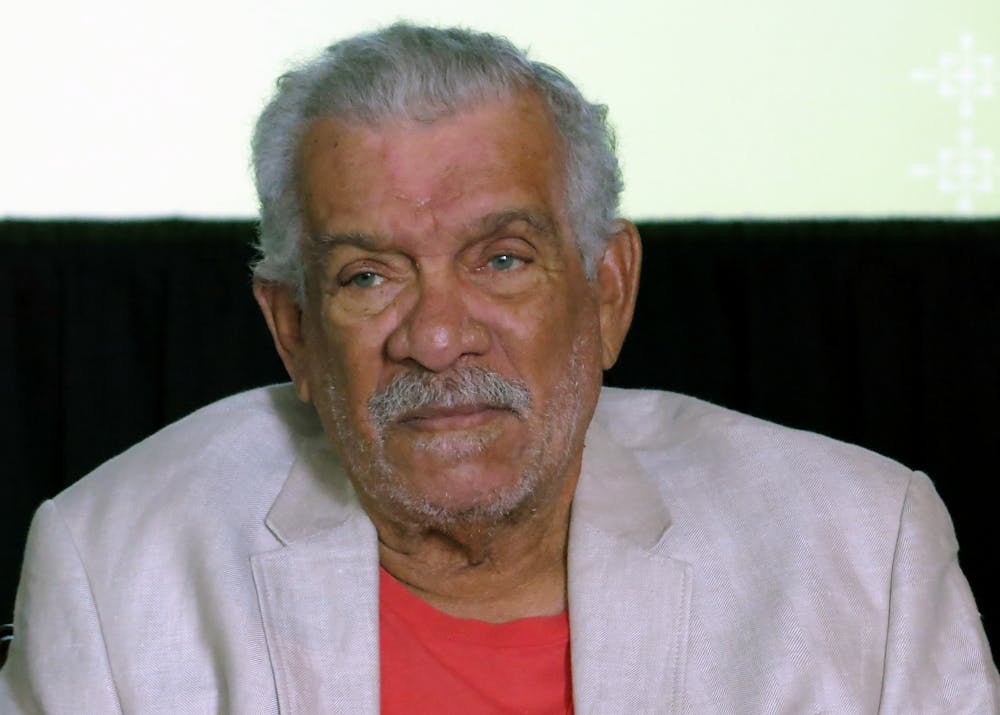 Derek Walcott’s poetry blasts Homer out of the continuum of history.
Berenice Bautista/AP
Through this deliberately irreverent statement, Walcott positions himself at a subversive distance – not so much from Homer himself as from the appropriation of Homer’s work by a conservative, colonial tradition of reading Homer as the wellspring and property of “Western civilisation”.
Walcott’s claim to have “not read” Homer is actually a claim to have engaged with his work in a deliberately improper manner – that is, on terms other than those of the dominant culture. Instead, Walcott tells us, he has encountered Homer through the living voice of the author, through his complex reception history, and through the landscape and people of the Caribbean.
Derek Walcott’s poetry blasts Homer out of the continuum of history.
Berenice Bautista/AP
Through this deliberately irreverent statement, Walcott positions himself at a subversive distance – not so much from Homer himself as from the appropriation of Homer’s work by a conservative, colonial tradition of reading Homer as the wellspring and property of “Western civilisation”.
Walcott’s claim to have “not read” Homer is actually a claim to have engaged with his work in a deliberately improper manner – that is, on terms other than those of the dominant culture. Instead, Walcott tells us, he has encountered Homer through the living voice of the author, through his complex reception history, and through the landscape and people of the Caribbean.
 By not-reading, Walcott blasts Homer out of the continuum of history – out of the meanings assigned to him by a Western colonialist tradition – and gives him new life in a rich new context.
Just like reading, not-reading can be simple or complex, reactionary or progressive. It can be complicit with a dominant culture, or resistant to it.
The question of whether Sarah Underwood has or hasn’t read Homer is a red herring. What matters is whether she recontextualises the old stories in a way that responds to our contemporary concerns. And ironically, to find that out, we will have to read her book.
By not-reading, Walcott blasts Homer out of the continuum of history – out of the meanings assigned to him by a Western colonialist tradition – and gives him new life in a rich new context.
Just like reading, not-reading can be simple or complex, reactionary or progressive. It can be complicit with a dominant culture, or resistant to it.
The question of whether Sarah Underwood has or hasn’t read Homer is a red herring. What matters is whether she recontextualises the old stories in a way that responds to our contemporary concerns. And ironically, to find that out, we will have to read her book.
Read more https://theconversation.com/to-read-or-not-to-read-is-that-the-question-185393


