

We planted two woody meadows a decade ago to see what would thrive. Now the concept is popular across Australia.
- Written by The Conversation
It sounds like a gardener’s holy grail: beautiful and practical plantings that can turn cities into green spaces with benefits for people and biodiversity.
Our Australia-first collaborative research has made this dream a reality. Woody meadows have transformed urban spaces in Australian cities by adding green beauty and colour in public spaces at a much lower cost than other approaches.
Ours is a collaborative research project that engages with urban land managers, designers and horticultural crews to research and trial woody meadows under real-world conditions. Their popularity reflects the huge demand to green our urban places in a cost-effective way.
After ten years of success, failure and constant experimentation, we can now share our insights into how woody meadows can be both beautiful and hardy.

What is a woody meadow?
A uniquely Australian concept, woody meadows are diverse, naturalistic plantings of native groundcover, shrubs and small trees. They are designed for maximum visual and ecological function, and are robust to heat and drought. A beautiful corridor for nature, they can cool cities and reduce stormwater runoff into waterways. They differ from naturalistic meadow-like plantings popular in Europe and America, which only contain flowering herbs and grasses.
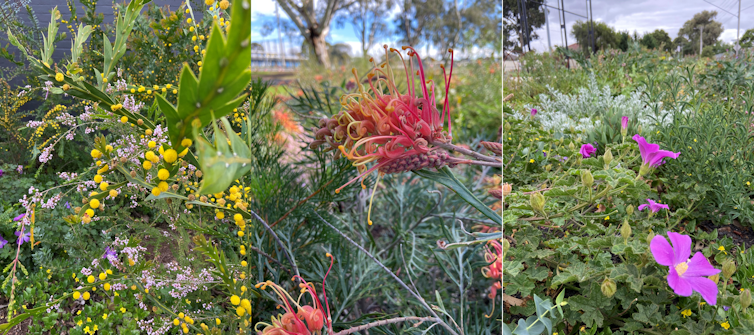
Woody meadows mimic the structure of natural shrubland communities and include wattles, grevilleas, melaleucas, goodenias and correas for year-round flowering. They are planted densely into low-nutrient materials such as crushed scoria or sandstone (which exotic species don’t like). This promotes rapid canopy coverage and requires less weeding, fewer chemicals and lower maintenance costs.
Woody meadow plants are managed by coppicing – hard pruning to around 15 centimetres every two to four years. This maintains diversity and ensures dominant plant species don’t take over. It also mimics disturbances such as fire and storm damage and stimulates dense new growth and lots of flowers.
We have tested more than 300 Australian plant species and shown most species can resprout after coppicing. This means that plants can be tailored for different climates and site conditions without high risk of failure.
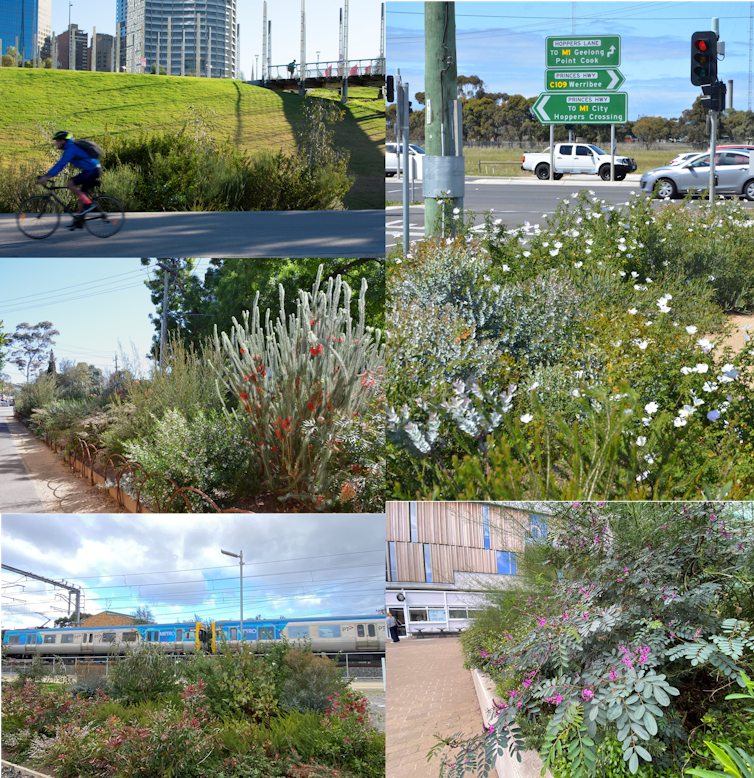
From little things…
Ten years ago, we planted two small plots of native plants in inner Melbourne. We wanted to find a novel and low-cost approach to urban greening.
From this single pilot project, the concept of woody meadows has grown exponentially. Our partners include transport agencies, water authorities, cemeteries, government agencies and councils. They have shared their successes and failures through a growing national Woody Meadow Network, established as part of this project.
There are now more than 30,000 square metres of woody meadows in 59 urban locations across southern Australia. These meadows are part of major infrastructure projects including Melbourne’s level-crossing removal project, Sydney’s metro rail project, and the East Subiaco redevelopment in Perth.
Australian cities are investing millions of dollars in urban green spaces. This has wide-ranging benefits for health and wellbeing, biodiversity, reducing pollution and tackling urban heating. But maintaining urban vegetation is expensive, leading to overly simple plantings that are dull and provide few benefits.
Living laboratories
The popularity of woody meadows reflects the huge demand for cost-effective ways to green urban areas.
Each meadow serves as a living laboratory, with data on plant performance and maintenance informing future designs. Historically, most public landscapes have been designed without considering maintenance, so involving horticultural crews and bringing their expertise into the design of woody meadows has been crucial to their success.
Installation costs for woody meadows are comparable to business-as-usual plantings of low-diversity, low-functioning monocultures such as massed plantings of strappy leaf plants such as Lomandra or Dianella species or shrubs. But they require 75% less maintenance over time. Their adaptable design has overcome barriers to planting in hostile urban sites and transport corridors.

Plant it yourself
If you are keen to plant a woody meadow of your own, we have condensed 15 years of research and testing into free Woody Meadow Guidelines outlining how to design, install and maintain them.
New woody meadow plantings can be registered on our website so we can continue to gather data on what works best.


