

How can I get water out of my ear after swimming?
- Written by The Conversation
Swimming is one of the best parts of summer. But long after you’ve cooled down and dried off, you might be left with a niggling feeling – there is still water in your ear.
Your ear may feel full or blocked and sounds may be muffled. You may even hear some gurgling or rustling noises.
While water usually drains naturally, a few tips can help speed things up and prevent swimmer’s ear, a common infection after swimming.
Why water gets stuck
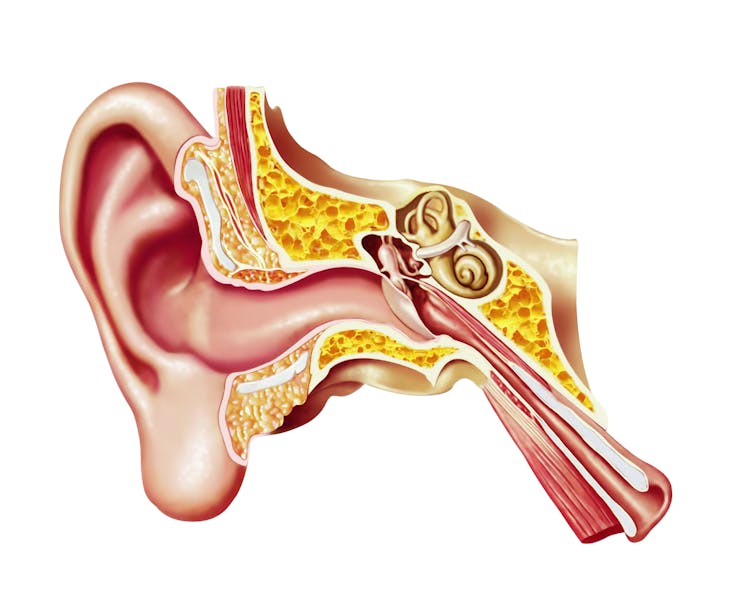
You might think your ear canal is a straight tube, but it’s not. It bends twice, and some people’s canals are naturally narrower than others.
The ear canal is lined with hair and wax for protection. It can also develop extra bone growth (exostoses) from years of cold-water swimming, sometimes known as “surfer’s ear”, which can make it even narrower.
When you swim, water can easily get past all these curves and barriers when you dip your head under water or get splashed. But getting it out afterwards can be tricky.
Try the simplest things first
Wiggle and tilt
Gently tug your earlobe up and down while tipping the blocked ear towards your shoulder. This straightens the ear canal and lets gravity help drain water out.
Lie on your side
Lay on your side on a towel for a few minutes, then roll over to the other side. Gravity will help again. In summer, warmth from the sun and towel can also help water in the ear dry faster.
Cup and pump
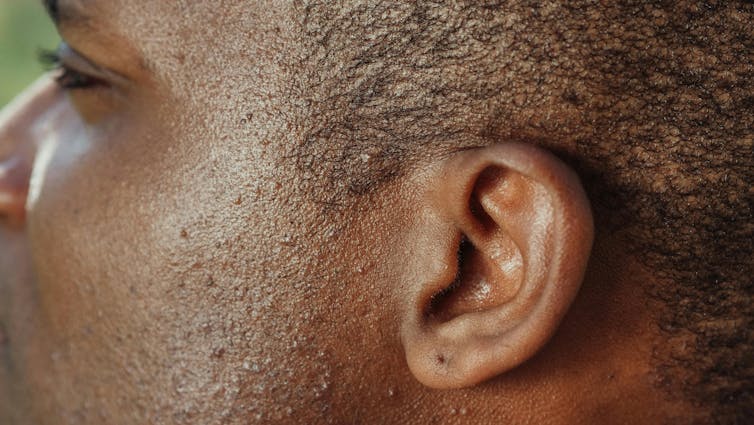
Press your slightly cupped palm over your ear to form a seal, then gently push and release to create a vacuum effect. You can also press the tragus (the firm skin in front of your ear canal) over the opening of your ear canal several times to encourage movement and drainage.
Do I need ear drops?
If none of these tips have worked so far, you might need some ear drops designed to dry out your ears.
Typically, these contain alcohol, which helps water evaporate faster. You can get these over the counter from a pharmacy.
But be sure to read the instructions, and don’t use them if you have any ear pain, discharge, an ear infection or a hole in your eardrum (or grommets, which are tiny tubes surgically inserted in the eardrum).
Some people make their own drops, using a solution of rubbing alcohol and white vinegar in equal proportions. This makes the ear canal more acidic, which can help prevent bacteria and fungal growth.
Be cautious when you use your own drops (again, don’t use them if you think you have a hole in your eardrum) and only use a few drops in each ear.
What not to do
Never put anything in your ears – even fingers or the tip of a towel can push water, wax and anything else trapped in your ear deeper and worsen the problem.
You might also scratch the delicate canal skin, increasing infection risk.
Avoid cotton buds and stick to the tips above.
Is trapped water dangerous?
Many people find the feeling annoying. But warm, moist places are also ideal for bacteria and fungi, so water trapped in the ear canal can lead to swimmer’s ear (otitis externa).
Symptoms include pain when moving the outer ear (the bit you can see), itchiness, discharge, redness or swelling, and sometimes fever.
Around one in ten people experience it at some point in their lives, most often during summer, and kids aged 7–14 are at higher risk.
If you suspect you have swimmer’s ear, it is important to see a medical professional as you will likely need treatment (typically antibiotic drops and pain relief).
Avoid swimming after storms or in polluted water, which carries more bacteria.
Freshwater sources such as rivers and lakes pose greater risk than salty ocean water, while properly chlorinated pools are generally pretty safe.
How to avoid it and when to seek help
If you don’t like the feeling after swimming – or you frequently get water trapped in your ears – invest in a swim cap or some ear plugs. Audiologists can help you find or customise earplugs to fit your ears.
Prioritise drying out ears once you are finished swimming, and use some of the tips above. For kids, making it into a game can help.
If an ear feels painful, inflamed or looks swollen, there might be an ear infection and it’s best to seek advice and attention from your GP.
If you still feel like you have water in your ears after two to three days, it’s best to also get it checked out.
Read more https://theconversation.com/how-can-i-get-water-out-of-my-ear-after-swimming-270674


