

With every extinction, we lose not just a species but a treasure trove of knowledge
- Written by The Conversation
The millions of species humans share the world with are valuable in their own right. When one species is lost, it has a ripple effect throughout the ecosystems it existed within.
But there’s a hidden toll. Each loss takes something from humanity too. Extinction silences scientific insights, ends cultural traditions and snuffs out spiritual connections enriching human life.
For instance, when China’s baiji river dolphin vanished, local memory of it faded within a single generation. When New Zealand’s giant flightless moa were hunted to extinction, the words and body of knowledge associated with them began to fade.
In these ways, conservation is as much about safeguarding knowledge as it is about saving nature, as I suggest in my research.
We’re currently living through what scientists call the planet’s sixth mass extinction. Unlike earlier events triggered by natural catastrophes, today’s accelerating losses are overwhelmingly driven by human activities, from habitat destruction to introduced species to climate change. Current extinction rates are tens to hundreds of times higher than natural levels. The United Nations warns up to 1 million species may disappear this century, many within decades.
This extinction crisis isn’t just a loss to broader nature – it’s a loss for humans.

Lost to science
Extinction extinguishes the light of knowledge nowhere more clearly than in science.
Every species has a unique genetic code and ecological role. When it vanishes, the world loses an untapped reservoir of scientific knowledge – genetic blueprints, biochemical pathways, ecological relationships and even potential medical treatments.
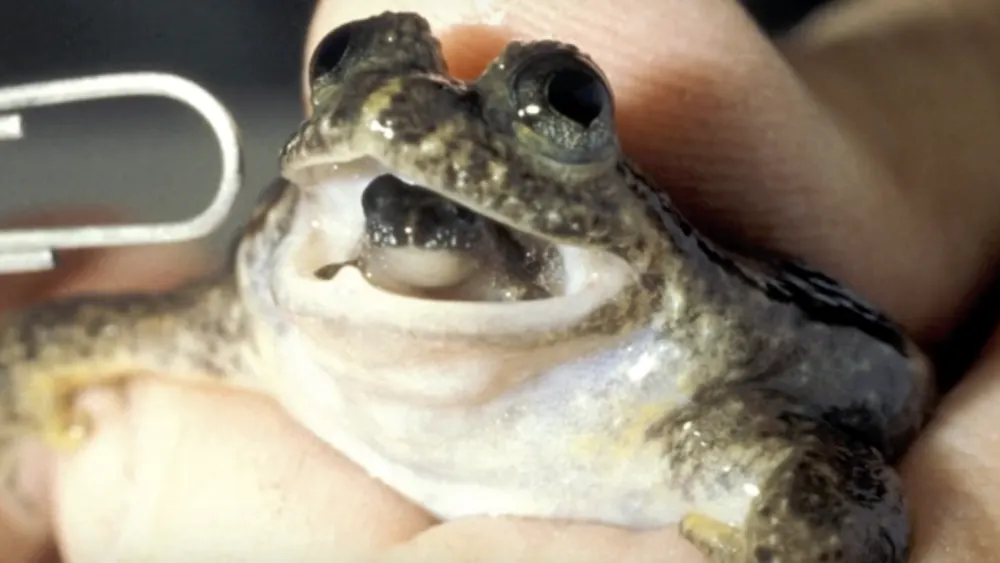
The two species of gastric-brooding frog once lived in small patches of rainforest in Queensland. These extraordinary frogs could turn their stomachs into wombs, shutting down gastric acid production to safely brooding their young tadpoles internally. Both went extinct in the 1980s under pressure from human development and the introduced chytrid fungus. Their unique reproductive biology is gone forever. No other frog is known to do this.
Studying these biological marvels could have yielded insights into human conditions such as acid reflux and certain cancers. Ecologists Gerardo Ceballos and Paul Ehrlich called their extinctions a tragic loss for science, lamenting: “Now they are lost to us as experimental models”. Efforts at de-extinction have so far not succeeded.
Biodiversity holds immense potential for breakthroughs in medicine, agriculture, materials and even climate change. As species vanish, the library of life shrinks, and with it, the vault of future human discoveries.
Lost to culture
Nature is deeply woven through many human cultures. First Nations people living on traditional lands hold detailed knowledge of local species in language, story and ceremony. Many urban residents orient their lives around local birds, trees, rivers and parks.
When species decline or vanish, the songs, stories, experiences and everyday practices built around them can thin out or disappear.
Extinction erodes our sense of companionship with the natural world and diminishes the countless small interactions with other species which help root our lives in joy, wonder and reverence.
The bioacoustics researcher Christopher Clark has likened extinction to an orchestra gradually falling silent:
everywhere there is life, there is song. The planet is singing – everywhere. But what’s happening is we’re killing the voices […] It’s like [plucking] the instruments out of the orchestra … and then it’s gone
One haunting example of a vanished voice comes from Hawaii. In 2023, a small black-and-yellow songbird, the Kauaʻi ʻōʻō, was declared extinct. All that’s left is a last recording, where the last male sings for a female who will never come.
 Illustration of the extinct Kauaʻi ʻōʻō (Moho braccatus), adult and juvenile.
John Gerrard Keulemans/Wikimedia Commons, CC BY-NC-ND
Disturbingly, birdsong is declining worldwide, diminishing the richness of our shared sensory world.
From an ecocentric perspective, each loss leaves the whole community of companion species poorer – humans included. Scientists call this the “extinction of experience”. As biologist David George Haskell writes, extinction is leaving the future:
an impoverished sensory world […] less vital, blander.
The loss of species is not only an ecological crisis but also a rupture in the communion of life – a deep injury to the bonds uniting beings.
Loss of spiritual knowledge
For many communities, nature is imbued with sacred meaning. Often, particular species or ecosystems hold deep spiritual significance.
Australia’s Great Barrier Reef is venerated by Indigenous custodians, whose traditions describe it as part of a sacred, living seascape. As the reef’s biodiversity declines under climate stress, these spiritual connections are eroding, diminishing the sources of wonder, reverence and existential orientation which help define human belonging in the world – across and beyond faith traditions.
Some ecotheological traditions regard nature as a book – a way to reveal divine truth alongside scripture. Nature holds deep significance for the varied communities and traditions viewing the land and its creatures as sentient, interconnected and sacred.
Extinction weakens nature’s capacity to embody transcendent meaning. The natural world dims and dulls, leaving us with fewer opportunities to experience awe, beauty and a sense of the sacred. In this sense, extinction is more than biological loss. It severs spiritual ties between human and other beings in ways transcending worldviews.
How do we grieve extinction?
Extinctions often evoke grief, which is a way of knowing through feeling. Grieving a lost species points to the scale of the loss across scientific, cultural and spiritual dimensions.
For Indigenous communities, this grief can be profound, born of deep environmental attachment. Scientists and conservationists witness cascading losses and bear the burden of foresight. Their grief may trigger anxiety, burnout and sorrow. But mourning the lost also makes the crisis tangible.
Grieving for extinct life isn’t pointless. It can compel us to look closely at what remains, to recognise the intrinsic value of a species and to resist reducing biodiversity to its instrumental uses. This kind of mourning carries the seeds of ecological responsibility, inviting us to protect life not just for our purposes but because of its irreplaceable role in the communion of life.


