

What is foot and mouth disease? Why farmers fear 'apocalyptic bonfires of burning carcasses'
- Written by The Conversation
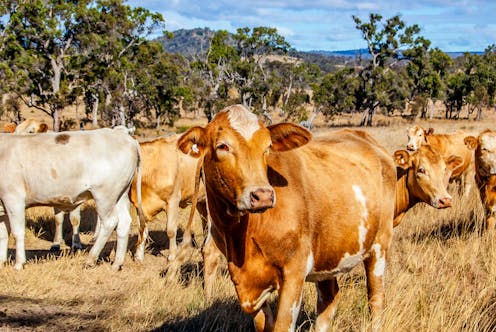
Foot and mouth disease – usually referred to by its acronym FMD – is the most feared livestock disease in the world. It can cripple the livestock sector, cause immense animal suffering, destroy farmer businesses, create food insecurity and has massive trade impacts for Australia.
It’s little wonder Australian farmers, rural communities, consumers and governments have reacted to the incursion and spread of FMD through Indonesia with dread.
This high impact livestock disease has not been on our doorstep since the 1980s. Keeping it out is a new challenge and a national priority.
What is foot and mouth disease?
This disease is caused by a viral infection. It’s present in many areas of southeast Asia, and most recently in Indonesia, where it has so far spread eastwards to Bali. Papua New Guinea, Australia and the South Pacific are historically FMD-free.
What makes FMD virus so remarkable is its environmental resistance. It can persist on many inanimate objects, such as equipment used with livestock, people’s clothing and shoes, on the tyres of vehicles and in livestock transport.
It can also persist in livestock feed and livestock products, such as meat and hides. It can even remain infectious on the hands and within noses of those in contact with infected livestock.
This means everything associated with infected livestock can become contaminated. On the positive side, FMD is not a disease that readily infects humans, and meat and milk from infected livestock are considered safe to consume.
Still, despite human safety, countries free of FMD would not buy Australian meat or milk if we became infected because of the fear of importing the disease.
The nature of this virus is what scares agricultural industries. FMD virus could plausibly be introduced via a tourist’s contaminated shoes, or through smuggled meat products in a passenger’s bag or the mail. There is a plethora of incursion pathways.
How does FMD affect animals?
FMD affects cloven-hoofed animals, such as cattle, sheep, goats, pigs and deer. FMD is one of the most contagious diseases known – it’s at least as contagious as the Omicron variant of COVID-19 in some situations, for example.
The characteristic sign in FMD infected animals is blisters. These are apparent in the mouths and hooves of infected animals – especially in the soft tissue immediately above the hoof, and between the two toes that form the hoof.
Rupture of these blisters produce ulcers. FMD lesions are very painful: animals stop walking, stop eating and drool. The severity of signs vary with different strains of FMD virus and different species.
Another remarkable characteristic is that within an infected herd or flock, nearly all animals become infected and sick, yet few will die from the disease in normal circumstances. It is a high morbidity, low mortality disease with a massive economic impact.
Why FMD is so hard to control
FMD is globally distributed and globally feared. Infected countries are isolated from the global livestock trade.
There are a large number of FMD virus strains. This is important because one measure to prevent economic and welfare impacts is to vaccinate susceptible livestock.
However, the vaccine needs to match closely with the strain in a region that is causing FMD. Also, the protection period is generally short-lived, perhaps 12 months or less.
Maintaining high levels of vaccination and herd immunity is challenging in livestock populations, especially in developing countries. It requires an advanced system of livestock identification, and advanced vaccine manufacture and delivery infrastructure.
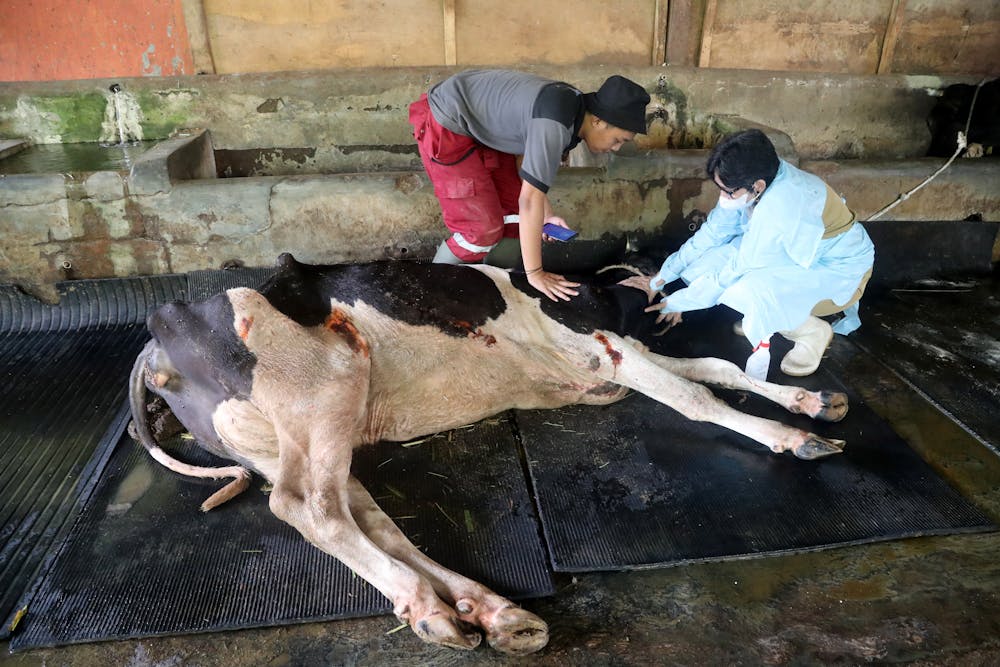
 The Indonesian government is rolling out a mass vaccination program for cattle to prevent the spread of foot and mouth disease in cattle.
EPA/ADI WEDA
Another problem is the host range of FMD. Besides managed livestock, in Australia FMD virus could infect feral pigs, feral goats and wild deer.
Once the infection enters these unmanaged populations, disease control becomes exponentially more difficult.
For example, we haven’t been able to successfully manage feral pigs, despite the massive damage they inflict to our environment, such as degrading our waterways and threatening native species.
If Australia’s feral population gets infected, it might mean we can never eradicate FMD, should an incursion occur.
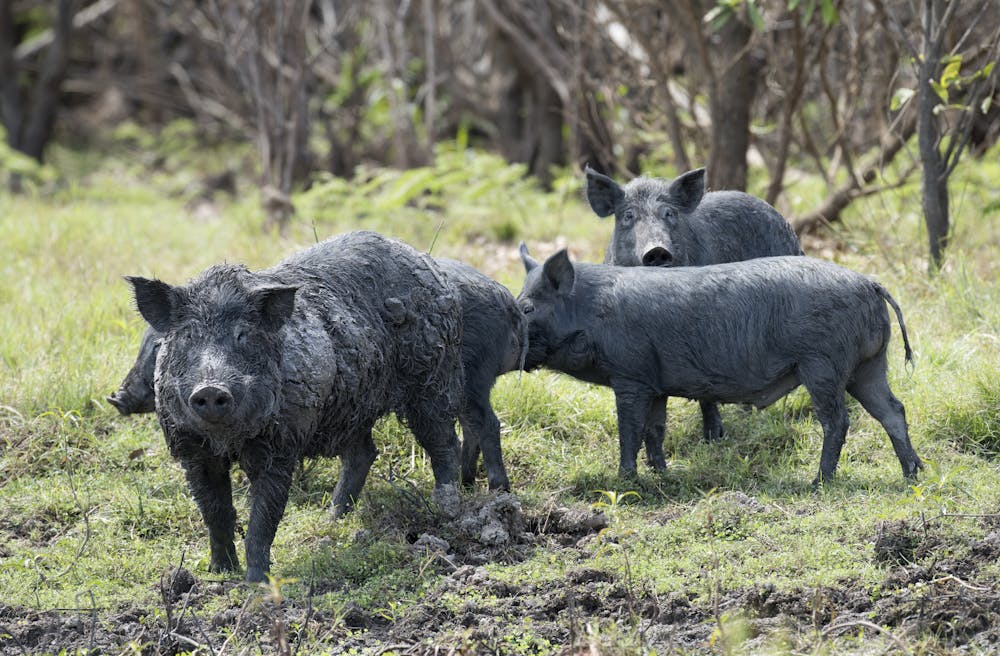 Foot and mouth disease may be impossible to eradicate if the virus infected feral pigs.
Shutterstock
The response
When responding to an FMD incursion in developed countries such as Australia, the goal is eradication. Based on the economic impacts of the disease, it’s less costly in the long run to eradicate than to live with the disease.
Perhaps the best example of such a response is when FMD entered the United Kingdom in 2001. How it entered is unknown, but a theory is the virus entered from illegally imported infected meat fed to Northumberland pigs.
There was a delay in detection. By the time authorities recognised the problem, the infection had spread widely. The response involved identifying both infected premises and those likely to be infected because of possible contact with the virus, and then culling all livestock on those premises.
 FMD devastated the UK’s agriculture sector.
AP Photo/Denis Doyle
This devastated the UK’s agriculture and tourism sectors, resulted in the death of more than 6.5 million livestock and cost £8 billion. The media coverage presented images of apocalyptic bonfires of burning carcasses and soldiers digging mass graves.
Even if a country demonstrates that elimination has been successful, it still won’t be able to trade again for many months, as its trading partners respond. This is why it’s so important to get on top of any incursion rapidly.
The closest analogy to an FMD response we’re familiar with is the incursion of equine influenza (“horse flu”) in New South Wales and Queensland in 2007.
Although culling isn’t part of the response for to equine influenza, the bans on horse movements and equine events, the mobilisation of a large veterinary workforce, and the creation of disease “zones” would be repeated, with the same disruptive effect on communities.
To Australia’s advantage, because FMD is such a high profile and high impact disease, federal, state and territory governments have well-developed response plans and have “war-gamed” FMD scenarios over many decades.
And more recently, other animal pest and disease incursions such as varroa mite in honey bees and Japanese encephalitis in pig herds have helped test our response systems for an FMD incursion.
However, we shouldn’t underestimate the cost and challenge of confronting this disease that has arrived just this month on our doorstep. So much depends on it.


