

Italy hosted the Winter Olympics 70 years ago. What was it like, and what’s changed?
- Written by The Conversation
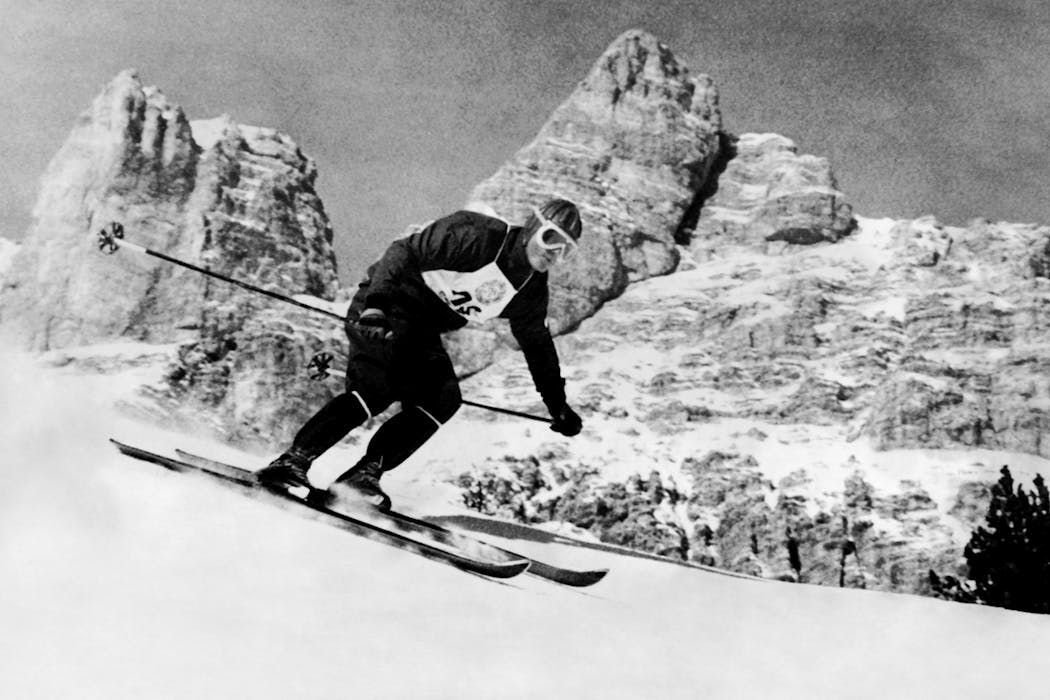
The 2026 Milan Cortina Winter Olympics are Italy’s fourth as Olympic host and come 70 years after the region first welcomed the world’s best winter athletes.
It is Italy’s third Winter Olympics, second only to the United States (four), reinforcing the nation’s long-standing influence within the Olympic movement.
So, what’s changed since 1956?
Looking back: Cortina d’Ampezzo 1956
The 1956 winter games were originally scheduled for 1944 but were postponed due to the second world war, eventually taking place in Cortina d’Ampezzo.
It was groundbreaking in several ways.
The games ran for 11 days, far shorter than this year’s 17-day program.
Italian skier Giuliana Chenal-Minuzzo became the first woman to recite the Olympic Oath at an opening ceremony.
For the first time, the Winter Olympics were broadcast live on television, albeit in black and white, to nine European nations.
In 1956, winter and summer games were held in the same year, (Melbourne hosted the Summer Olympics that year).
This changed in 1994, when the International Olympic Committee (IOC) moved them to alternating even-numbered years, significantly boosting the profile, commercial appeal and growth of the Winter Olympics.
From centralised to decentralised hosting
Cortina 1956 featured a highly centralised model, with eight venues clustered within the Dolomites mountain range.
In contrast, Milan Cortina in 2026 reflects the IOC’s modern strategy of decentralisation and sustainability.
The spread-out nature of the 2026 event features:
- four main geographical clusters (Milan, Cortina d'Ampezzo, Valtellina and Val di Fiemme) plus Verona (opening and closing ceremonies)
- 15 competition venues
- two host cities – the first time in Olympic history, separated by 413 kilometres
- six Olympic villages
- four opening ceremony locations.
With Milan as a major metropolitan hub, the 2026 games are far more urban than their alpine predecessor.
Growth of the winter games
The expansion from 70 years ago is striking:
New, youth-friendly and broadcast-driven sports such as short-track speed skating, snowboarding and freestyle skiing have transformed the program.
The only new sport in 2026 will be ski mountaineering.
Near-gender parity will be achieved through expanded women’s events and mixed-gender competitions.
Leading nations on the medal table
In 1956, the dominant nations were mainly European – the Soviet Union, Austria, Norway, Finland, Sweden and Switzerland as well as the US.
This year, the podium will likely be owned by Norway, the US, Germany, Italy, China and Canada – the latter two making huge improvements in recent times.
Even Australia, a summer games powerhouse, which never made the podium until 1994, has improved dramatically and is expected to have its best result of around six medals, placing it in the top 15.
The Russians will be noticeably absent, forced out by the IOC due to the Ukrainian invasion. They will be allowed to have neutral athletes who can win medals but as a nation they are on the outer.
Paralympics, professionalism and equity
The 2026 Winter Paralympics will follow immediately after the Olympics – something that did not exist in 1956.
The Winter Paralympics first appeared in 1976 and only began sharing host cities with the Olympics in 1992.
Other major shifts since 1956 include:
- expanded women’s participation, including ice hockey (introduced in 1998)
- the end of strict amateur-only participation (phased out after 1986)
- increased financial rewards for medal winners
- the return of professional National Hockey League male players for the first time since 2014 – a major boost for fans and broadcasters.
Media, technology and the fan experience
Media coverage has exploded since 1956 with the ability to follow every sport, every event on television and radio, digital platforms, newspaper and print media, blogs, podcasts and social media.
Technological changes over the past seven decades have been dramatic. This includes:
- extensive new types of media coverage
- use of artificial intelligence
- equipment design
- athlete apparel innovation
- snow-making capabilities
- venue design and preparation
- transportation improvements
- monitoring of athlete performance and training methods.
Fan experience will be greatly enhanced and transformed through:
Costs, sustainability and climate challenges
The 1956 games operated on a modest budget of around US$250,000 (A$350,000).
The 2026 event is projected to cost around US$5.9 billion (A$8.3 billion) for operating and infrastructure expenses.
Cost escalation is driven by inflation, transport and accommodation, security requirements, venue construction and technology.
Balancing this are vastly increased revenues from broadcast rights, sponsorship and ticketing.
Most Olympic hosts end up losing money. The list is long, with Montreal (1976), Nagano (1998), Athens (2004), Sochi (2014), Rio (2016), Tokyo (2020/21) and others all going well over budget.
Sustainability and legacy – barely considered in 1956 – are now central.
The IOC strongly discourages “white elephant” venues, prioritising temporary facilities, venue reuse and carbon reduction.
Climate change remains a long-term concern. While snow was imported for some events in 1956, global warming now threatens the future pool of viable hosts.
Geopolitics, governance and security
The election of Kirsty Coventry as the first woman president of the IOC underscores the organisation’s broader push toward gender equity in leadership.
Under her guidance, the IOC is looking to implement firmer policies on transgender participation.
No major boycotts by nations are expected despite tension caused by the expulsion of Russia and Belarus.
Several international sport federations – supported by some European nations – have even restricted these two banned national Olympic teams from participating as individual neutral athletes.
For the 2026 games, doping controls are stricter than ever, led by the IOC and the World Anti-Doping Agency.
Security planning is at an all-time high. It now includes cyber-threats as well as physical risks.
Watch this space
Seventy years after Cortina d’Ampezzo hosted a modest, alpine-focused winter games, Milan Cortina 2026 represents a vastly expanded, technologically sophisticated and globally connected Olympic festival.
Despite challenges – climate, cost and geopolitics – all indicators suggest the games will deliver a compelling, inclusive and memorable celebration of winter sport.


