

Quantum computers are coming to break our codes faster than anyone expected
- Written by The Conversation
Online data is generally pretty secure. Assuming everyone is careful with passwords and other protections, you can think of it as being locked in a vault so strong that even all the world’s supercomputers, working together for 10,000 years, could not crack it.
But last month, Google and others released results suggesting a new kind of computer – a quantum computer – might be able to open the vault with significantly less resources than previously thought.
The changes are coming on two fronts. On one, tech giants such as IBM and Google are racing to build ever-larger quantum computers: IBM hopes to achieve a genuine advantage over classical computers in some special cases this year, and an even more powerful “fault-tolerant” system by 2029.
On the other front, theorists are refining quantum algorithms: recent work shows the resources needed to break today’s cryptography may be far lower than earlier estimates.
The net result? The day quantum computers can break widely used cryptography – portentously dubbed “Q Day” – may be approaching faster than expected.
The quantum hardware race
Quantum computers are built from quantum bits, or qubits, which use the counterintuitive properties of very tiny objects to carry out computations in a different and sometimes far more efficient way from traditional computers.
So far the technology is in its infancy, with the major goal to increase the number of qubits that can be connected to work as a single computer. Bigger quantum computers should be much better at some things than their traditional counterparts – they will have a “quantum advantage”.
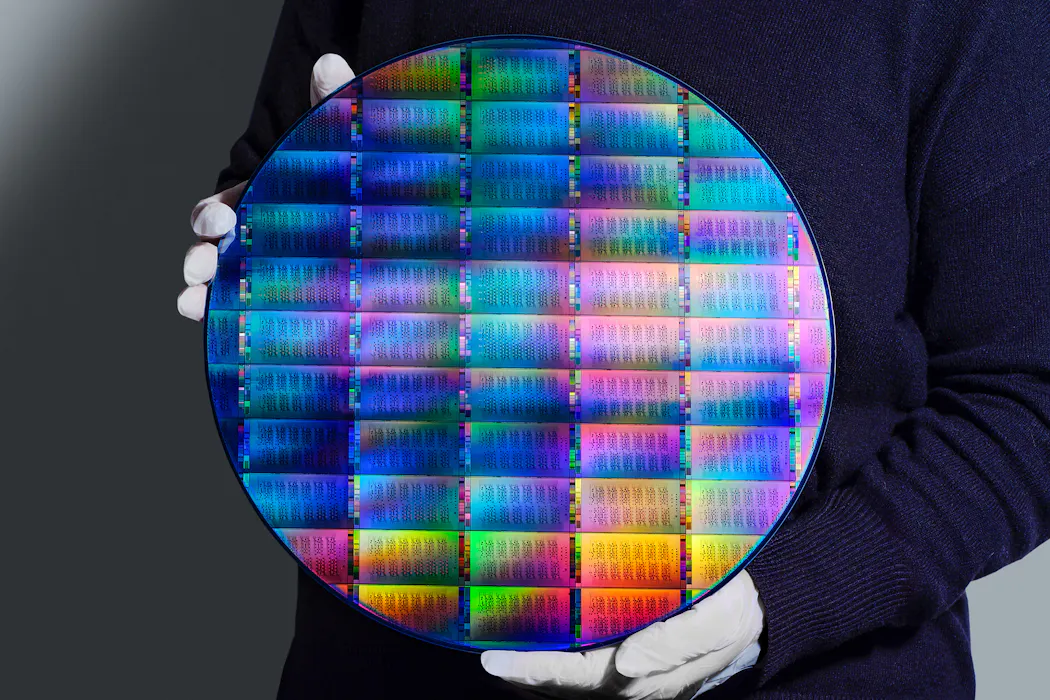
Late last year, IBM unveiled a 120-qubit chip which it hopes will demonstrate a quantum advantage for some tasks.
Google also recently announced it planned to speed up its move to adopt encryption techniques that should be safe against quantum computers, known as post-quantum cryptography.
Alongside these tech giants, newer approaches are also flourishing. PsiQuantum is using light-based qubits and traditional chip-manufacturing technology. Experimental platforms such as neutral-atom systems have demonstrated control over thousands of qubits in laboratory settings.
In response, standards bodies and national agencies are setting increasingly concrete timelines for moving away from common encryption systems that are vulnerable to quantum attack.
In the United States, the National Institute of Standards and Technology (NIST) has proposed a transition away from quantum-vulnerable cryptography, with migration largely completed by 2035. In Australia, the Australian Signals Directorate has issued similar guidance, urging organisations to begin planning immediately and transition to post-quantum cryptography by 2030.
Algorithms make the lock-picking faster
Hardware is only half the story. Equally important are advances in quantum algorithms – ways to use quantum computers to attack encryption.
Much interest in quantum computer development was spurred by Peter Shor’s 1994 discovery of an algorithm that showed how quantum computers could efficiently find the prime factors of very large numbers. This mathematical trick is precisely what you need to break the common RSA encryption method.
For decades, it was believed a quantum computer would need millions of physical qubits to pose a threat to real-world encryption. This is far bigger than current systems, so the threat felt comfortably distant.
That picture is now changing.
In March 2026, Google’s Quantum AI team released a detailed study showing that far fewer resources may be needed to attack a different kind of encryption which uses mathematical objects called elliptic curves. This is what systems including Bitcoin and Ethereum use – and the study shows how a quantum computer with fewer than half a million physical qubits may be able to crack it in minutes.
That’s still a long way beyond current quantum computers, but around ten times less than earlier estimates.
At the same time, a March 2026 preprint from a Caltech–Berkeley–Oratomic collaboration explores what might be possible using neutral-atom quantum computers. The researchers estimate that Shor’s algorithm could be implemented with as few as 10,000–20,000 atomic qubits. In one design they propose, a system with around 26,000 qubits could crack Bitcoin’s encryption in a few days, while tougher problems like the RSA method with a 2048-bit key would need more time and resources.
In plain terms: the codebreakers are becoming more efficient. Advances in algorithms and design are steadily lowering the bar for quantum attacks, even before large-scale hardware exists.
What now?
So what does this mean in practice?
First, there is no immediate catastrophe – today’s cryptography won’t be broken overnight. But the direction of travel is clear. Each improvement in hardware or algorithms reduces the gap between current capabilities and useful quantum cracking machines.
Second, viable defences already exist. NIST has standardised several post-quantum cryptographic algorithms which are believed to be resistant to quantum attacks.
Technology companies have begun deploying these in hybrid modes: Google Chrome and Cloudflare, for example, already support post-quantum protections in some protocols and services.
Systems that rely heavily on elliptic-curve cryptography – including cryptocurrencies and many secure communication protocols – will need particular attention. Google’s recent work explicitly highlights the need to migrate blockchain systems to post-quantum schemes.
Finally, this is a two-front race. It is not enough to track progress in quantum hardware alone. Advances in algorithms and error correction can be just as important, and recent results show these improvements can significantly reduce the estimated cost of attacks.
Every new headline about reduced qubit counts or faster quantum algorithms should be understood for what it is: another step toward a future where today’s cryptographic assumptions no longer hold.
The only reliable defence is to move – deliberately but decisively – toward quantum-safe cryptography.


