

What is an Acknowledgement of Country and how is it different to a Welcome to Country?
- Written by The Conversation
Pauline Hanson’s recent dramatic outburst and walkout from parliament as an Acknowledgement of Country was delivered has been condemned as racist and ignorant.
Social media sites reporting this incident have attracted a barrage of negative comments perpetuating misconceptions around Acknowledgement of Country and Welcome to Country. Many clearly do not understand what they are and see them as “special treatment”. Unfortunately, Hanson has been a source of this line of thinking around so-called “special treatment”, as seen in her 1996 maiden speech to parliament.
Such comments reveal an Australian society still burdened with an unfounded resentment and fear of Aboriginal rights and connection to Country.
So, what is an Acknowledgement of Country? How is it different to a Welcome to Country?
Read more: The courage to feel uncomfortable: what Australians need to learn to achieve real reconciliation
What is an Acknowledgement of Country?
An Acknowledgement of Country is often made at the start of an event to pay respect to First Nations peoples as the Traditional Owners and ongoing custodians of the land.
An Acknowledgement often highlights the unique position of First Nations people in the context of culture and history, and their intimate relationship with the land.
An Acknowledgement does not exclude anyone. Anyone can deliver one. It costs nothing to give or listen to. You lose nothing from a ten second acknowledgement of the Country, language, and people that existed in a place for tens of thousands of years.
An Acknowledgement does not impact on the rights and status of other Australian people.
Read more: 'Don't read the comments': misinformed and malicious comments stifle Indigenous voices
What is a Welcome to Country?
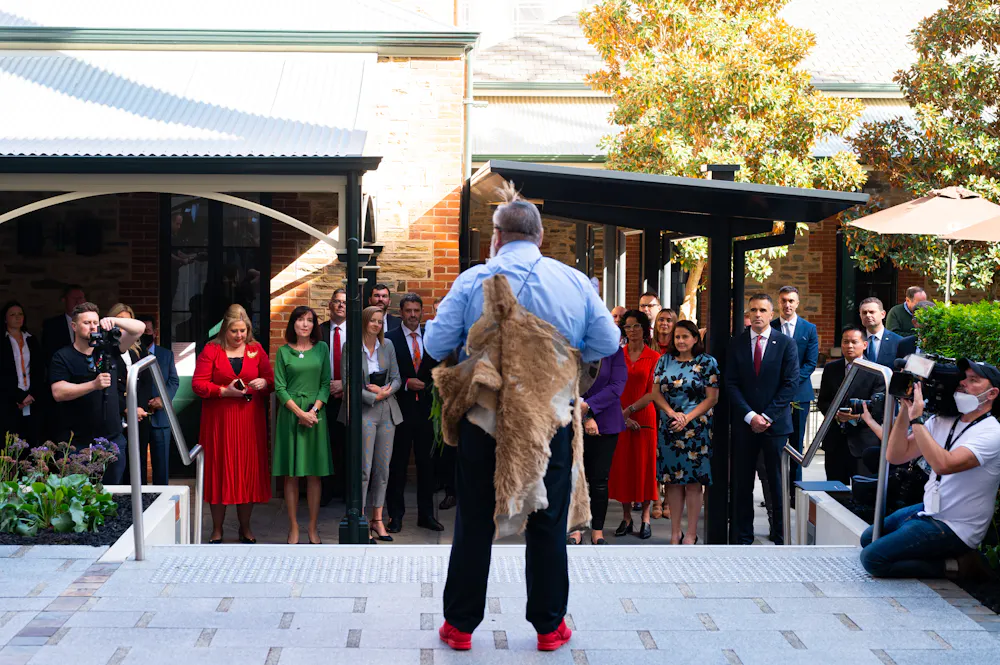
Acknowledgement of Country is different to a Welcome to Country. Crucially, only Traditional Owners can deliver a Welcome to Country.
Traditionally, First Nations people travelling to different Country had to seek permission to enter from the Traditional Owners. If granted, permission was given by way of a Welcome to Country.
Today, inviting an Elder to perform a Welcome is a way to recognise unceded Aboriginal sovereignty of ancestral lands. It’s also a way to honour ancient and continuing First Nations customs.
Wurundjeri Elder Joy Murphy Wandin has described Welcome to Country as practised by her people:
When there was a request to visit Country, the Werrigerri (a young man selected by the Elders of the community) would go on behalf of the community under the voice of the Elder, the Nurungeeta. There would be this negotiation and that could take a long time, it could take months. So that is the background of Welcome to Country. It is not a new thing. It is not because our land was dispossessed; it has nothing to do with that. It is all about respect for our culture and who we are. It is paying respect, especially to our ancestors.
 It’s common to see a Welcome to Country at a sporting event.
AAP Image/Matt Turner
It’s common to see a Welcome to Country at a sporting event.
AAP Image/Matt Turner
Acknowledgements and Welcomes to Country weren’t invented to divide First Nations and non-Indigenous people.
Although both have been widely revived in recent years, they are traditional protocols. When Aboriginal peoples travel from their own home Country to that of another Aboriginal group, they too acknowledge the traditional custodians.
Similarly, it’s standard practice for a hosting First Nations group to perform a welcome to all visitors – Indigenous and non-Indigenous alike – as a way of being inclusive and welcoming.
In doing this, Aboriginal people are sharing their culture and social protocols and offering the opportunity to feel a deeper connection to the lands you walk upon and visit.
By learning traditional place names, you unlock important information about the character or features of that place.
Read more: Creating a constitutional Voice – the words that could change Australia
Restoring and maintaining connection to Country
Many Aboriginal people have been removed from Country, or can no longer access it through development, private ownership, farming and mining.
The Stolen Generations and mission era systematically worked to eradicate Aboriginal languages and cultural traditions. For many First Nations peoples, Acknowledgement of Country can help to restore some of this severed connection to Country and identity.
As Professor Mick Dodson explains:
For us, Country is a word for all the values, places, resources, stories, and cultural obligations associated with that area and its features. It describes the entirety of our ancestral domains. While they may all no longer necessarily be the titleholders to land, Aboriginal and Torres Strait Islander Australians are still connected to the Country of their ancestors and most consider themselves the custodians or caretakers of their land.
For some Aboriginal people, Acknowledgement of Country is a constant reminder of the responsibilities of custodians to advocate for the protection of a fragile environment and its cultural heritage.
It reminds us all Aboriginal languages were the first languages spoken in this country. Many are are still spoken. Acknowledgement of Country brings us together and recognises the shared cultural history and landscape we have all inherited.
Joy Murphy Wandin, describes it as:
a very important way of giving Aboriginal people back their place in society, and an opportunity for us to say, “We are real, we are here, and today we welcome you to our land”. It’s paying respect, in a formal sense, and following the traditional custom in a symbolic way.
Understanding what Acknowledgement of Country and Welcome to Country are, and their history and origins can help us recognise the importance and power of continuing these practices.
It’s not about being divisive. It’s about continuing ancient connections to Country, history, and ancestors. It’s a reminder of the responsibility of custodians to the land and its creatures; to protect and look after them.
It’s about honouring and being respectful towards a custom and way of thought much older than the name or concept of “Australia” as a nation state, or any sitting of parliament.


