

This spider-eating, nest-sharing bat was once safe from fire – until the Black Summer burnt its rainforests
- Written by The Conversation
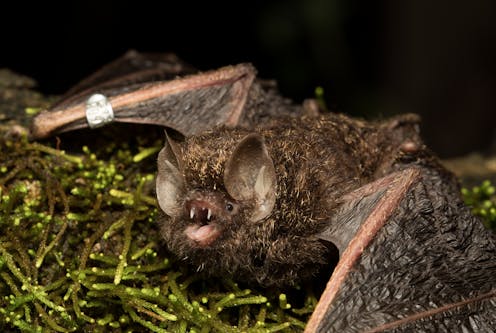
Am I not pretty enough? This article is part of The Conversation’s series introducing you to unloved Australian animals that need our help.
Golden-tipped bats are peculiar creatures. By night, they hunt the understorey for orb-weaving spiders, plucking them carefully from their sticky webs. By day, they roost in excavated basements at the bottom of nests made by two rainforest birds.
Unfortunately, while their rainforest nests usually keep them safe from fire, our new research found that’s no longer guaranteed. Rainforests grow in areas normally unburnt by fires. But ahead of the 2019/2020 Black Summer of fire, many of these areas had dried out, setting the stage for fires of unprecedented size and intensity. As a result, large areas of rainforest along the coasts of south-eastern Australia were badly burnt.
Our study confirms expert predictions that rainforest-dependent golden-tipped bats would be hard hit. We found the fires caused a large reduction in suitable habitat.
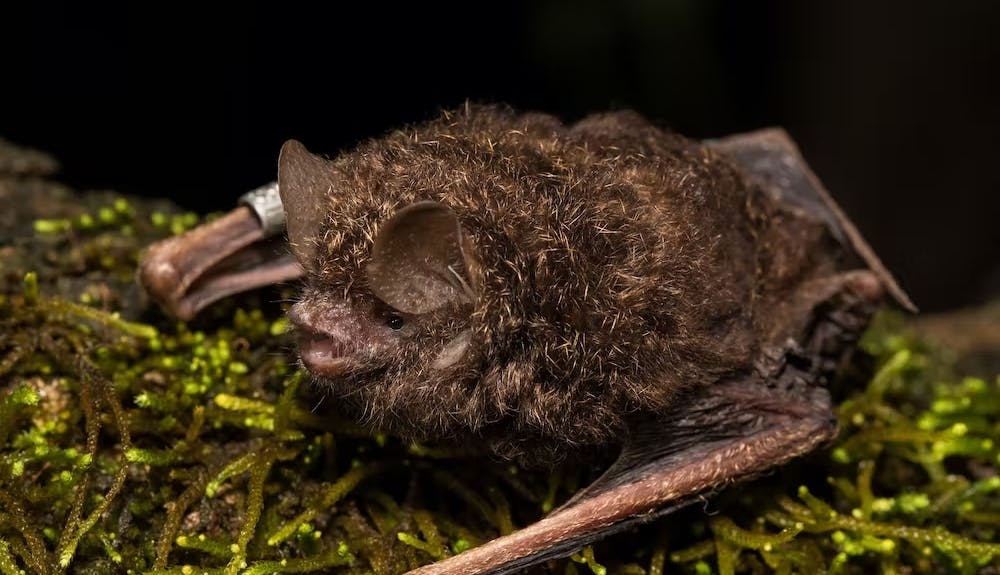
Why is this rainforest bat so special?
Like birds, Australia’s many bat species come in many different shapes and sizes. Some fly fast in open air while others fly slowly with great agility amongst cluttered vegetation. The delicate golden-tipped bat is a “clutter specialist”, hunting in the understorey and plucking its favourite orb-weaver spiders from their webs without getting caught. Its wings are optimised for slow, careful flight.
Amazingly, golden-tipped bats roost in chambers they dig out underneath the elaborate suspended nests of two birds, the yellow-throated scrubwren and brown gerygone. These birds make their nests in patches of moist vegetation, which infiltrates the dryer eucalypt forests along a network of gully lines, up and down Australia’s east coast.
Read more: 5 remarkable stories of flora and fauna in the aftermath of Australia’s horror bushfire season
The birds have the top bunk, and the tiny bats – all six grams of them – make room in the basement. The woolly, golden-coloured fur of the roosting bats matches their mossy bird-built homes.
These daytime rainforest refuges give these bats access to wet and dry forests, allowing them to forage more widely at night.
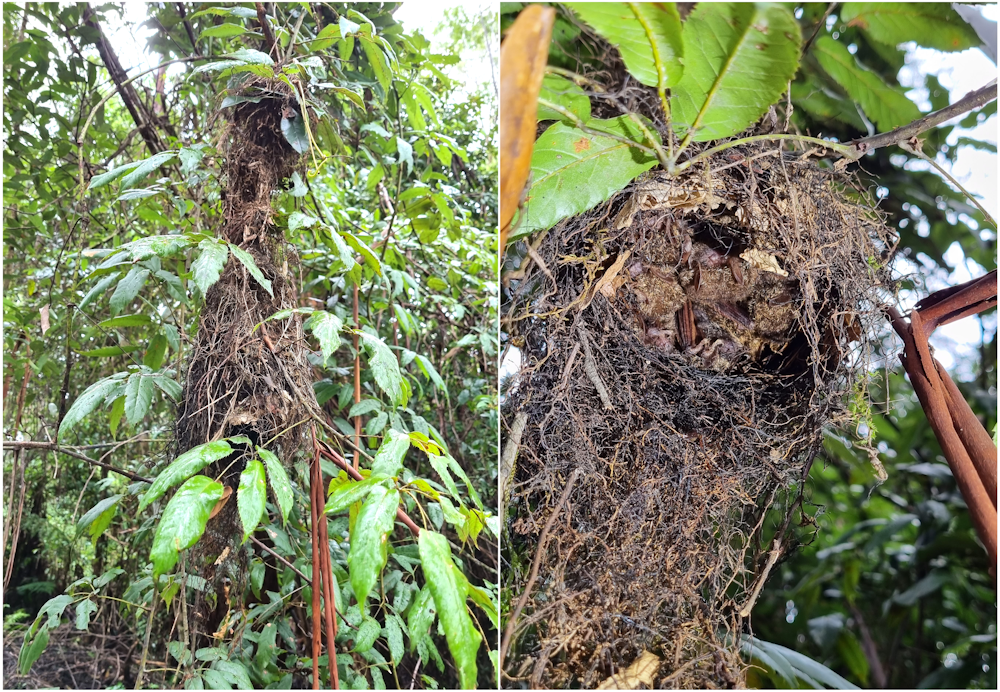 A cluster of golden-tipped bats roosting in a space they’ve dug out underneath a suspended nest of the yellow-throated scrubwren.
Fiona Backhouse, Author provided
A cluster of golden-tipped bats roosting in a space they’ve dug out underneath a suspended nest of the yellow-throated scrubwren.
Fiona Backhouse, Author provided
Why are fires such bad news in rainforests?
Animals in fire-prone eucalypt forests have evolved mechanisms to cope with bushfires. But rainforest plants and animals have not had to learn these tricks. In rainforests, fire is a rare and destructive event.
Fire events classified as extreme occur infrequently (by definition) and we rarely have an opportunity to measure their impacts on forest wildlife. Climate change has been linked to increasingly dangerous fire weather conditions and more frequent extreme-level megafires in south-eastern Australia.
To find out what this means, our study measured the impact of the 2019/20 megafires on this bat.
What did we do?
A year after the fires, we set harp traps in rainforest sites ranging from badly burnt to entirely unburnt. Our goal was to understand if golden-tipped bats occurred at each site and to use these data to model the effects of the fire on habitat for this species.
The result? At sites where high intensity fire had raged, we found modelled occupancy fell sharply from 90% to 20%. Even a year later, badly burnt rainforest was no longer used by this species.
At burnt sites there were also few scrubwrens and gerygones, and almost none of their nests. On the plus side, in unburnt rainforest, we captured 66 golden-tipped bats, showing this elusive and poorly studied species persists in reasonable numbers.
We attached tiny radio-transmitters to our captured bats to see how they moved and roosted in fire-affected habitat. Tracking bats across steep gullies of thick bush was hard work, as they moved almost daily to new roosts.
The bats chose their roosts in unburnt patches, which wasn’t surprising given that their preferred bird nests were readily consumed by fire. Their avoidance of burnt areas could suggest movements will be limited across fire-affected landscapes.
Our study also tested whether a humble mop head could act as a stop-gap roost for these bats until the scrubwrens and gerygones could return and build new nests.
Why mops? Because these bats have previously been found roosting in an old mop head.
So far, we haven’t recorded them making use of the mops but we will continue to monitor them over the coming breeding season.
What happens if extreme fires become common?
In many dry eucalypt forests, corridors of rainforest following gullies and creeks offer vital food and shelter for wildlife like the golden-tipped bat, significantly increasing local biodiversity.
Climate change poses a threat to rainforest-dependent wildlife in south-eastern Australia, by drying out soils, intensifying drought and increasing severe fire weather. Combined, these make it possible for unburnt rainforest to go up in flames.
Animals that rely on rainforests are not adapted to cope with fire. Increases in frequency of extreme fire events as the world warms will cause major disruption to the forests of south-eastern Australia.
These unusual golden-tipped bats roost underneath the hanging nests of two rainforest birds. Video by Lachlan Hall and George Madani.Read more: A staggering 1.8 million hectares burned in 'high-severity' fires during Australia's Black Summer


