

The public history, climate change present, and possible future of Australia’s botanic gardens
- Written by The Conversation
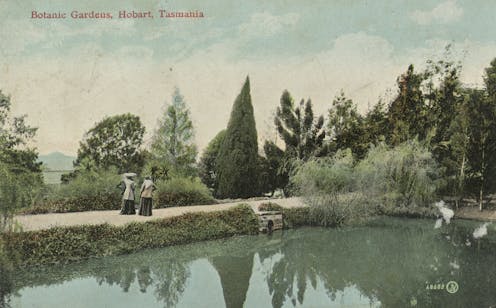
Can we justify maintaining water-hungry botanic gardens in an age of climate change and rising water prices?
Perhaps such gardens are no longer suited to Australia’s changing climate – if they ever were.
It is easy to argue Australian botanic gardens are imperial remnants full of European plants, an increasingly uncomfortable reminder of British colonisation.
But gardens, and their gardeners, aren’t static. They are intrinsically changing entities.
A brief history
Most Australian botanic gardens were established in the 19th century, starting with the garden in the Sydney Domain around 1816.
The earliest gardens served multiple functions.
They were food gardens. They were test gardens used to establish the suitability of crops and vegetables introduced from Europe and other colonies.
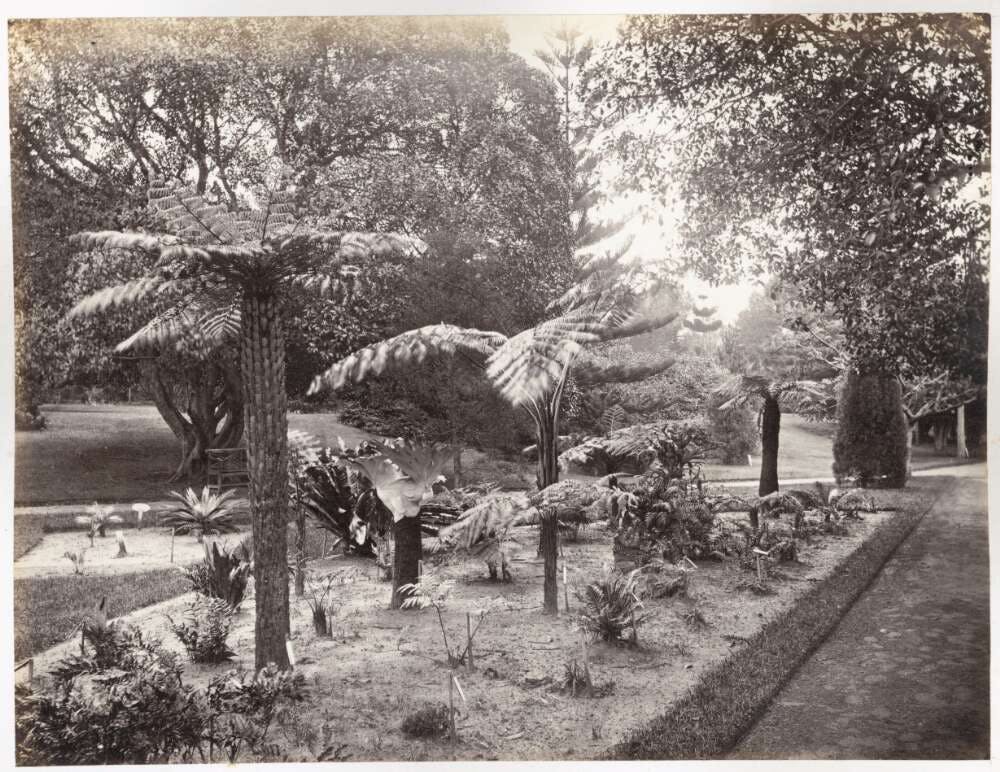
Nostalgia, European ideas of beauty and the desire to test introduced varieties meant botanic gardens were planted with trees familiar to British visitors. Oaks, elms and conifers were all planted, along with the kinds of flowers and shrubs naturalised in British private and public gardens.
Introduced plants and trees were distributed to settlers as part of acclimatisation – the introduction of exotic plants intended to transform the Australian landscape to a more familiar one and make it “productive”.
Botanic gardens also reversed this exchange by collecting, cultivating and internationally distributing Australian native plants deemed potentially useful or beautiful.
 Australian specimens were often collected by botanic gardens and sent to Europe.
© copyright of the Board of Trustees of the Royal Botanic Gardens, Kew
Australian specimens were often collected by botanic gardens and sent to Europe.
© copyright of the Board of Trustees of the Royal Botanic Gardens, Kew
Read more: Friday essay: the forgotten German botanist who took 200,000 Australian plants to Europe
Finally, and most controversially, they were public spaces.
Australian public gardens drew on then new ideas from European social reformers and progressive politicians. These gardens were seen as providing healthy air for the citizens of increasingly crowded cities. They were also built on older ideas about commons and provision of shared public space for the recreation of the poorer classes.
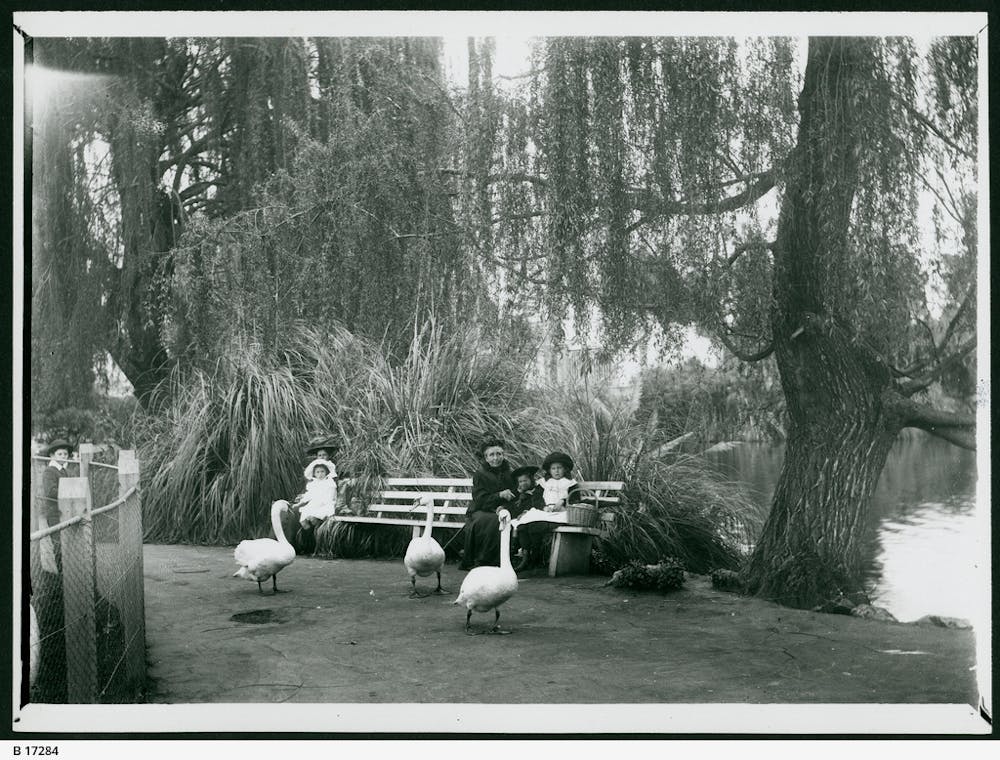 Australia’s botanic gardens were public spaces.
State Library South Australia.
Australia’s botanic gardens were public spaces.
State Library South Australia.
These different uses sometimes clashed. Ferdinand Mueller, director of the Melbourne Botanic Gardens, was arguably displaced from his role because his vision of the garden was as an instructional botanical nursery. Public demand had shifted to a desire for a more aesthetic and usable garden.
Facing the climate emergency
Water for trees and decorative plants drawn from very different climates were always an issue for these gardens.
As early as 1885, Richard Schomburgk in his role of director of the Adelaide Botanic Gardens told Nature about the drought affecting that city and the drastic impact it was having “upon many of the trees and shrubs in the Botanic Garden, natives of cooler countries”.
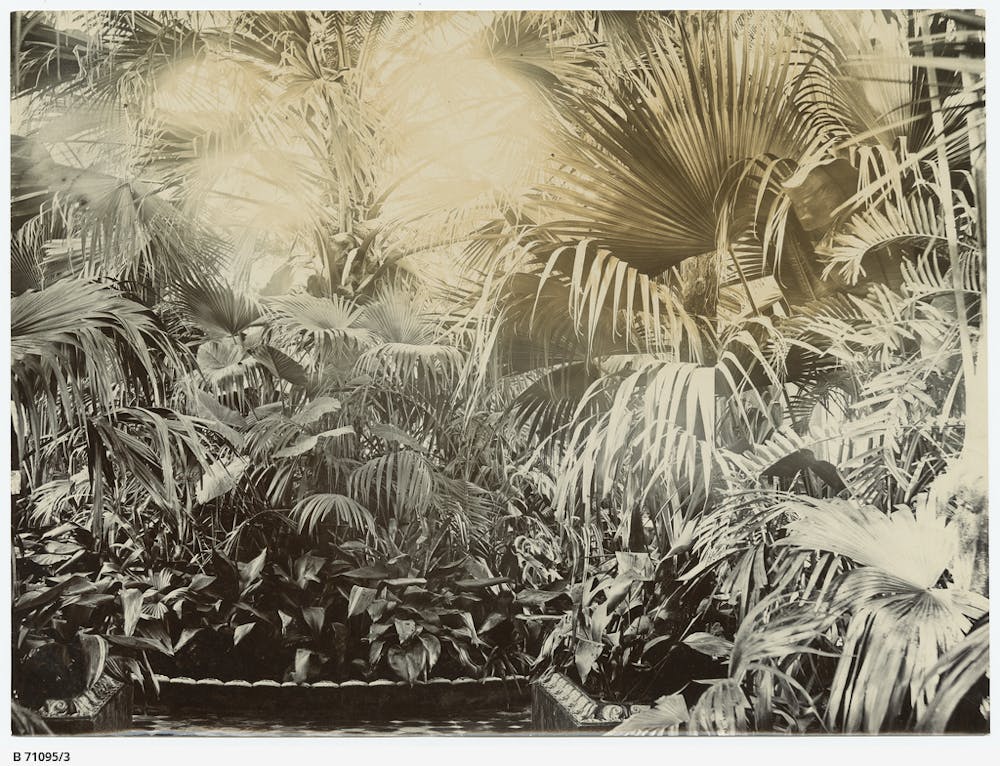 Drought was affecting the Adelaide Botanic Gardens as early as 1885.
State Library South Australia.
Drought was affecting the Adelaide Botanic Gardens as early as 1885.
State Library South Australia.
As the climate has shifted, droughts, changes in water table and climate change uncertainty have foregrounded the plight of these thirsty trees, and some have died.
The Geelong Botanic Gardens, established in 1851, provide an example of water demand and the work done to retain historic trees, using wastewater to maintain these plantings. The garden also now has a “21st-Century Garden” focused on sustainability, containing hardy natives including acacias, eremophila, saltbush and grasses.
Today’s botanic gardens are still test gardens, and are now important sites for global climate change research. They demonstrate what not to plant, but also that not all introduced plants are unsuited to Australian conditions.
Adelaide Botanic Gardens offer a plant selection guide where residents can check whether a plant is suited to their local conditions.
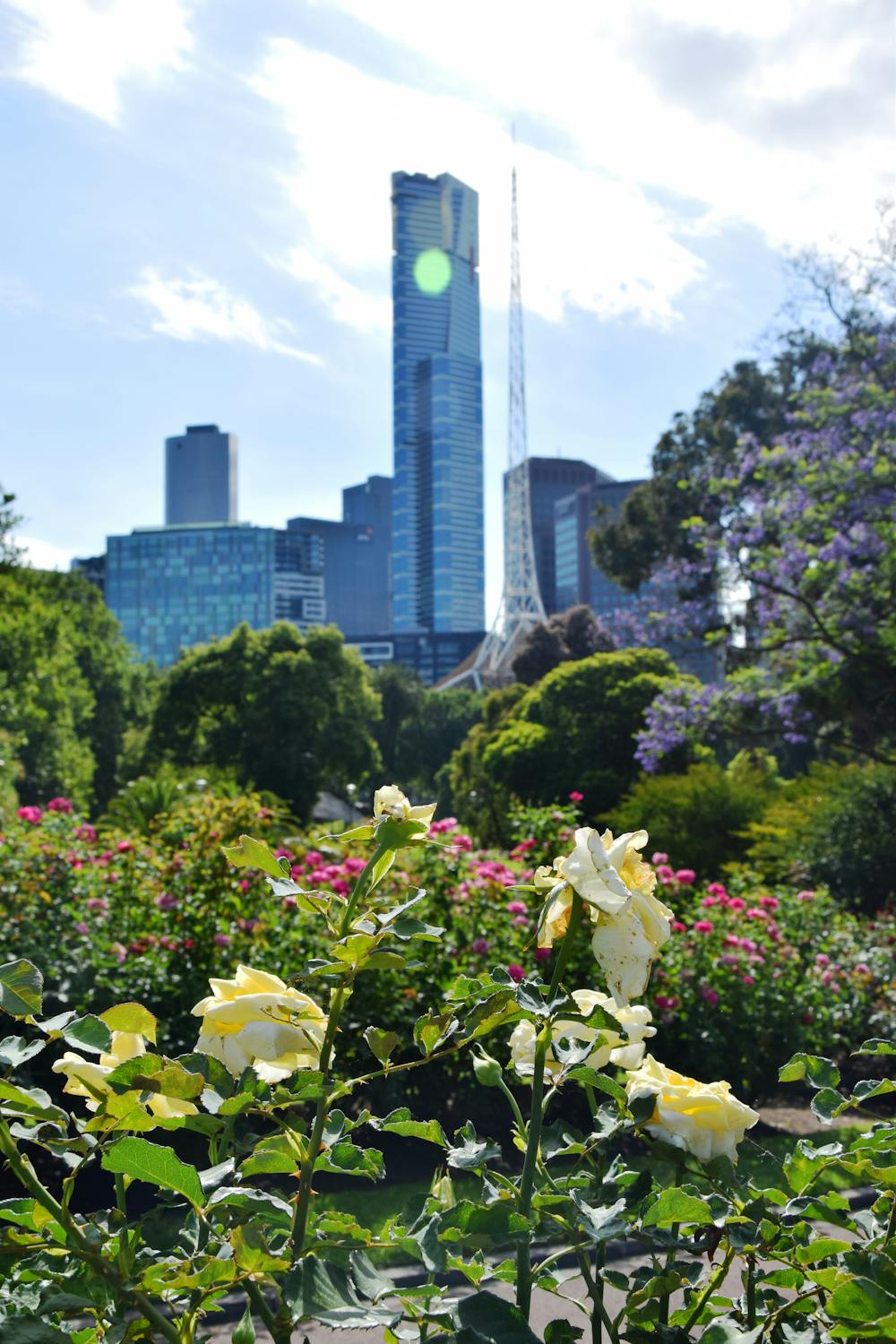 The Melbourne Royal Botanic Gardens include a display of roses suited for an Australian climate.
Shutterstock
The Melbourne Royal Botanic Gardens include a display of roses suited for an Australian climate.
Shutterstock
The Melbourne Royal Botanic Gardens have a “climate ready” rose display, a reframing of the decimated species rose collection, which adjusts exotic planting to climate change, without throwing the baby out with the (diminishing) bath water.
Some European, Mediterranean, North and South American plants are exactly suited to Australian climates, or are robust enough to adapt to changes which include increased drying and heat in many areas, but also the possibility of increased humidity in formerly arid zones.
Colonial memorials
There has been a recent trend to erase reminders of our colonial past.
Do the best lessons come from removing colonial memorials, or from rewriting their meaning? Pull out the giant trees and exotic gardens, or use them to demonstrate and examine the assumptions and mistakes of the past, as well as to design the future?
Various garden exhibitions, such as the touring Garden Variety photography exhibition, do the latter, foregrounding the problematic history as well as the future possibilities of the space.
Many gardens also now include Indigenous acknowledgement and content: heritage walks, tours, and talks by Indigenous owners to demonstrate the long history, naming and uses of local plants which overturn their colonial positioning.
Shifting landscapes
Australia’s botanic gardens have changed a lot over the past 200 years.
Botanic gardens are adapting to climate change, replacing dying and stressed trees and outdated gardens with hardier varieties and new possibilities, conserving endangered species and acting as proving grounds for climate impacts.
For decades, state and national gardens like the Western Australian Botanic Garden and regional gardens like Mildura’s Inland Botanic Gardens have installed indigenous, native or climate-focused gardens, as well as or instead of the traditional heritage European style.
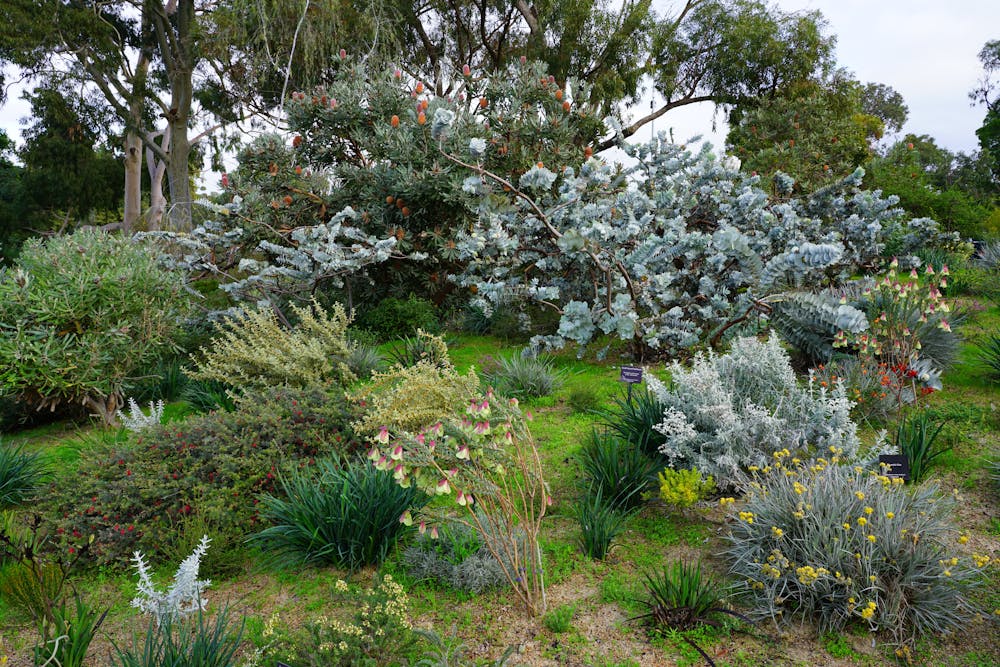 Gardens like the Western Australian Botanic Garden are increasingly showcasing native plants.
Shutterstock
Gardens like the Western Australian Botanic Garden are increasingly showcasing native plants.
Shutterstock
Botanic Gardens Australia and New Zealand offers a landscape succession toolkit: a guide for mapping out what is doomed, what most needs preserving and what adaptations are most pertinent for our botanic gardens of the future.
Finally, we don’t need to rip out non-hardy introduced trees: climate change will progressively remove them for us.


