

Program to plant 20 million trees prioritised cost-saving over gains for nature, research finds
- Written by The Conversation
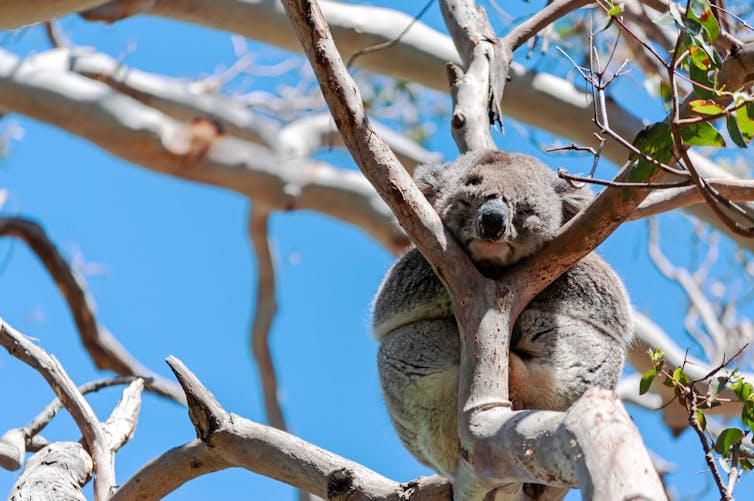
Australia is a world leader in land clearing and species extinctions. Tree-planting programs are among the restoration measures needed to bring threatened species back from the brink. But do these programs always work?
Our new research set out to answer that question, by examining the much-touted 20 Million Trees program. It began under the Rudd Labor government in 2014 and was continued by successive governments.
The program aimed to improve native vegetation, support a richness of plant and animal species and reduce greenhouse gases.
Our research, however, found funding decisions were largely driven by simplistic “value for money” considerations such as the cost of each tree. This undermined the benefits for both threatened species and the climate.
What was the 20 Million Trees program?
Australia has experienced the greatest biodiversity decline of any country in the past 200 years, driven largely by land clearing for agriculture. Many of Australia’s 2,000 threatened species and communities will become extinct unless their habitat is restored.
What’s more, vegetation stores carbon from the atmosphere, so restoring native plant communities is important for tackling climate change.
With this in mind, the Rudd government established a A$62 million tree-planting program in 2014. As the name suggests, it aimed to plant 20 million trees by 2020. The program was administered by the then Department of the Environment and Energy.
The program has now ended. More than 29.5 million trees were planted across 30,000 hectares.
Groups including restoration practitioners, community groups and landholders were paid to plant trees under the scheme. Contracts were awarded through a variety of means, including $13 million in competitive grants. These grants delivered the most individual projects, and led to three million trees planted across about 8,000 hectares.
A significant percentage of the funds allocated to threatened species recovery in 2014 and 2015 was directed to the 20 Million Trees program. So it was vital the program delivered real benefits for threatened species.
Read more: Australia could 'green' its degraded landscapes for just 6% of what we spend on defence
‘Cost per tree’ measures are fraught
Our research investigated what projects were most likely to be funded by the program’s competitive grants, and whether these projects delivered real benefits to threatened species.
We started by examining the project outlines prepared by applicants for all 169 successful and 698 unsuccessful applications.
Projects were more likely to be funded when the cost per tree was less than A$5. Projects with a tree cost of more than A$10 were almost never funded.
Allocating funding based on “cost per tree” is fraught. The cost to produce a seedling depends on factors such as the cost of obtaining seeds, germination times, and growth and mortality rates. Seedlings of woodland eucalypts may cost a couple of dollars to produce, while some tropical rainforest trees can cost about $14 per seedling.
Tree species may also differ in their value to the broader ecosystem, such as their ability to provide food or shelter for threatened animals.
Forcing groups to bid low to win funding may also lead to cutting corners. This may include planting fewer tree species and minimising essential maintenance such as weeding and watering. Focusing on how many trees survived, rather than were planted, would lead to better environmental outcomes.
Dudding our threatened species
Grant applications were also substantially more likely to be funded when they included the names of threatened species in the project summaries. Despite this, projects in areas supporting many threatened species were less likely to be funded.
Tree-planting projects occurred in the habitat of 769 threatened species. Of these, just nine benefited from projects covering more than 1% their range. Many projects capable of delivering more substantial benefits to threatened species were not funded.
The majority of Australia’s threatened plants and animals, or 1,302 species, received no habitat restoration under the program. But if different projects were selected for funding, habitat for about 400 of these species could have been restored.
Cost considerations were also given far more weight in funding decisions than a project’s carbon-storing potential. Projects in areas with high potential were not more likely to be funded than those in areas with low to intermediate potential.
This contradicted grant guidelines, which stipulated that alignment with program objectives – including environmental conservation and carbon reduction – be given a higher weighting than value for money.
Our conclusion was corroborated by the Australia National Audit Office in its 2016 report into the 20 Million Trees program. It found the program was appropriately designed, but assessment methods were not adhered to and eligibility assessments were not conducted transparently.
In its response to that report, the department said it was “committed to continuous business improvement to ensure that grants administration is to best-practice standard”, adding it would address the report’s recommendations.
New measures of success
Our research suggests simplistic measures of success are inappropriate when it comes to environmental restoration. It can lead to perverse outcomes that don’t benefit the threatened species for which funding was intended.
We found different funding criteria would have led to much larger gains for threatened species. Value for money, for example, should be calculated as the cost per area of threatened species habitat. Funding should also be prioritised for species that have lost the most habitat.
Nature restoration programs are vital to reversing Australia’s biodiversity crisis. But if they’re not done right, we risk squandering precious conservation dollars and pushing our unique plants and animals further towards extinction.


