

The cost of living is biting. Here’s how to spend less on meat and dairy
- Written by The Conversation
The cost of groceries has risen substantially over the last year. Food and non-alcoholic drinks rose by 7.9% in the year to May, with biggest increases in dairy products (15.1%), breads and cereals (12.8%) and processed foods (11.5%).
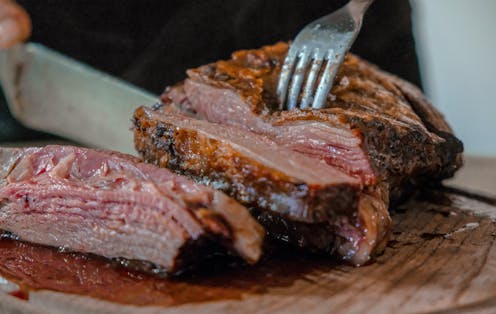
Meat costs rose by 3.8%, but the absolute increase was high, with a kilo of fillet steak costing up to A$60 for a kilogram.
Australians spend around 15% of their weekly food budget on meat and half that (7.4%) on dairy products.
About 43% of householders say grocery prices are a cause of financial stress, with half trying to reduce spending.
So how can you save money on meat and dairy products without skimping on nutrients?
Read more: How to save $50 off your food bill and still eat tasty, nutritious meals
Meat
Meat is a good source of protein, iron, zinc and vitamin B12.
Recommendations are for a maximum of three serves of cooked lean red meat a week. This includes beef, lamb, veal, pork, or kangaroo, with a serve being 65g cooked, which equates to 90–100g raw. This means purchasing 270–300g per person per week.
Check prices online and weekly specials. Less expensive cuts include oyster blade, chuck or rump steak ($22–$25 per kilogram). They can be tougher, making them better for casseroles or slow cook recipes, like this beef stroganoff.
One exception is mince because higher star, lower fat, more expensive products shrink less during cooking compared to regular mince, which shrinks by 25–30%.
Extend casserole and mince dishes by adding vegetarian protein sources, such as dried or canned beans and legumes.
A 400g can of red kidney beans costs about $1.50 and contains 240g of cooked beans, equivalent to 1.6 standard serves. Add a can of any type of legume (black, adzuki, cannelloni, butter, chickpeas, four-bean mix, brown lentils) or use dried versions that don’t need pre-soaking like dried red lentils at about $5 per kilogram.
This adds nutrients including protein, B vitamins, iron, zinc, calcium, magnesium and dietary fibre.
Read more: Love meat too much to be vegetarian? Go 'flexitarian'
Dairy
Dairy products are important sources of protein, calcium, magnesium, zinc, potassium and vitamins A, B2 and B12. Australian recommendations are for two to three serves a day for adults and four serves for women over 50. One serve is equivalent to a cup of milk or 40g cheese.
Fresh milk costs between $1.50 and $3.00 per litre depending on type and brand, while UHT milk is cheaper, about $1.60 per litre. It’s even cheaper to buy powdered milk ($10 per kilogram pack, which makes ten litres), equating to $1 per litre.
Making yoghurt at home costs about $5–6 per kilogram using a powder mix and yoghurt maker ($25). Once set, divide into smaller tubs yourself. Use as a substitute for cream or sour cream.
Fresh yoghurt varies from $11–$18 per kilogram, with individual serves and flavoured varieties more expensive (but not always). Compare per kilogram or per 100g prices and check for specials.
Cheese prices vary a lot so compare prices per kilogram. As a guide, block cheese is cheaper than pre-sliced or grated cheese. Home brand products are cheaper than branded ones. Mature cheeses are more expensive and processed cheese least expensive. But, if you cut block cheese really thick you end up using more. Block cheese ranges from $15 to $30 a kilogram, while packets of pre-sliced cheese vary from $18 to over $30.
Pre-grated cheeses range from $14 to $30 per kilo, with most around $20, and processed cheese varies from $10 to $15. Extend grated cheese by mixing with grated carrot (about $2 a kilogram) and use as a topper for tacos, wraps, pasta and pizza. Use processed cheese slices for toasted sandwiches. Most recipes work adding less cheese than specified.
A high-calcium alternative to cheese in sandwiches is canned salmon, but at $15–$30 per kilogram ($6–$7 per 210g can) you add variety but may not save money.
Read more: Eggs are so expensive right now. What else can I use?
3 tips to save on your food bills
1. Have a household food budget
Ensure everyone is on the same page about saving money on food and drinks.
About 50% of household food dollars are spent on takeaway, eating out, coffee, alcohol, food-delivery services and extras, so have a budget for discretionary food items. This is where you can make big savings.
Your household might need an incentive to stick to the budget, like voting on which “discretionary” items food dollars get spent on.
2. Have a rough weekly meal plan
Use your meal plan to write a grocery list. Check what you already have in the pantry, fridge and freezer.
If you’re not sure where to start, look at ours at No Money No Time, either for one person or a family with young children.
3. Avoid food waste
Australians waste 7.6 million tonnes of food each year yet 70% is edible. Before heading to the shops, check your fridge.
Turn leftovers into tomorrow’s lunch or dinner. When clearing the dinner table, pack leftovers straight into lunch containers so it’s grab and go in the morning (or freeze for days you’re too busy to cook).
Use our resources at No Money No Time for ideas on how to help your food dollars go further. If you need food help right now, the Ask Izzy website can locate services in your area.


