6 reasons Australians don't trust economists, and how we could do better
- Written by The Conversation

Economics is about organising markets in ways that contribute to social welfare, which means anyone interested in anything from inequality to housing affordability, to health and education systems, or climate change to gender gaps ought to be interested in it.
But economists are far from the most trusted professionals. We are apparently among the least-trusted in the US and midway down the ranking in the United Kingdom.
In Australia, such surveys on our most trusted professions don’t include economists, which itself is noteworthy.
Nevertheless, it’s worth reflecting on why Australians may distrust economists, and the ways in which economics can better serve Australia.
1: Weak diversity and reflexivity
Diversity is imperative for a field that helps make decisions about the allocation of resources.
At high school, economics students are increasingly male, and concentrated in metropolitan and high socio-economic status locations.
Only 0.5% of Indigenous graduates identified economics or econometrics as their main discipline in the 2021 census.
Two-thirds of the Australians employed as economists are male, and although university economics departments have improved recently, they are still notoriously male-dominated.
Compounding this is that – unlike other social sciences – mainstream economics is not a tradition where reflexivity is encouraged.
Reflexivity involves reflecting on one’s background and environment.
Nor are economists often encouraged to reflect on the role of power in the promotion of the ideas they and others espouse, including in the media.
2: The media and conflicts of interest
Economists span academia, government, private and not-for-profit sectors.
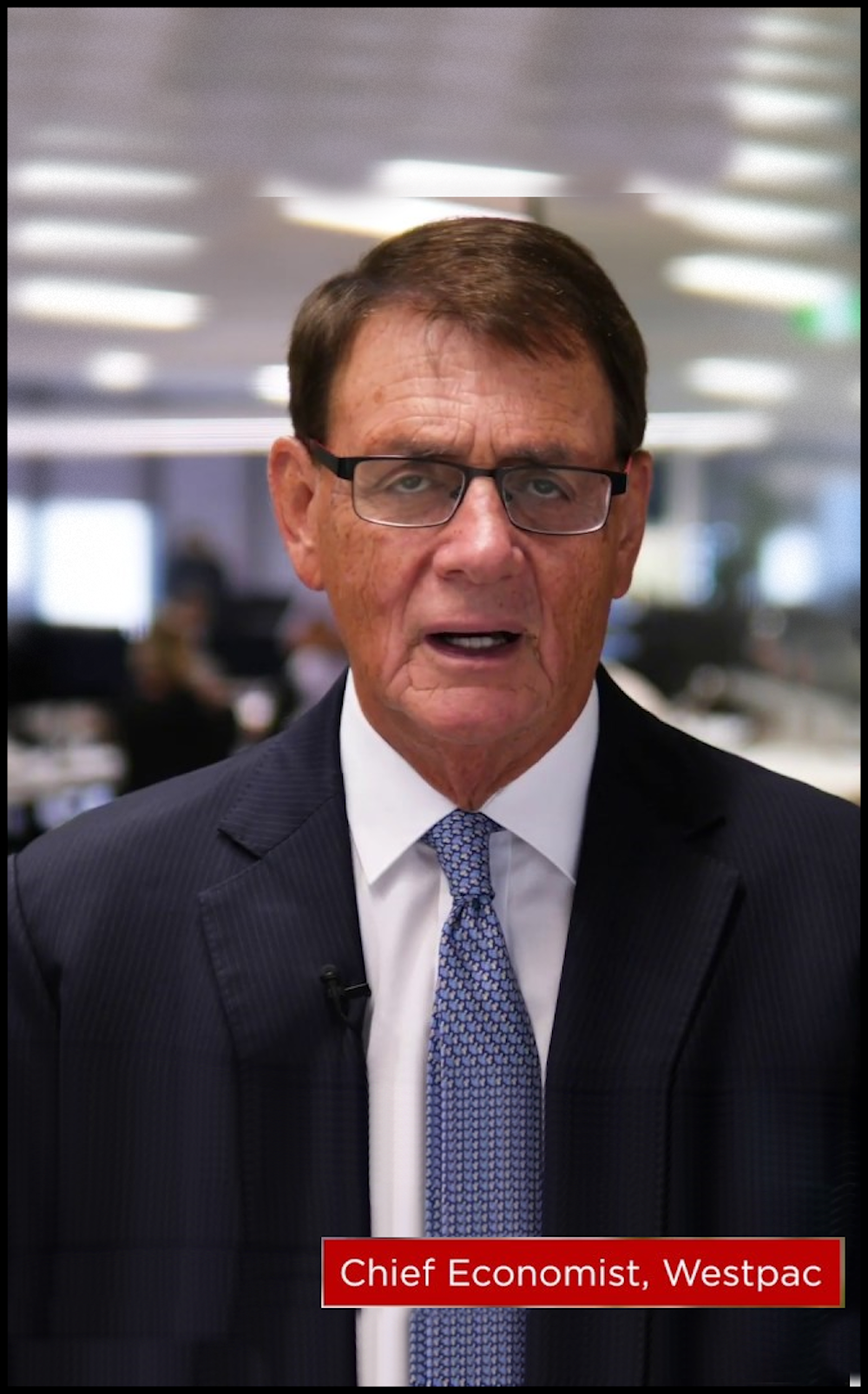
But those appearing in the media appear to come disproportionately from banks, other financial institutions, management consultancies and think tanks. Particularly worrying is that some think tanks do not disclose the identity of their donors.
The media seems uninterested in holding them to account for this. In contrast, all reputable academic journals (and The Conversation) require authors to declare any potential conflicts of interest as a condition of publication.
Also worrying is that some think tanks seem particularly ideologically driven.
In my view, the media should be much more critical and discerning in its engagement with economists and potential conflicts of interest.
And more space should be made for academic and public-sector economists.
Choices as to who is quoted should be guided by informed attempts to identify genuine expertise, as well as by diversity considerations. The opposite approach, sensationalism, is irresponsible and detrimental to the public good. And it contributes to distrust in economists.
Equally, academic economists should strive to contribute more to national economic debates. A realignment of incentives within universities would help.
3: Efficiency preferred to equity
Decisions made by governments usually affect both the “size of the pie” (loosely, what economists call efficiency) and how it is shared (equity).
How to balance this trade-off is a question of values, about which economists have no special insight. But we are well placed to summarise the likely distributional implications of policies.
It is true that many economists are at the forefront of research on inequality, but it is also true that economists often focus too much on efficiency.
It is rare for economists to explicitly discuss the implications of government decisions for both. Recent examples are debates about increases to the minimum wage and to JobKeeper payments in the context of containing inflation.
Read more: The case for boosting JobSeeker for all: younger people report greater financial hardship
4: A heavy international focus
Most of our best and most prominent economists were trained overseas, which is a double-edged sword.
We should continue to help top students to study at the world’s best institutions, and continue to recruit top economists globally. But we should accept that this can come with the price of reduced interest and engagement in Australian issues.
In my view we should balance this by also creating a truly world-class Australian postgraduate training system, perhaps through cross-institutional collaboration, drawing on strengths and creating economies of scale.
Such programs run successfully in Europe. This has been discussed many times by academics in Australia, but it requires government resolve to happen.
5: Declining economics training
It’s also hard to trust economics if you don’t understand it.
Year 12 enrolments in economics have fallen by about 70% since the 1990s. In New South Wales at least, economics has been mostly replaced by “business studies”.
The study of economics has also declined strikingly compared to other fields at universities.
Census data shows that only 1% of university graduates under 40 specialised in economics, compared to 2.5% of those now in their 70s.
Management and commerce degrees are much more popular, producing 23% of graduates across all ages.
While these degrees do include some economics, it is usually in only one or two compulsory units.
6: Overconfidence
While it was once said that every two economists had at least three opinions, reflecting the inherent uncertainties in the discipline, economists seem very sure of themselves in the media.
A large dose of humility would help, and it would help build trust.
The media and consumers of the media should seek out the voices that acknowledge the necessary uncertainties.