

Painting the unfamiliar: why the first European paintings of Australian animals look so alien to our eyes
- Written by The Conversation
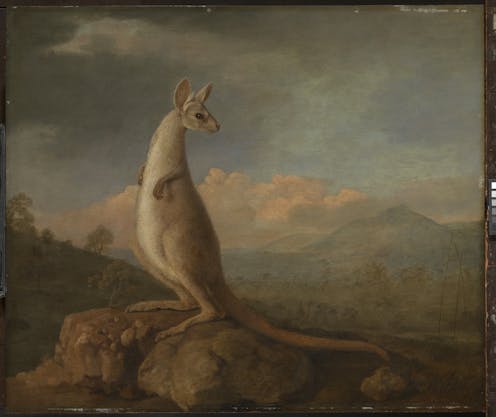
In 1772, Joseph Banks commissioned the foremost painter of animals in England, George Stubbs, to paint a dingo and a kangaroo.
To our modern eyes the paintings lack the vitality and strength of the animals we are familiar with in Australia. The kangaroo more closely resembles a rodent than a bipedal marsupial. The dingo’s glassy-eyed stare lacks any animation.
Stubbs was renowned for how well he captured horses and dogs. Even today, those paintings of his capture the lifelike individual essence of his subject. So why did his paintings of the dingo and kangaroo – some of the earliest European representations of Australian animals – look so strange?
Read more: It's Australia v England, in battle over Stubbs masterpieces
‘To compare it would be impossible’
Stubbs had not travelled with the 1768 Endeavour expedition to the South Seas. Instead, Banks commissioned him to paint from skins collected during the voyage.
While the journey was officially to chart the transit of Venus across the Sun from the vantage point of Tahiti, King George III also secretly instructed James Cook to search for the fabled Terra Australis Incognito and
with the consent of the Natives […] to take possession of a Continent or Land of great extent […]in the Name of the King of Great Britain.
Banks collected the skins of a “large dog” and a “kongouro” (thought to be a misinterpretation of the Guugu Yimidhirr word gangurru, which refers to the Grey Kangaroo) when the Endeavour pulled into safe harbour for repairs after striking the Great Barrier Reef in June 1770.
Banks recorded his first impressions of this very unfamiliar animal in his journal entry dated July 14 1770.
To compare it to any European animal would be impossible as it had not the least resemblance of any one I have seen. Its fore legs are extremely short and of no use to it in walking, its hind again as disproportionately long; with these it hops 7 or 8 feet at each hop in the same manner as the Gerbua, to which animal indeed it bears much resemblance, except in size […]
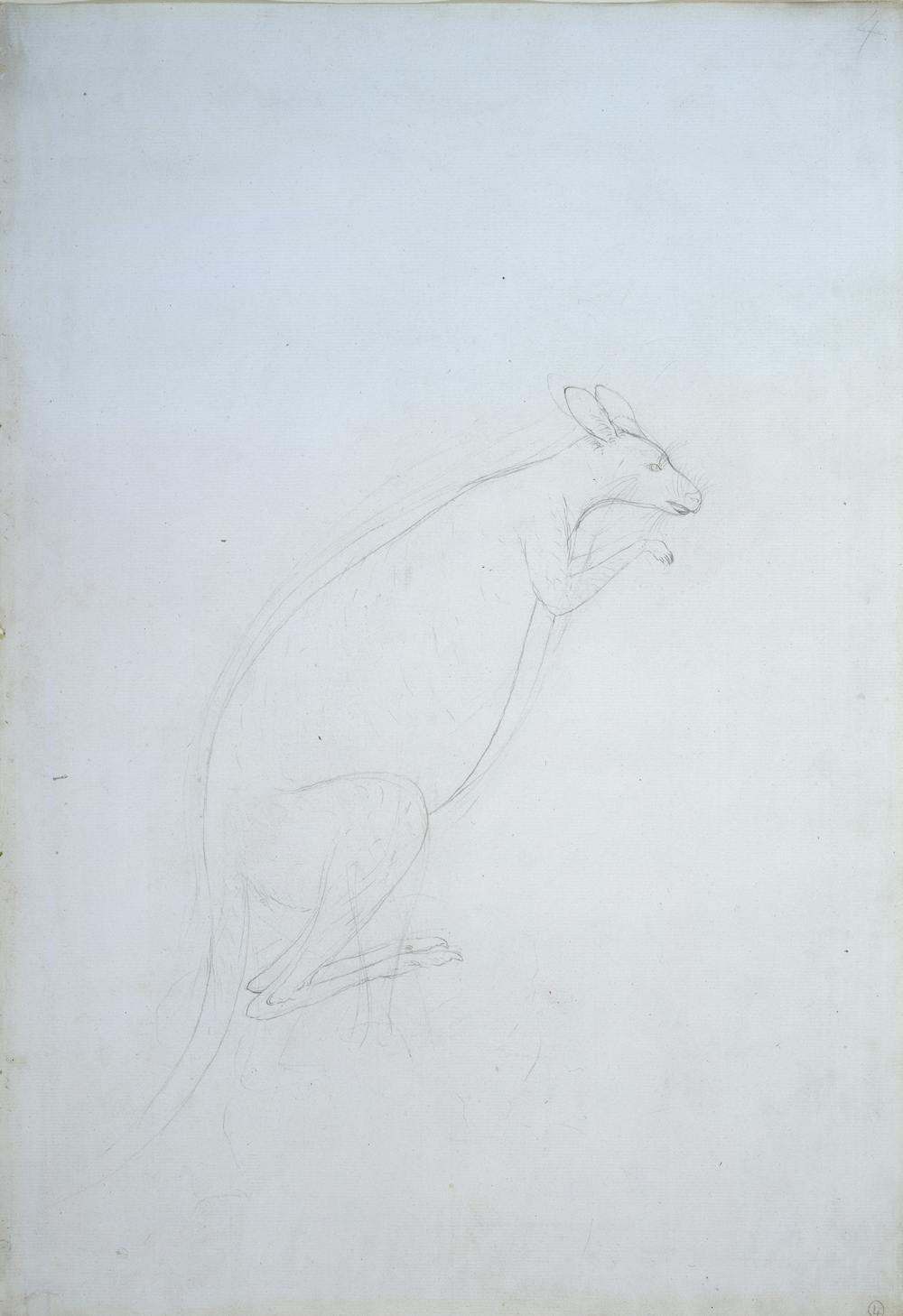
Sydney Parkinson, one of the artists who accompanied Banks, made five sketches of the dead animal after it was shot by one of the ship’s gamekeepers.
These sketches, the flayed (and possibly inflated) skins, Banks’ journal entry and his personal memories were the material that informed Stubbs as he made his preparations to paint these very unfamiliar animals.
Read more: Friday essay: the art of the colonial kangaroo hunt
The semantic memory
Stubbs was lauded for his anatomically correct forms of horses and dogs. On occasion, Stubbs also painted exotic animals like the lions housed in the Royal Menagerie.
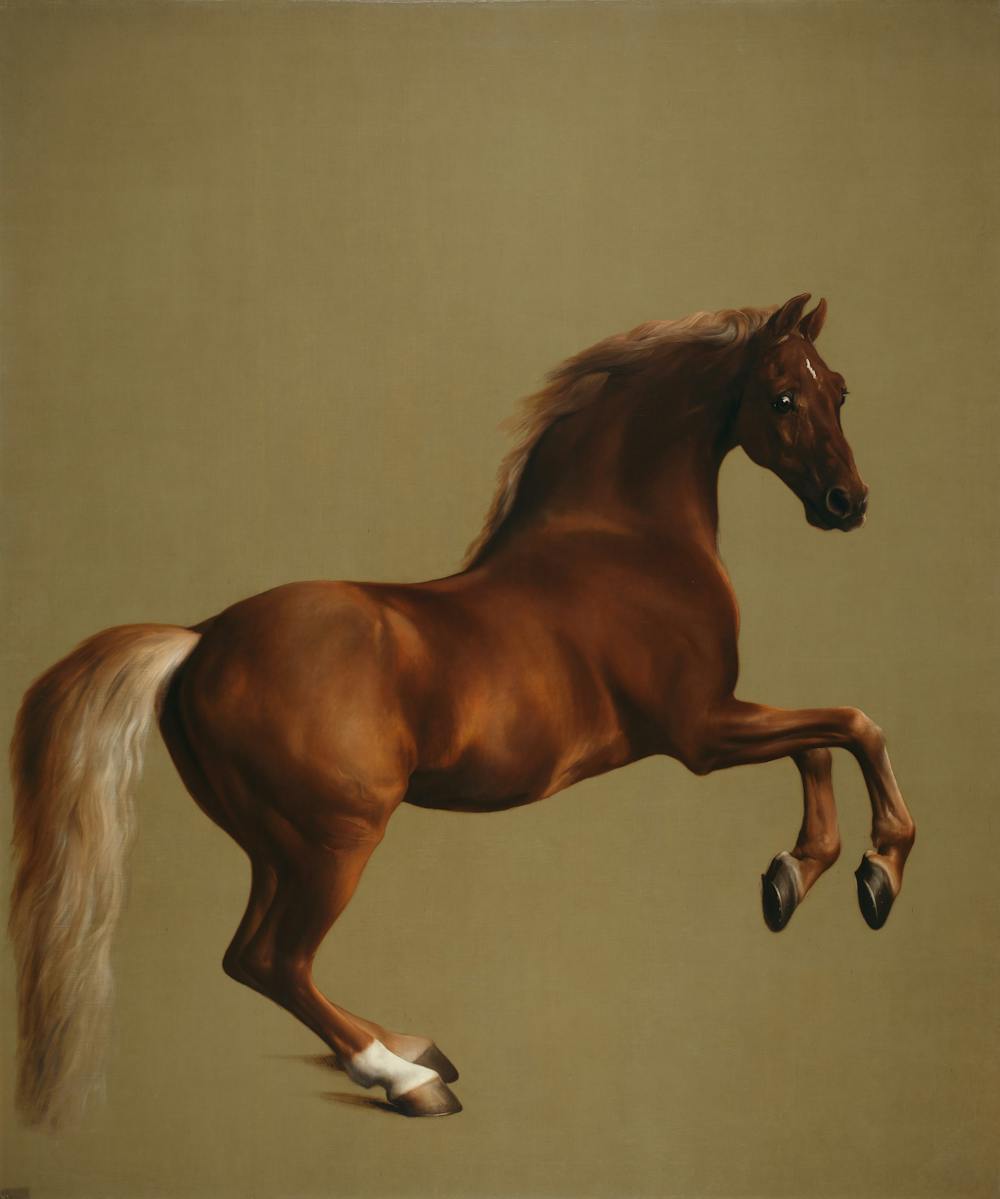 Whistlejacket by George Stubbs, 1762.
National Gallery
Whistlejacket by George Stubbs, 1762.
National Gallery
But his paintings of the dingo and kangaroo were the first time he painted animals he had never studied from life.
Stubbs capitalised on the swell of interest in the return of the Endeavour by exhibiting the paintings at the Society of Artists in London 1773.
This brought the dingo and the kangaroo to the scientific community and public’s attention. The animals became the two most associated with the new world of Australia – adding greatly to Great Britain’s sense of national pride as the conqueror of new worlds.
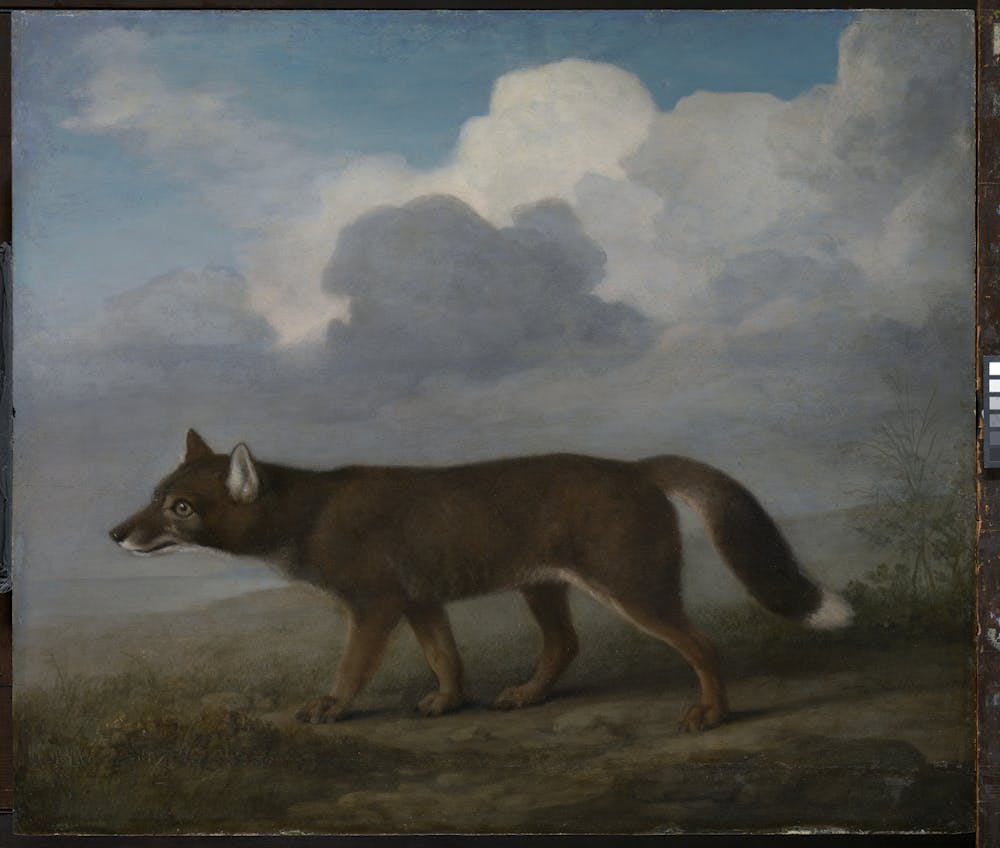 Portrait of a Large Dog (dingo) by George Stubbs, 1772.
National Maritime Museum, Greenwich, London
Portrait of a Large Dog (dingo) by George Stubbs, 1772.
National Maritime Museum, Greenwich, London
Stubbs’ kangaroo painting set the standard for future representations of the animal until well into the 19th century, serving as a model for engravings and illustrations used in scientific and popular publications.
But Stubbs’ kangaroo more closely resembles the rat-like Gerbua of Banks’ description than the creature we know today. This can perhaps be explained by Stubbs’s unfamiliarity with the animals.
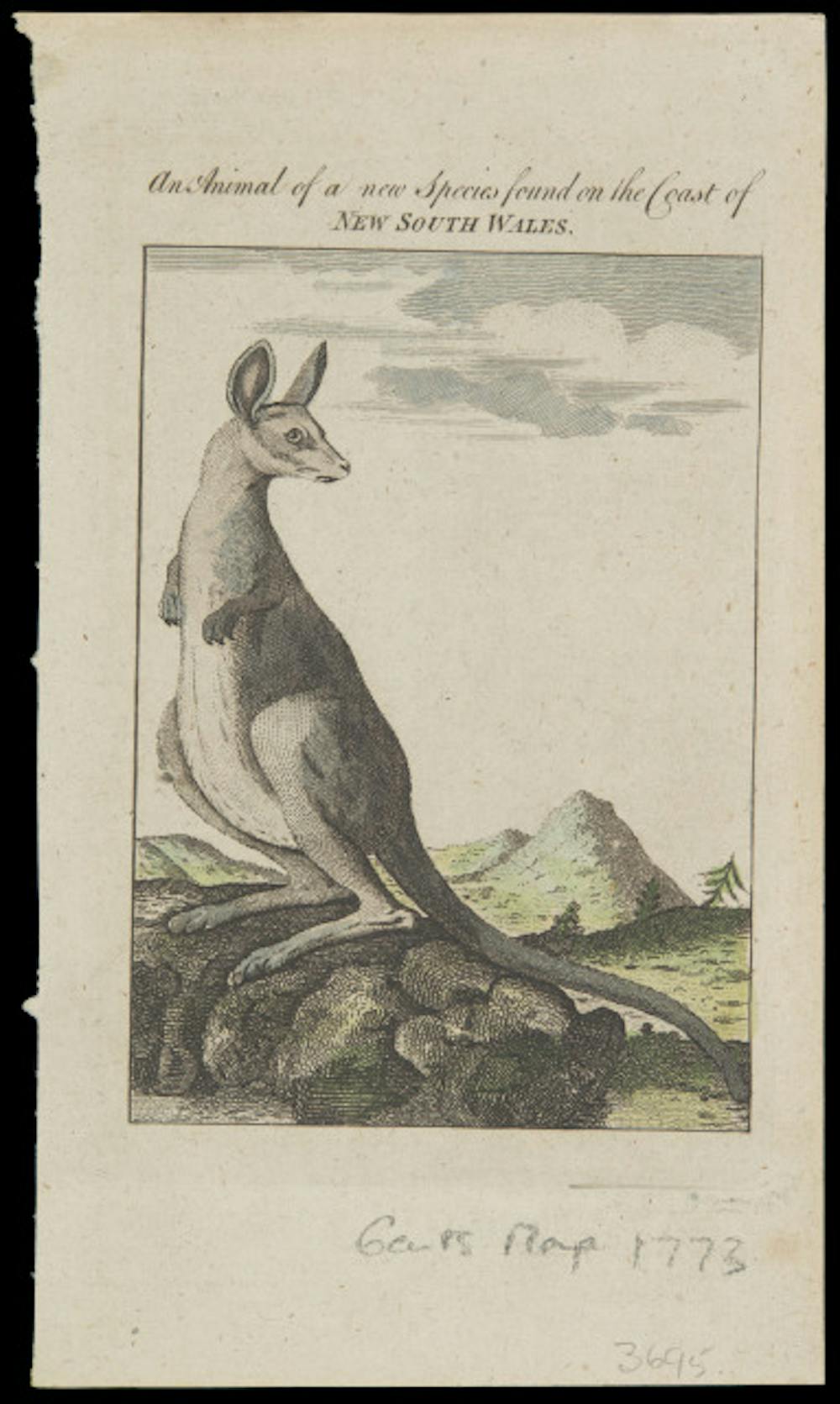 An animal of a new species found on the coast of New South Wales. 1773 engraving based on Stubbs’ painting.
National Museum of Australia
An animal of a new species found on the coast of New South Wales. 1773 engraving based on Stubbs’ painting.
National Museum of Australia
As an artist who had made a lifelong study of the anatomy and movement of animals, he would normally have relied on what psychologists refer to as “implicit memory” when painting his subject in the studio. That is, the unconscious memory he would instinctively rely on from years of painting animals he was familiar with.
It’s a bit like riding a bicycle: once learned, it’s never forgotten.
In this case, Stubbs primarily relied on “semantic memory”, or general knowledge of his experiences in the world, to paint the unfamiliar by utilising the knowledge, written material and personal recollections Banks had given to him.
Having been told a kangaroo was a giant rat-like gerbua by Banks, it is understandable that Stubbs also relied on his implicit memory of rats and gerbuas to depict the kangaroo.
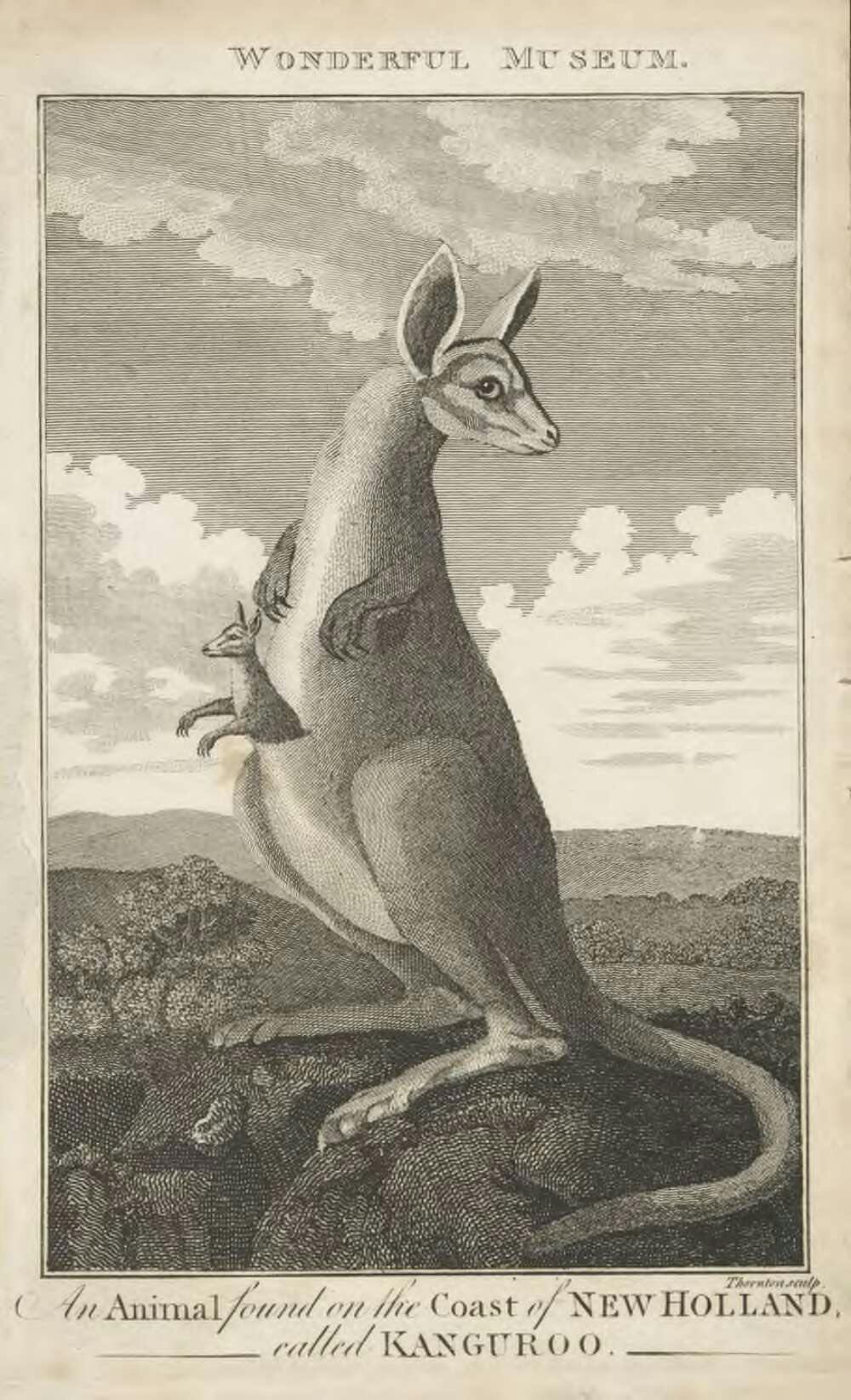 An animal found on the coast of New Holland called kanguroo, 1809, by Thomas Thornton, based on Stubbs’ painting.
National Library of Australia.
An animal found on the coast of New Holland called kanguroo, 1809, by Thomas Thornton, based on Stubbs’ painting.
National Library of Australia.
Rendering the unfamiliar
As an artist, I can relate to this. My paintings of unfamiliar landscapes in Scotland and Ireland always seem to depict trees that look like eucalypts.
Despite using the same brand of watercolours I have used my whole artistic life, the way I paint the interplay of light, shadow and hue on mountain passes, birch groves and fields of heather and gorse usually seems more gaudy than the dull blue-grey colours of the Australian bush.
Unconsciously, I overlay the hues of the Australian landscape onto my paintings of the British landscape in order to tone the gaudiness down – much like the English painters who conversely depicted the Australian bush as English landscapes.
Rendering the unfamiliar familiar.
Read more: Terra nullius interruptus: Captain James Cook and absent presence in First Nations art


