

How social media is breathing new life into Bhutan’s unwritten local languages
- Written by The Conversation

Dechen, 40, grew up in Thimphu, the capital city of Bhutan. Her native language was Mangdip, also known as Nyenkha, as her parents are originally from central Bhutan. She went to schools in the city, where the curriculum was predominantly taught in Dzongkha, the national language, and English.
In Dechen’s house, everyone spoke Dzongkha. She only spoke her mother tongue when she had guests from her village, who could not understand Dzongkha and during her occasional visits to her village nestled in the mountains. Her mother tongue knowledge was limited.
However, things have now changed.
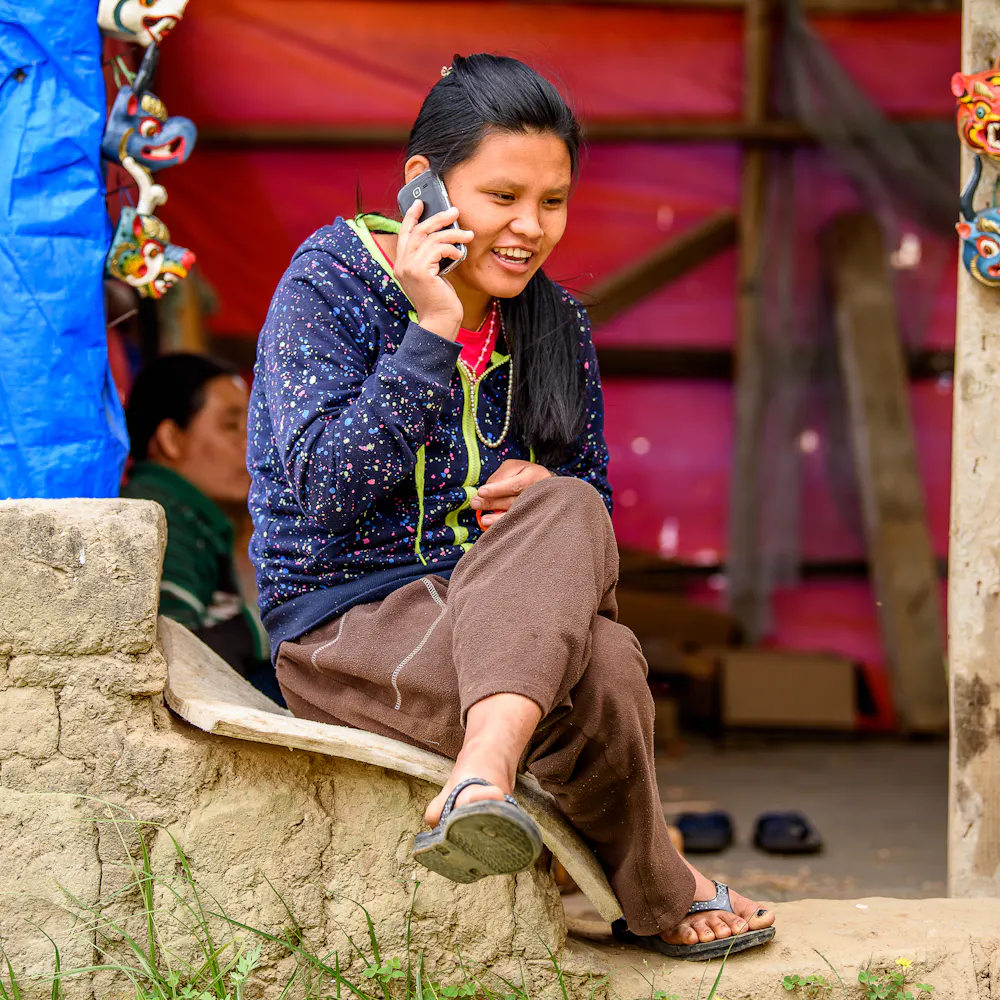
With 90% of Bhutanese people using social media and social media penetrating all remotes areas in Bhutan, Dechen’s relatives in remote villages are connected on WeChat.
She is in three WeChat groups where people usually communicate through voice messages in their native language. Most WeChat users in rural parts of the country communicate in their oral native language.
“I learn many words. I learnt how to say a lot of things in my own language,” the mother of two now living in Western Australia told me.
Dechen’s story is not isolated. Social media is giving a new lifeline to Bhutan’s native languages, which do not have written script and lack proper documentation. By communicating through voice messages, social media is giving Bhutanese people in both urban and rural areas a new opportunity to use their local language.
Read more: What can the kingdom of Bhutan teach us about fighting corruption
Losing Bhutan’s languages
Bhutan is a tiny Himalayan nation with a population of under 800,000 people. Internet and television was introduced only in 1999 and mobile phones in 2004.
The country has more than 20 local languages, but only Dzongkha has written text and is promoted as the national language.
The country struggles to promote the national language and its usage against English. Today most urban residents, especially the elites, speak English as their primary language.
Many languages – especially minority languages – are vanishing or becoming endangered as younger generations switch to Dzongkha and English.
The medium of instruction in schools is mostly in English; Dzongkha is taught only as grammar and literature. Students are shamed and often punished for using their local languages.
The preservation and promotion of local languages, therefore, depends on the speakers. A language faces extinction when its speakers die out or switch to another language.
Linguist Pema Wangdi has researched languages in Bhutan, and he told me many people are losing their native language.
“When we lose our language, we lose a piece of our national identity,” he told me.
 Languages are an important part of cultural identities.
Pema Gyamtsho/Unsplash
Languages are an important part of cultural identities.
Pema Gyamtsho/Unsplash
Wangdi has identified there are no longer any speakers of Olekha, an indigenous dialect of Rukha in Wangdu Phodrang.
“The loss of a single language is a loss of a piece of our national linguistic heritage and identity,” he said. “When a language is lost, cultural traditions which are tied to that language such as songs, myths and poetry will be lost forever.”
Other Bhutanese languages – including Tshophu language of Doyaps in Samtse, Monpa language of central Bhutan, and Gongdukha of Mongar – are endangered and at the brink of extinction.
Preservation of local languages
The future of the minority languages are at threat. The Constitution of Bhutan mandates the preservation and promotion of local languages, but there are no official efforts to preserve native languages.
But encouraging people to speak their native languages can have far reaching benefits in preserving and promoting Bhutan’s rich culture and tradition. Language embodies identity, ethnicity and cultural values: a thriving local language would help transfer this intangible wealth to the younger generation.
Social media could be an invaluable tool in this preservation.
 Social media could be an invaluable tool in the preservation of languages.
Shutterstock
Social media could be an invaluable tool in the preservation of languages.
Shutterstock
Bhutan could save its languages from becoming extinct with promotion of social media usages and language education could be done on the social media platforms. With both young and old people glued to social media, encouraging more people to use local languages in social media could generate interest among the youth to learn their local languages.
It could also help in documenting the endangered local languages as the older generation can record their voices on WeChat.
Many elder citizens feel strongly about their language and emphasise teaching their mother tongue to the younger generation and their grandchildren. Social media – joining the younger generation on platforms where they feel at home – could be the way forward.
Read more: Thinking of taking up WeChat? Here's what you need to know


