

‘An odd work that has borne the brunt of my grief’: the serenity and the grit of Stanislava Pinchuk’s The Theatre of War
- Written by The Conversation
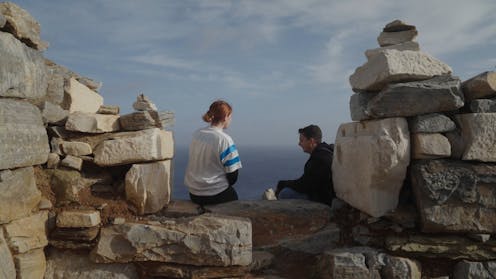
Through a nuanced exploration of place, time, and memory, a new video work invites audiences to reflect on landscape and its relationship to the echoes of conflict.
Stanislava Pinchuk’s three-channel installation The Theatre of War uses a diverse range of performers, people and locations, interlacing the introductory passages of Homer’s The Iliad across three films which contend with grief, memory and place.
Read more: Guide to the classics: Homer's Iliad
A compelling story
Pinchuk is a Ukrainian-Australian artist who grew up in Melbourne and now resides in Sarajevo, the capital of Bosnia and Herzegovina. Her body of work traces the shifting topographic landscapes of war zones across the world. Her pieces range from large-scale sculpture to data-maps and tapestries, and incorporate drawing, film, tattoo and installation.
At the launch event for this new work on display at ACMI, Pinchuk spoke compellingly of the time the work took to compose, the support she received, and the grief that surrounded it. Commissioned in 2019, the making of The Theatre of War was interrupted by the COVID pandemic, and deeply inflected by the Russian invasion of Ukraine in February 2022.
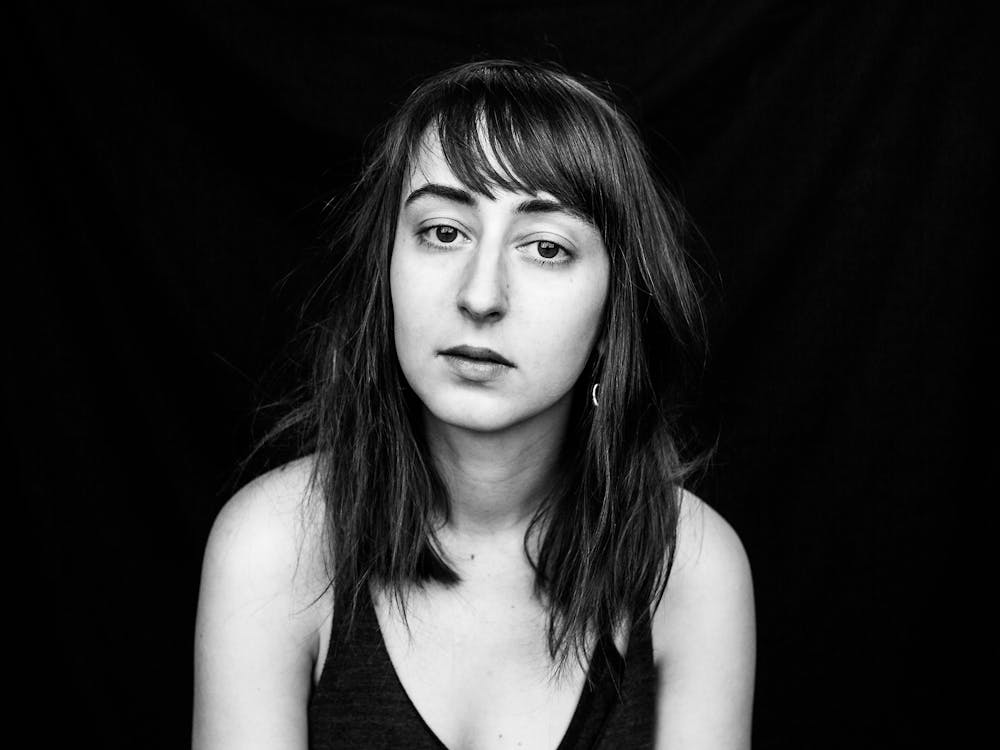
Describing the piece as “an odd work that has borne the brunt of my grief”, Pinchuk shared memories of months in combat training with the Ukrainian army, where she and the soldiers would spend one minute of silence each day for those who had died.
A carefully constructed sonic world
In the darkened exhibition space, we sit facing three screens with three films in different locations and contexts.
In a Sarajevo theatre, six female performers in traditional costume take their seats on a stage. At the tomb of Homer on the island of Ios, a long path to a craggy isthmus overlooks the Mediterranean, where two young people perch on the rocky bluff. In a remote and destroyed village in the United Kingdom, masked and armed Ukrainian soldiers engage in very realistic combat training: boots, guns and all.
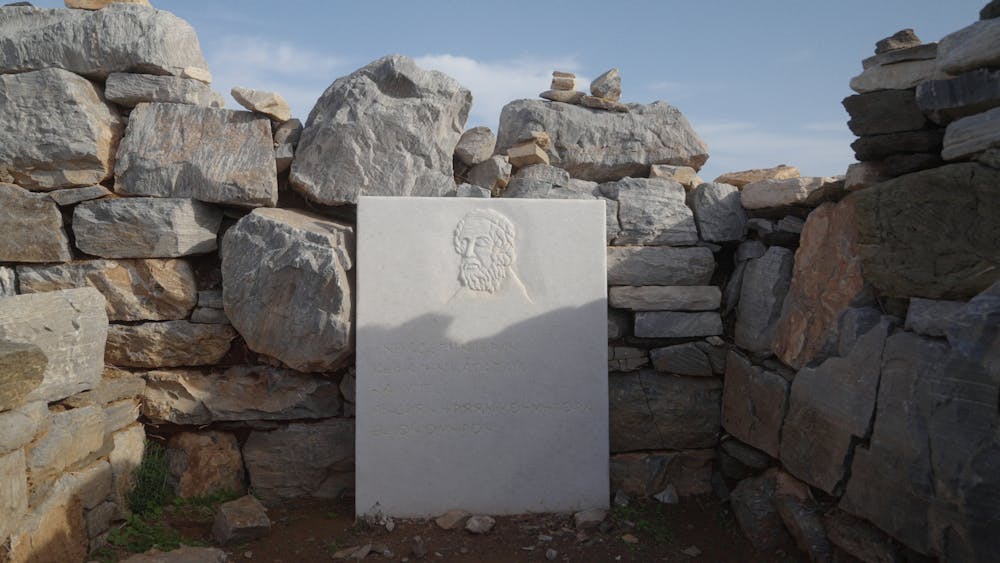 The Theatre of War video still, Stanislava Pinchuk, image courtesy of the artist.
Each film has its own discrete audio which makes for random or purposeful intersection. The soldiers, in full battle gear, run drills, shouting to clear rubble-filled rooms and firing off automatic weapon rounds as the choir’s singing swells and the wind gusts. Ammunition and cartridge cases clink as the opening lines of the Iliad – “Sing, goddess, the wrath of Achilles, Peleus’ son!” – are repeated in text and voice across the three screens: from a smiling chorister and then like a radio broadcast to the soldiers as they move through the destroyed landscape.
At times the films synchronise sets of still, detailed images: discarded bullet casings in the dust, a nose ring, a kneeling soldier. Long fingernails holding a mobile phone, a laughing singer, the metal discs of her head piece dangling. A shoe, a necklace, a freighter in the blue mist. The work builds to a sonic crescendo as the sounds of sirens and songs intersect with the bluster of automatic weapon fire echoing across the concrete bunker. At Homer’s grave, the scene is an azure, infinite sea.
Storytelling at the heart
The Theatre of War is rich, resonant and thoughtful. There is an essence of storytelling at its heart which coheres the work, reminiscent of Pinchuk’s interest in Homer’s universal, timeless themes of migration, battle, loss and yearning.
At times, extreme closeups of lines and wrinkles on hands and lips remind us of the resilience and the frailty of the body in war. There is a potent metaphor of landscape in the work: as a geographic descriptor, certainly, but also as a container for memory, and as a way to think about the terrain of bodies.
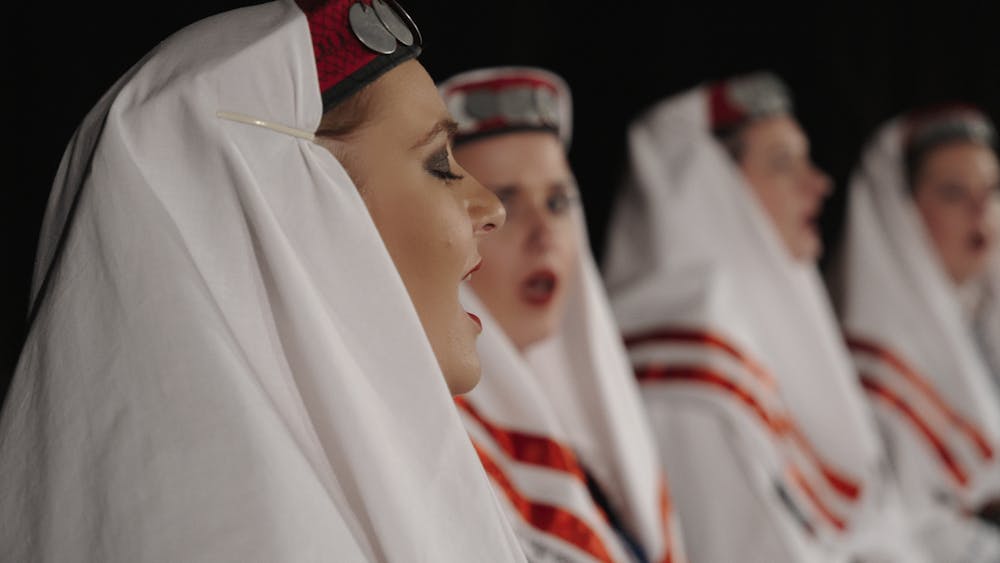 The Theatre of War video still, Stanislava Pinchuk, image courtesy of the artist.
There is something vulnerable and arresting about the faces, hands and legs in the work, which are variously marked, lipsticked, wrinkled or pierced. We are reminded of the traces that life leaves on our bodies, as well as the traces through time from ancient stories of war to modern, horrific ones: how innocent people become, as Homer describes, “the spoil for dogs and birds of every kind”.
I am struck by my own inadequate set of understandings as I view this work. I feel lucky, privileged, deeply moved. I notice my attention to the details, the physical bodies, the half hidden bits and pieces, but also the challenge established by the artist in the creation of three films viewed concurrently. Where do I look, and for how long? What is important? What might I miss?
Pinchuk has created a work which is somehow serene and gritty in equal measure. A meditation on memory and sadness, it considers, with compassion and courage, the ways in which places bear witness to history. The Theatre Of War asks us, compels us, to look.
Stanislava Pinchuk: The Theatre of War is at ACMI, Melbourne, until June 9.
Read more: The Russia-Ukraine War has caused a staggering amount of cultural destruction – both seen and unseen


