

A rush on critical minerals is coming for our most remote and disadvantaged communities
- Written by The Conversation
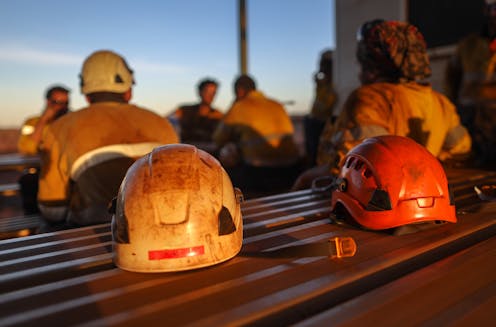
The Australian mining industry was promised billions of dollars in last week’s federal budget to boost critical minerals such as lithium, copper and rare earth metals. This includes tax incentives, an innovation fund and money for Geoscience Australia to map these resources.
Local investment in critical minerals mining and processing also feeds into the new National Battery Strategy, announced this week.
But despite all this funding, virtually nothing has been allocated to help local communities engage with new mining activities. There are social and economic risks and opportunities, all of which need to be considered.
We mapped Australia’s critical minerals deposits against socio-economic data to identify the communities most at risk. Our study shows some of our most disadvantaged areas have the most abundant critical minerals. This means they are highly likely to come under pressure from mining activities. But they may also have more to gain.
These rare minerals hold the key to scaling up renewable energy (International Energy Agency)Why is the government supporting critical minerals?
Critical minerals include aluminium, cobalt, copper, graphite, lithium, nickel and rare earth elements.
We need much more of these minerals to scale up renewable energy. Critical minerals are also used in defence, space, computing, telecommunications and transport.
Australia is rich in these resources. Supporting the sector could stabilise global supply and boost the Australian economy.
The A$22.7 billion Future Made in Australia package includes support for “green metals” and $8.8 billion for critical minerals.
Prime Minister Anthony Albanese also promised to fast-track low-risk foreign investment to unlock new projects.
The Albanese government has already announced support for two major critical minerals projects. This includes $400 million in new loans to Australian company Alpa HPA for a high-purity alumina processing facility in Gladstone, Queensland. It also includes conditional approval of $185 million to Renascor Resources to expedite the development of its Siviour Graphite Project in South Australia.
Earlier announcements include $840 million in loans and grants for Arafura, a Gina Rinehart-backed rare-earth refinery in Western Australia.
The Minerals Council of Australia has welcomed the government’s strategy.
What’s the problem?
Mining more minerals at a greater rate will put some of Australia’s poorest and most remote communities under enormous pressure.
Unless we understand how critical minerals mining will affect people in these locations, the strategy could drive social inequality rather than reduce it. Australia already struggles with inequality. We don’t want to make a bad situation worse.
Our research shows Australia’s most disadvantaged areas have the highest number of critical minerals mines and mineral deposits.
People in these areas live in smaller communities. They also have poorer school completion rates and lower levels of qualifications than their counterparts in capital cities. These areas are also home to a higher proportion of Indigenous people than elsewhere in the same states.
We found 57.8% of critical minerals projects in areas where Indigenous peoples have a legally recognised right to negotiate. Including native title claims, these rights are available at 79.2% of these projects.
Following the Future Made announcement, local communities and Land Councils began telling us all this new activity is adding to the pressure around consultation with mining companies. More applications for minerals exploration and mining projects means more community input is required. This should include careful consideration of potential risks and impacts. These processes are complex and take time to do well.
State and territory governments have promised to partner with local communities and First Nations people and share the benefits of critical minerals mining. But these commitments are not accompanied by any tangible support for research or for communities, or a clear strategy for avoiding negative impacts.

But doesn’t mining bring local benefits to remote areas?
Mining can create local jobs and business opportunities, but it can also cause harm. The downsides include land and water contamination, loss of biodiversity, destruction of cultural heritage and liabilities after mines cease production. Some of these impacts last for generations.
Our data shows that despite the promises made, remote communities and regions don’t always see the benefits from mining.
Another challenge is many of these new mines are expected to be deeper, with lower cutoff grades, thereby producing more waste at the surface.
Building complex mines in environmentally fragile or culturally sensitive areas, where people haven’t benefited from mining in previous decades, will be a huge challenge.
Unless these issues are better acknowledged and addressed, opposition to mining is likely to increase. If critical minerals mining fails to proceed, economic gains will be lost and the transition to renewable energy becomes more difficult.
These issues need to be a central part of Australia’s future critical minerals strategy.
 Jirrbal traditional owner Brad Go-Sam pointing out features in the Silver Valley, North Queensland, a highly prospective area for critical minerals being re-evaluated by the Geological Survey of Queensland. Used with permission.
John Burton
What can be done?
There is an opportunity to map and better understand the distribution of mining’s social and economic risks and potential benefits. Here are three ideas.
First, the federal and state governments could commit to a minimum spend of their critical minerals and energy research budgets for independent social science and public policy research. Given the large overlap with Indigenous peoples lands, this must include First Nations people.
Second, as critical minerals deposits are mapped, governments also need to explore any overlap with local social and economic issues. In our work, we overlaid critical minerals project data with Australian Bureau of Statistics data on social disadvantage, employment, household income and population characteristics, to highlight issues policymakers and industry need to consider.
This kind of early and pre-emptive analysis, conducted before project approval applications are lodged, would put companies and communities in a better position. Together they can discuss how to protect local people and the environment – and equitably share benefits.
Third, governments should support researchers to make these studies publicly available and engage local communities, media and civil society groups to discuss the results. Communities may also have questions of their own. This kind of open exchange would help to level the playing field in agreement negotiations and project approval processes – particularly when small communities are faced with multiple projects moving quickly.
Mining is the backbone of the Australian economy. We can’t overlook social impacts and inequalities in the race to mine more critical minerals.


